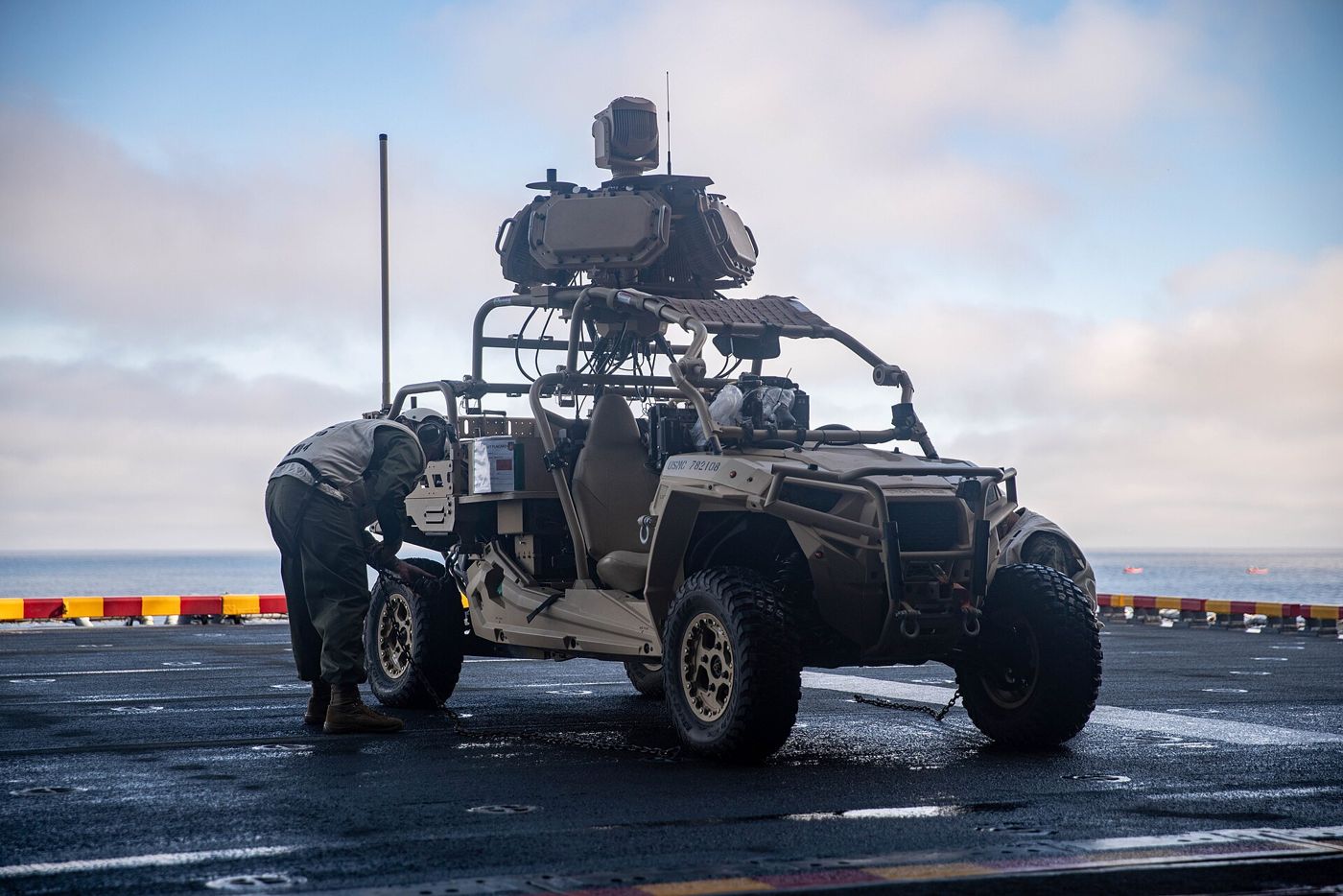
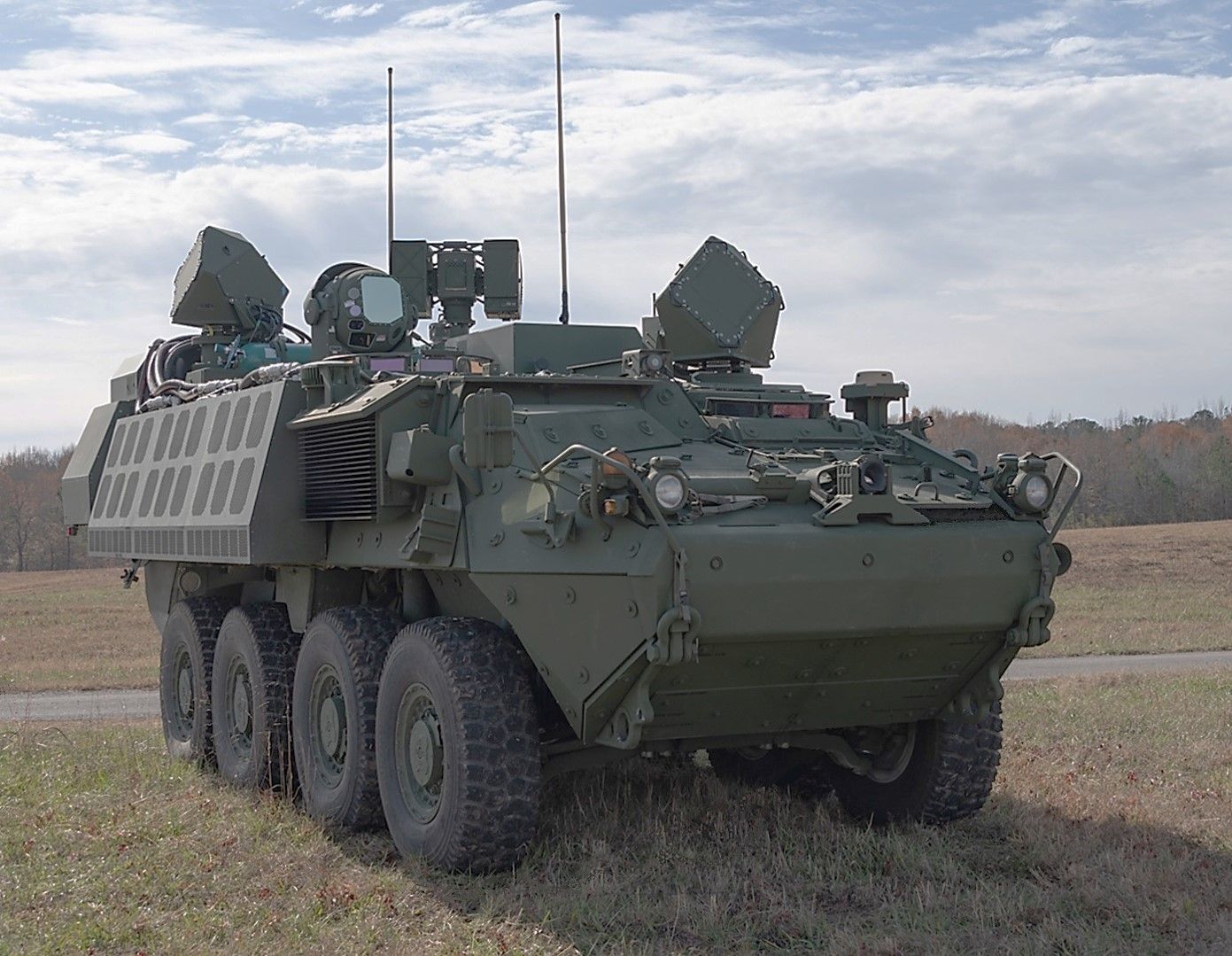
In February 2024 the Army sent four Stryker vehicles fitted with 50-kilowatt lasers to the U.S. Central Command area for soldiers to try. Three months later Doug Bush, then the Army’s acquisition chief, reported that the feedback was not overwhelmingly positive. He told lawmakers that the power level was “challenging to incorporate into a vehicle that has to move around constantly,” citing heat dissipation. In the same remarks he said the 20-kilowatt Palletized High Energy Laser, sitting at fixed sites overseas, was proving successful.
That split has held for two and a half years. The directed-energy weapons that have left the test range and stayed in use are modest in power and mostly stationary. The systems meant to maneuver with brigades, or to clear swarms with microwaves, are still being evaluated. With the Pentagon now buying lasers in quantity, the measure that should govern the next purchases is availability in the hands of troops, and that figure should be published.
The lasers in service are small and mostly stationary
The Army’s Rapid Capabilities and Critical Technologies Office built 17 laser prototypes in five years and deployed 11 of them, according to officials who spoke to Defense News in August 2025. The lessons they described were about upkeep: combat units have no clean rooms, and optics were among the parts that failed most often. The Army’s answer was the Enduring High Energy Laser, which a request for information in October 2025 described as up to 20 modular platforms and the service’s first laser program of record. On September 2, 2026, AeroVironment announced a $464.8 million agreement to deliver its 30-kilowatt LOCUST X3 on the Joint Light Tactical Vehicle, which the company calls the first U.S. production contract for a high-energy laser. The production laser is smaller than the Stryker prototype that soldiers criticized.
Israel’s record points the same way. A lower-powered, shorter-range laser operated by an air defense battalion intercepted about 35 drones launched from Lebanon during the fighting with Hezbollah that ended in November 2024. The full Iron Beam followed in late December 2025, when one system was handed to the air force with more in production. The Financial Times later reported, according to the Times of Israel, that Israel sent Iron Beam to the United Arab Emirates during the war with Iran, mostly as prototypes.
At sea the numbers are smaller still. The destroyer USS Preble used its 60-kilowatt-class HELIOS laser against an aerial drone in fiscal 2024, a test disclosed in the Pentagon test office’s annual report. Lockheed Martin’s chief executive said in January 2026 that HELIOS had neutralized four drones in a Navy demonstration; the Navy did not say how long each engagement took or how close the targets came, and Preble remains the only ship with the weapon. Britain’s DragonFire is further back. A £316 million contract signed in November 2025 covers installation on a Type 45 destroyer from 2027.
Microwaves have the swarm argument but a thin field record
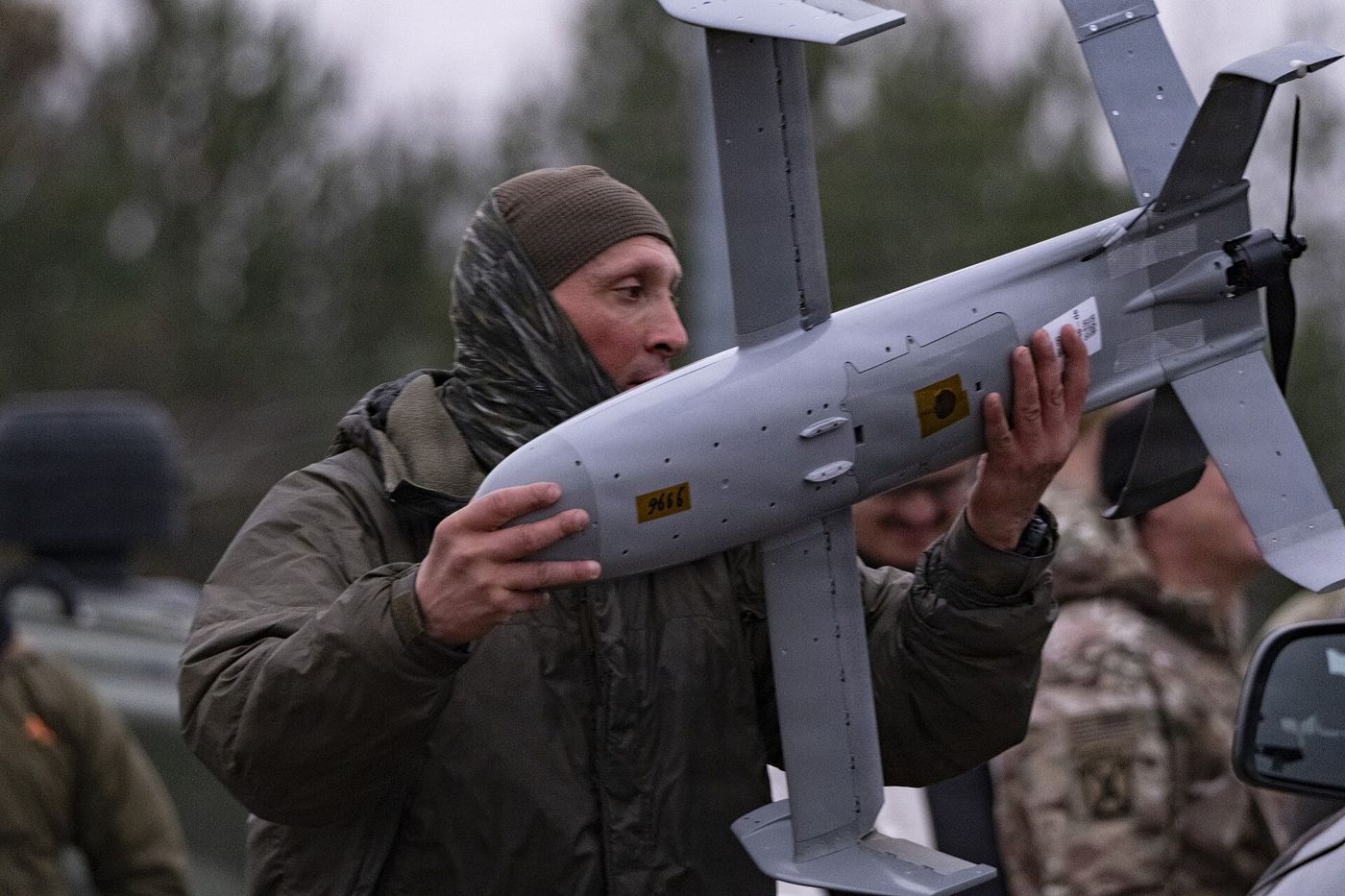
A laser has a narrow beam and must hold it on one target before moving to the next. The Congressional Research Service notes that high-power microwave weapons might provide more effective area defense against swarms for that reason. The evidence so far comes from ranges. The Air Force Research Laboratory’s THOR disabled a swarm at Kirtland Air Force Base in April 2023, but the lab declined to say how many drones flew or whether all were stopped. An earlier Air Force statement that a microwave system had deployed to Africa was retracted within days.
Epirus has gone further. The Army took delivery of four Leonidas-based prototypes under its Indirect Fire Protection Capability program, and in May 2024 its chief of staff said they were headed to the Middle East for soldier testing. The best-known result is a company-run event: at Camp Atterbury, Indiana, in August 2025, Epirus said Leonidas disabled 49 quadcopters with one pulse and 61 across five scenarios, weeks after a $43.6 million Army order for two second-generation systems. Those are vendor figures, and no comparable government assessment of the deployed prototypes was found in public sources.
The year-long base trial should report availability
The physical limits are well documented. CRS warns that rain, fog and obscurants can reduce range and beam quality, and Bush said dust storms degraded the Stryker lasers. Israeli officials claim Iron Beam will be available up to 90 percent of the time, a figure not yet tested by a full year of operations. The institutional limits are documented too. In April 2023 the Government Accountability Office found that the Pentagon spent about $1 billion a year on directed energy while prototypes struggled to become programs, and that the Navy and Air Force, lacking transition agreements, risked building weapons “misaligned with operational needs.” GAO’s tracking page still lists its two recommendations to the Navy as open.
The opportunity to fix this is already funded. Joint Interagency Task Force 401 has named four systems, Military Times reported on October 6, 2026, for a roughly year-long pilot at five U.S. installations: AeroVironment’s palletized laser, Kord’s Firefly laser, Boeing’s Compact Laser Weapon System and Epirus’s Leonidas, all operated and maintained by service members. The task force should commit now to releasing, for each system, the share of hours it was ready to fire, the days lost to weather, the parts replaced and the generator and cooling load. Congress should make further Enduring High Energy Laser lots and any microwave production decision conditional on those figures, and the Navy should sign a transition agreement before a second ship receives HELIOS.
This analysis draws on the public sources linked in the text. Send corrections to [email protected].