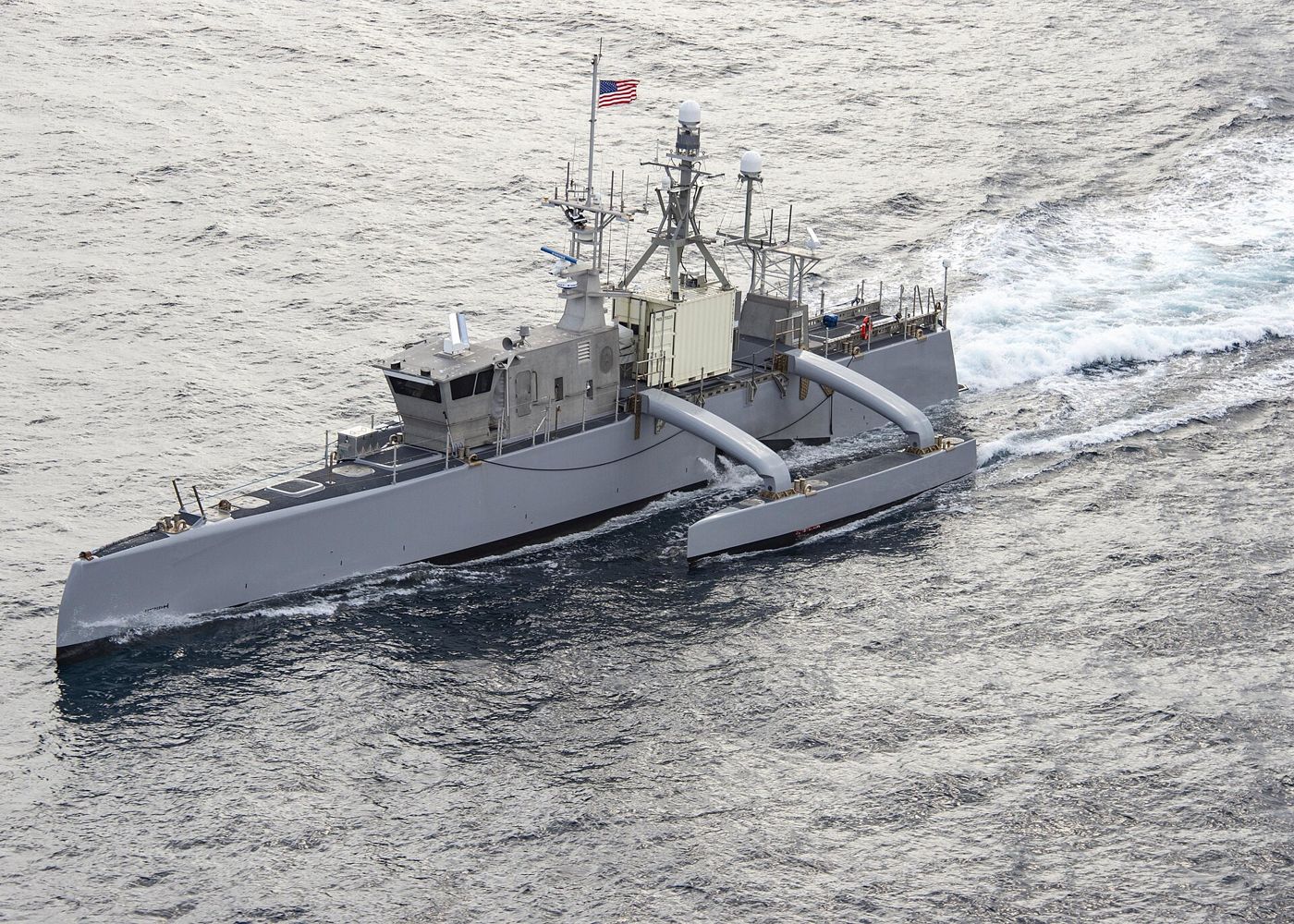
On September 11, 2026, the destroyer USS Chafee passed fuel to the uncrewed vessel Seahawk in the Pacific, following an April trial with the oiler USNS Guadalupe. The telling detail was in the method. Astern refueling, Military Times reported, “requires onboarding personnel to the Seahawk.” A 145-ton vessel built to operate without a crew still needed sailors on its deck to take on fuel.
Getting an uncrewed ship from one point to another under its own direction has been shown repeatedly over six years. Keeping one at sea for weeks with nobody aboard to clear a fuel filter, reset a generator or reseat an antenna cable has been shown far less often, and the Navy is now buying medium uncrewed vessels in quantity on the strength of tests that mostly measure the first thing. The service and Congress should judge these programs by how long the vessel and its support chain can function without hands on the hull, because that figure will decide how many of them are actually available on a given day.
What the long transits proved, and what they did not
The record on navigation is real. In 2021 the Ghost Fleet Overlord vessel Nomad sailed 4,421 nautical miles from the Gulf Coast to California, 98 percent of it in autonomous mode, supervised from a shore operations center run by Surface Development Squadron One, according to the program’s announcement. Ranger had made a similar passage in October 2020. Between August 2023 and January 2024, Unmanned Surface Vessel Division One took Mariner, Ranger, Seahawk and Sea Hunter to Japan and Australia in Integrated Battle Problem 23.2. The Navy’s account gives a combined 46,651 nautical miles, “navigated primarily by autonomous systems.”
The more useful numbers came afterward. Capt. Scot Searles, then the program manager for unmanned maritime systems, told an audience in January 2024 that the deployment produced 157 human interventions, DefenseScoop reported. Of those, 109 had nothing to do with autonomy and were attributed to communications and combat-system issues, maintenance troubleshooting and convenience. Among the 48 the program counted as concerning, 17 involved sensing and perception, nine involved maneuvering decisions and 11 involved hull, mechanical and electrical systems.
The navigation software had defects, including false contacts in rough seas and heavy rain, but they were counted, categorized and assigned fixes. And most of the occasions on which a person had to act concerned the ship as a machine and a network node. A percentage of miles steered autonomously says nothing about that second category, and it was the larger one.
Machinery with nobody on watch
DARPA built its No Manning Required Ship program around this problem. USX-1 Defiant, a 180-foot, 240-metric-ton vessel with no accommodation for people, was christened on August 11, 2025. Program manager Greg Avicola put the premise plainly: without people aboard to maintain systems, “ensuring reliability in the harsh maritime environment becomes the new hardest problem.”
The agency’s own log of the at-sea demonstration is instructive. Defiant left Port Angeles, Washington, on September 4, 2025, and covered more than 1,100 nautical miles to Port Hueneme, California, in five days. On September 17 it demonstrated fueling at sea with no one aboard, pumping water as a stand-in for fuel, and it added about 1,000 nautical miles before returning to Long Beach at the end of that month. It then spent the winter of 2025–2026 receiving engineering changes “to improve reliability and robustness.” The latest update DARPA has posted, dated March 27, 2026, describes final acceptance trials of revised autonomy and machinery-control software. DARPA has not published what prompted the changes. The public record shows a purpose-built ship demonstrating days of continuous operation, in a program whose stated goal was an extended demonstration of endurance.
Undersea, the limiting factor has been stored energy. GAO found in 2022 that the Orca extra-large uncrewed undersea vehicle was at least $242 million over its estimate and at least three years late. In its June 2025 weapons assessment, as Breaking Defense reported, GAO said it was “unclear” whether Orca would become a program of record after roughly $885 million, and listed battery endurance alongside autonomy and navigation among the technologies still giving trouble.
Congress has written the concern into law. Section 122 of the fiscal 2026 defense authorization act, reproduced in Ronald O’Rourke’s Congressional Research Service report, bars detail design or construction awards for medium and large uncrewed surface vessels unless the contract requires a demonstration of “not less than 720 continuous hours” without preventive or corrective maintenance on the propulsion and electrical plants. Thirty days is the right order of magnitude. The provision also permits the test to be run ashore, and it covers only two of the systems that needed attention in the Pacific.
A production decision ahead of the evidence
The acquisition side has moved faster than the testing. In 2025 the Navy merged its Large and Medium USV programs into the Modular Attack Surface Craft. Its solicitation, also reproduced by CRS, set hard thresholds for payload, range and speed: two 40-foot containers, 2,500 nautical miles, 25 knots. “Extended operation times” without maintenance appeared in a list of secondary attributes that were merely “desired.”
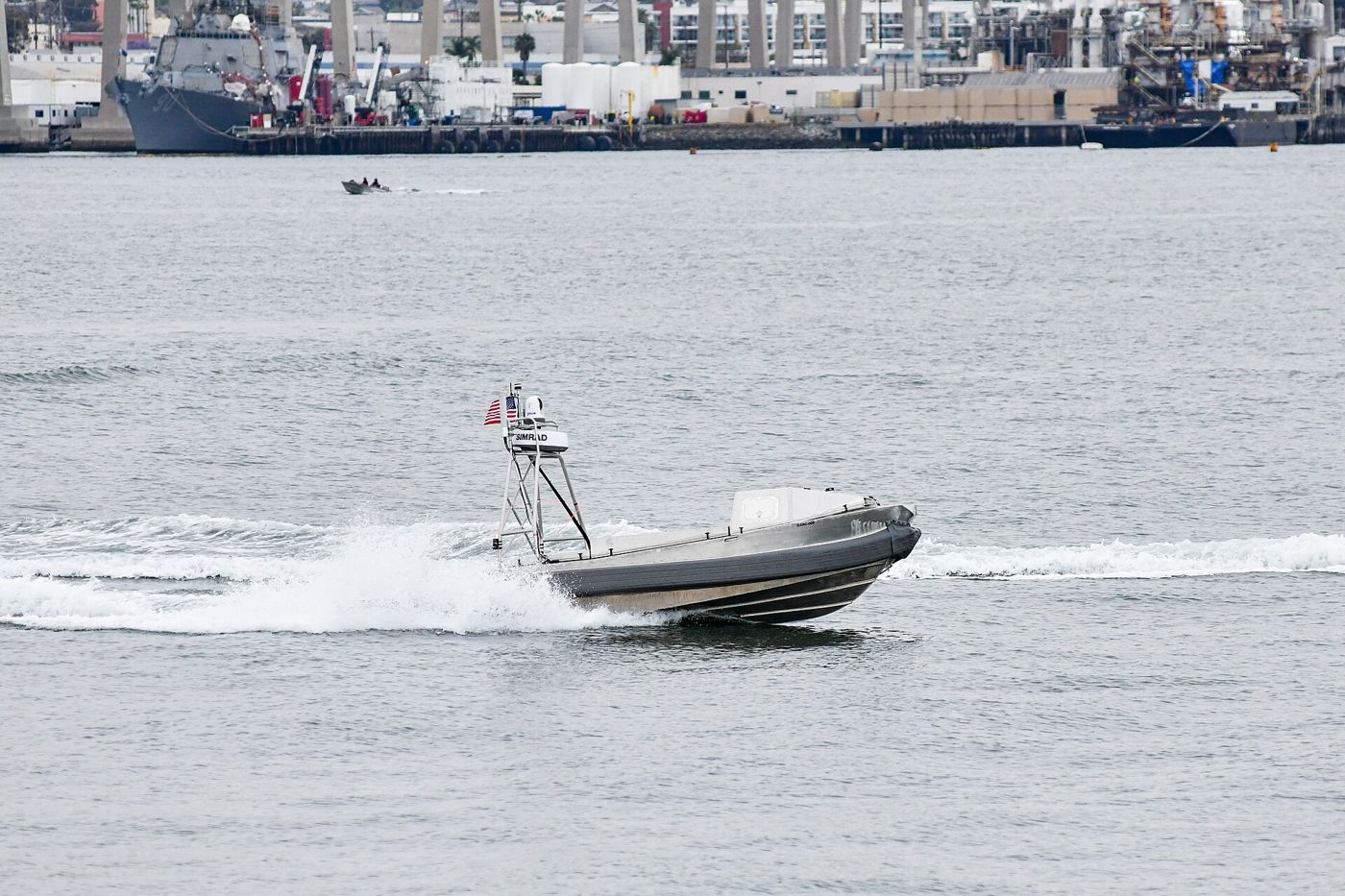
On March 26, 2026, the Navy cancelled that effort in favor of a medium USV “marketplace” funded from $2.1 billion in the 2025 reconciliation law. Rebecca Gassler, the portfolio acquisition executive, said prototyping was unnecessary because “there were enough mature platforms on the market.” Seven companies were picked for at-sea trials beginning in July, and on September 29 the Navy selected Galliano Marine Services, Huntington Ingalls Industries and Saronic to build ten vessels each at about $40 million apiece.
Phase one did assess the ability to “deploy at sea for long intervals,” according to that report, but the Navy has not said how long, or how many unplanned interventions each design needed. For phase two, the acting portfolio manager, Christopher Miller, said he was trying to “back off” the more demanding requirements to keep competitors in the field, and that the next round will not require refueling at sea. That is the same task that put sailors on Seahawk’s deck in September, and one that a 2024 DARPA report quoted by Military Times said “adds significant constraints on USV design and operations” when it needs people aboard.
Shore support decides availability
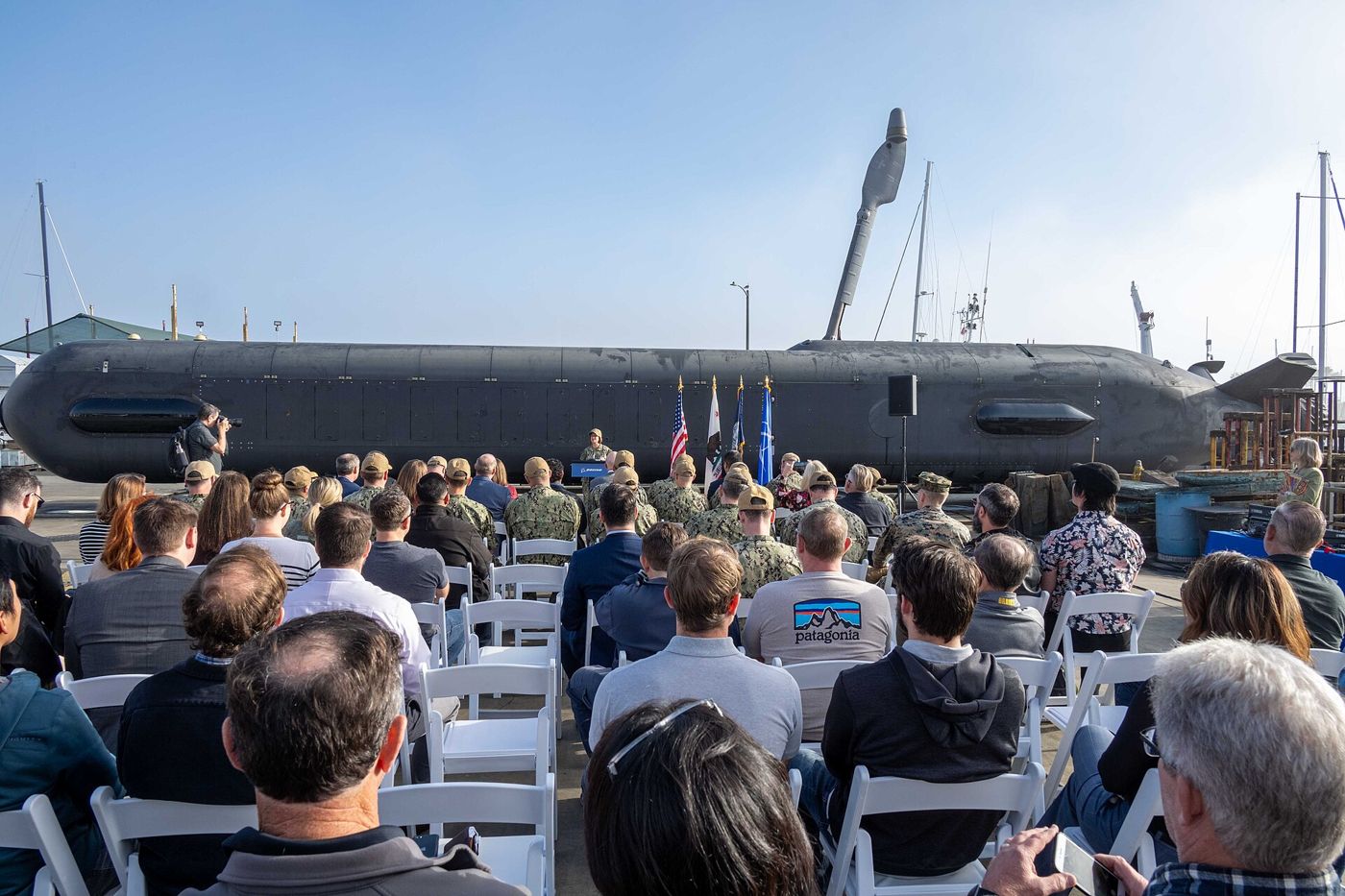
None of this argues against deploying the vessels. Capt. Garrett Miller, commodore of Surface Development Group One, said in January that Sea Hunter and Seahawk “will no longer be experimental vessels” and that the group expects 11 medium vessels by 2027 and more than 30 by 2030. The Navy announced in April that Seahawk would deploy with the Theodore Roosevelt Carrier Strike Group, and its builder, Leidos, said on September 8 that it is operating with the group. That deployment will generate the first fleet data on how often a medium USV needs a technician, a tow or a port. Breaking Defense noted in June that the Navy had not answered its questions about what the service intends to test.
The cost of the answer is unknown by the Navy’s own accounting. GAO recommended in 2022 that the service give Congress an estimate covering operations, sustainment and digital infrastructure for uncrewed maritime systems; GAO still listed the recommendation as open in September 2024. In March 2025 testimony, GAO’s Shelby Oakley repeated that the Navy “did not account for the costs of operations and sustainment” in a $4.3 billion plan. Jonathan Panter and Johnathan Falcone warned in War on the Rocks in 2021 that the Littoral Combat Ship had already shown where this leads: “reducing maintenance at the operator level simply increased it at the intermediate and original manufacturer levels.”
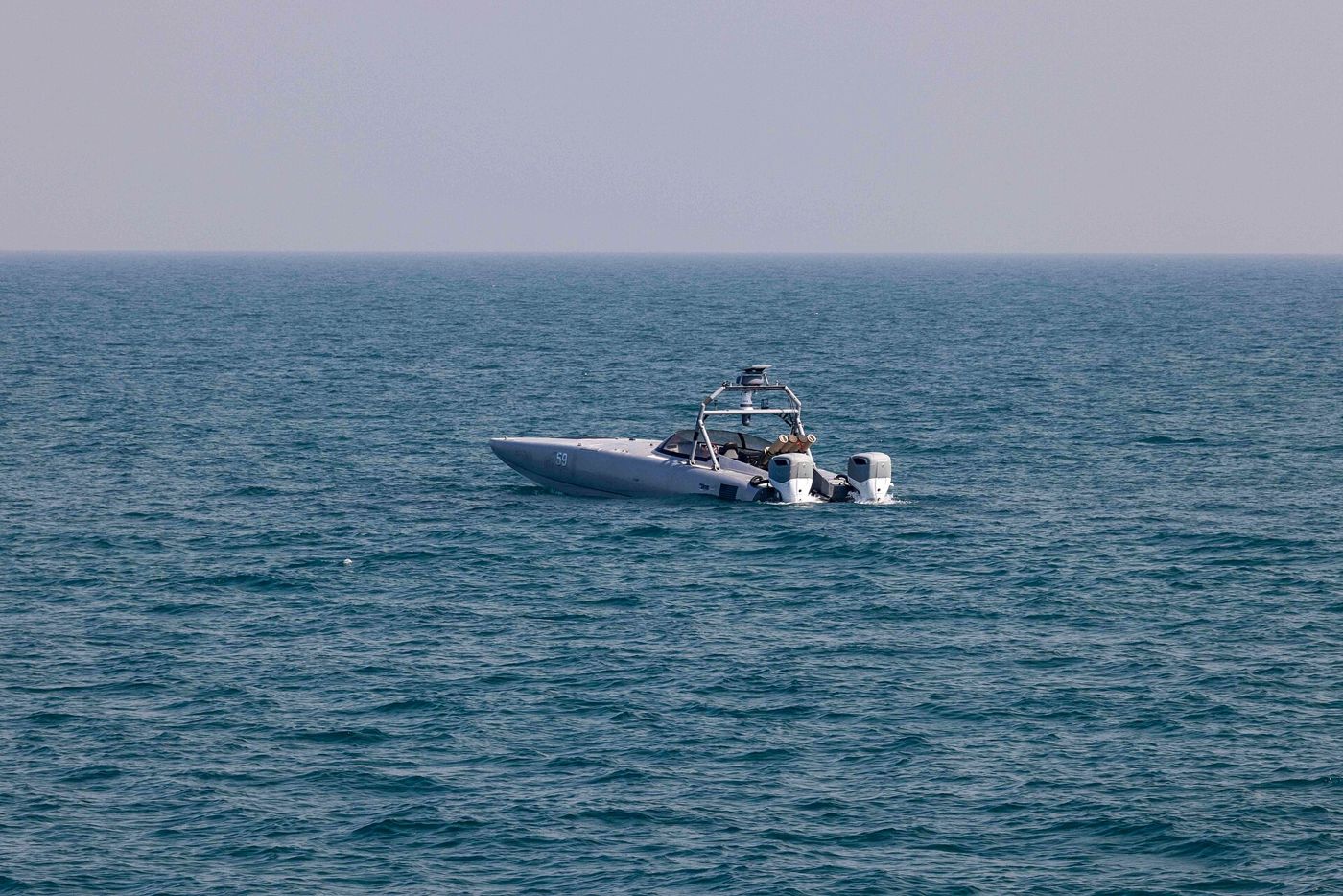
Ukraine’s sea drones are often cited as proof that the technology is ready, and they prove something narrower. The Magura V5 is an 18-foot attack boat with a range of about 800 kilometers and a battery life of 60 hours, according to Ukrainian figures reported by the Associated Press. Its maintenance problem ends when it reaches the target. A vessel meant to carry containerized payloads alongside a strike group for months is a different engineering problem.
Measure the interval between human hands
The Navy should publish, for the Seahawk deployment and for each marketplace design, the mean time between interventions that required a person aboard, broken out by cause, as Searles did for the 2023 deployment. The 720-hour demonstration should be run at sea on a complete vessel, with communications, sensors and payload power included, before the second production lot is ordered.
Fueling without personnel aboard, which Defiant has shown with water, should return as a threshold requirement for any vessel expected to stay with a deployed formation. And the cost estimate GAO asked for in 2022 should accompany the fiscal 2028 request, with the shore maintenance detachments, forward repair sites and operations-center watch teams priced per vessel. Thirty hulls at about $40 million each are affordable only if the people and facilities behind them are counted in the same ledger.
This analysis draws on the public sources linked in the text. Send corrections to [email protected].