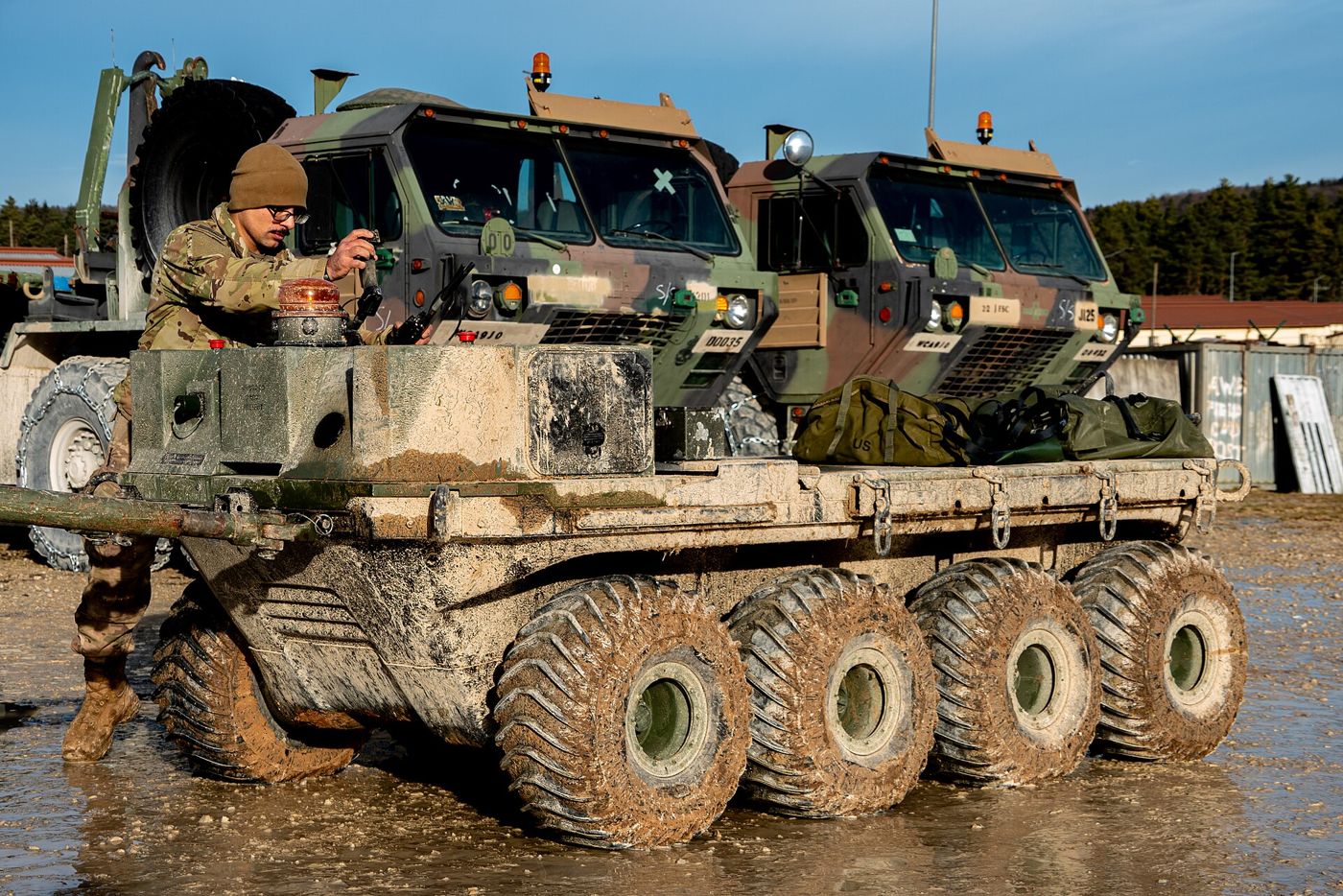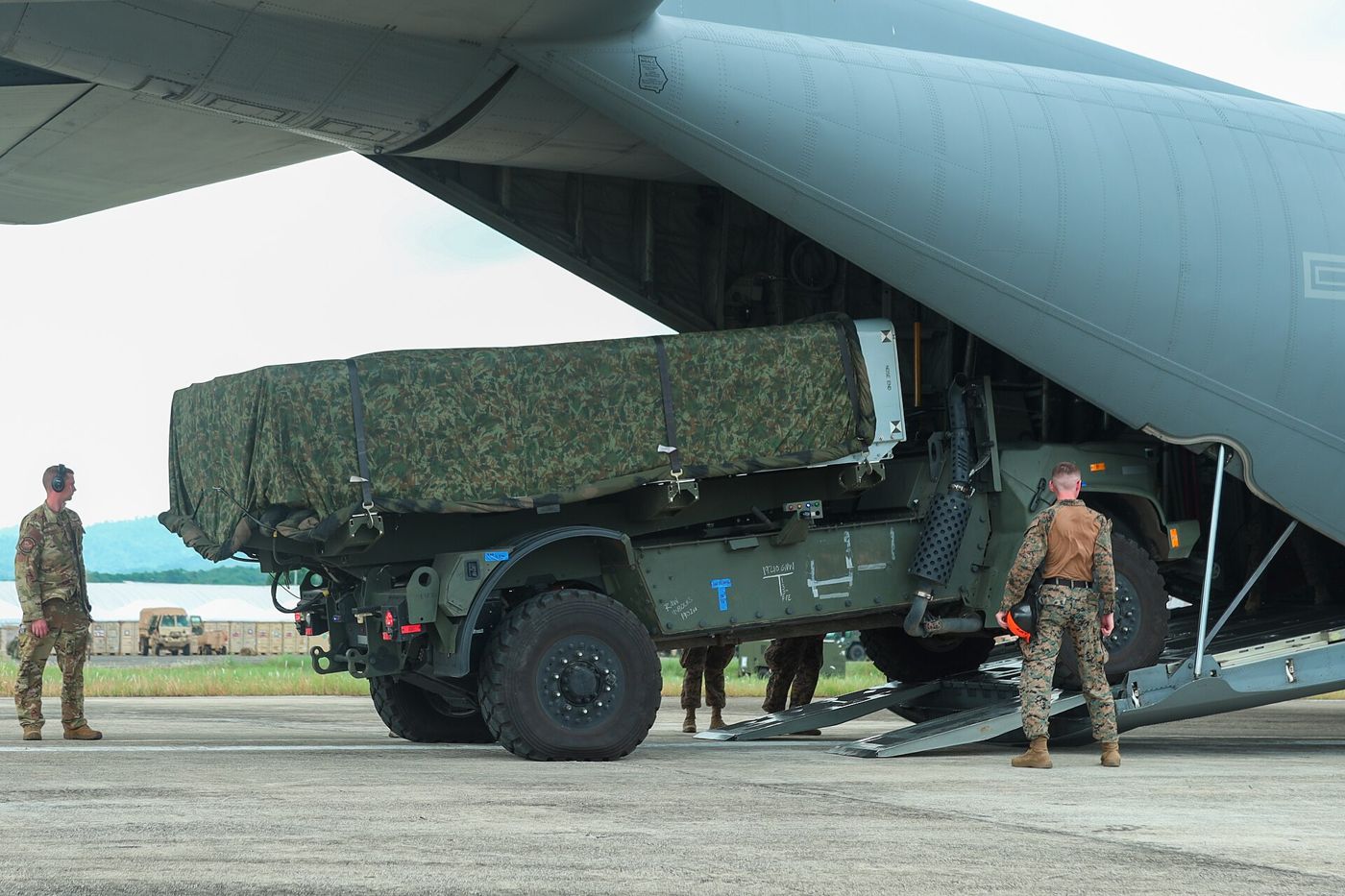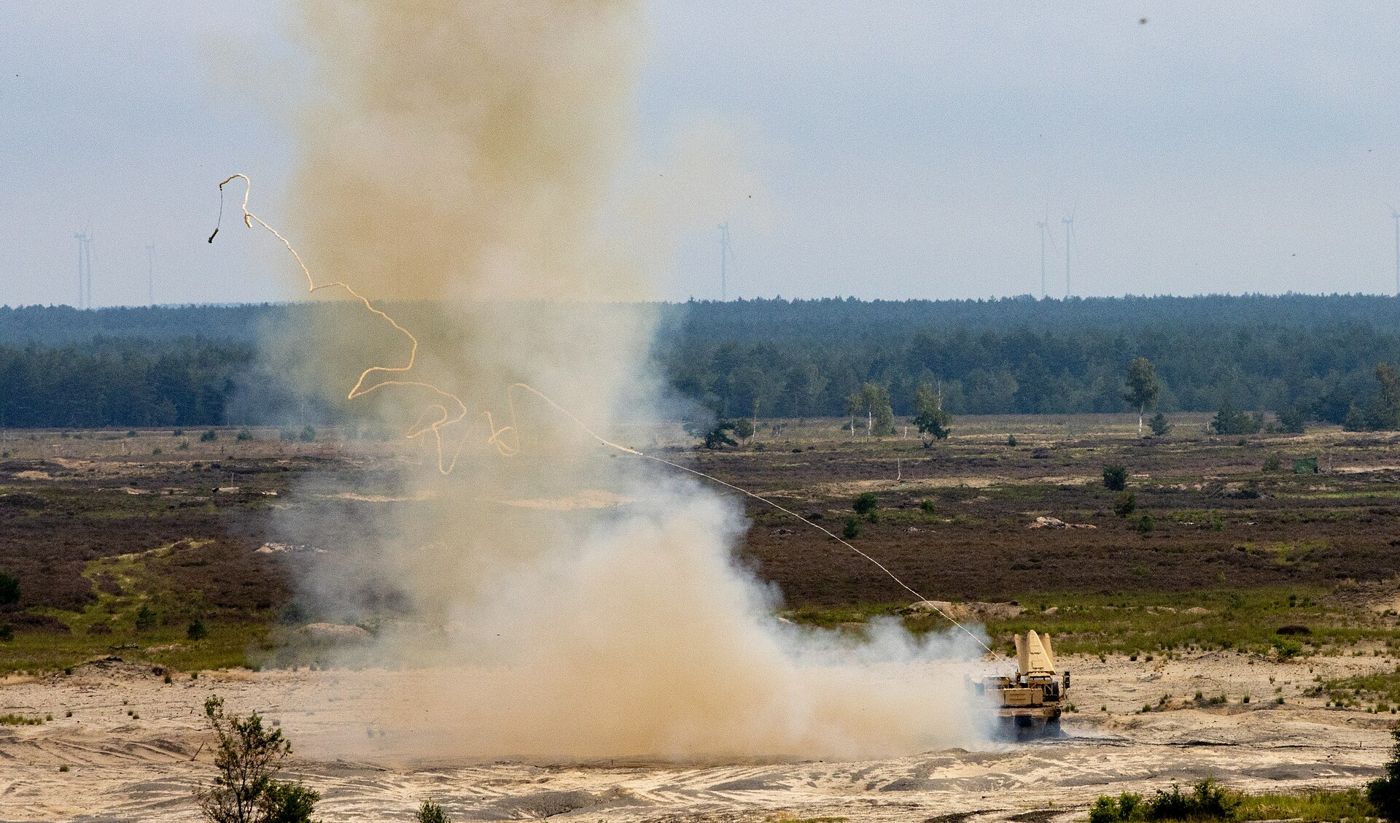
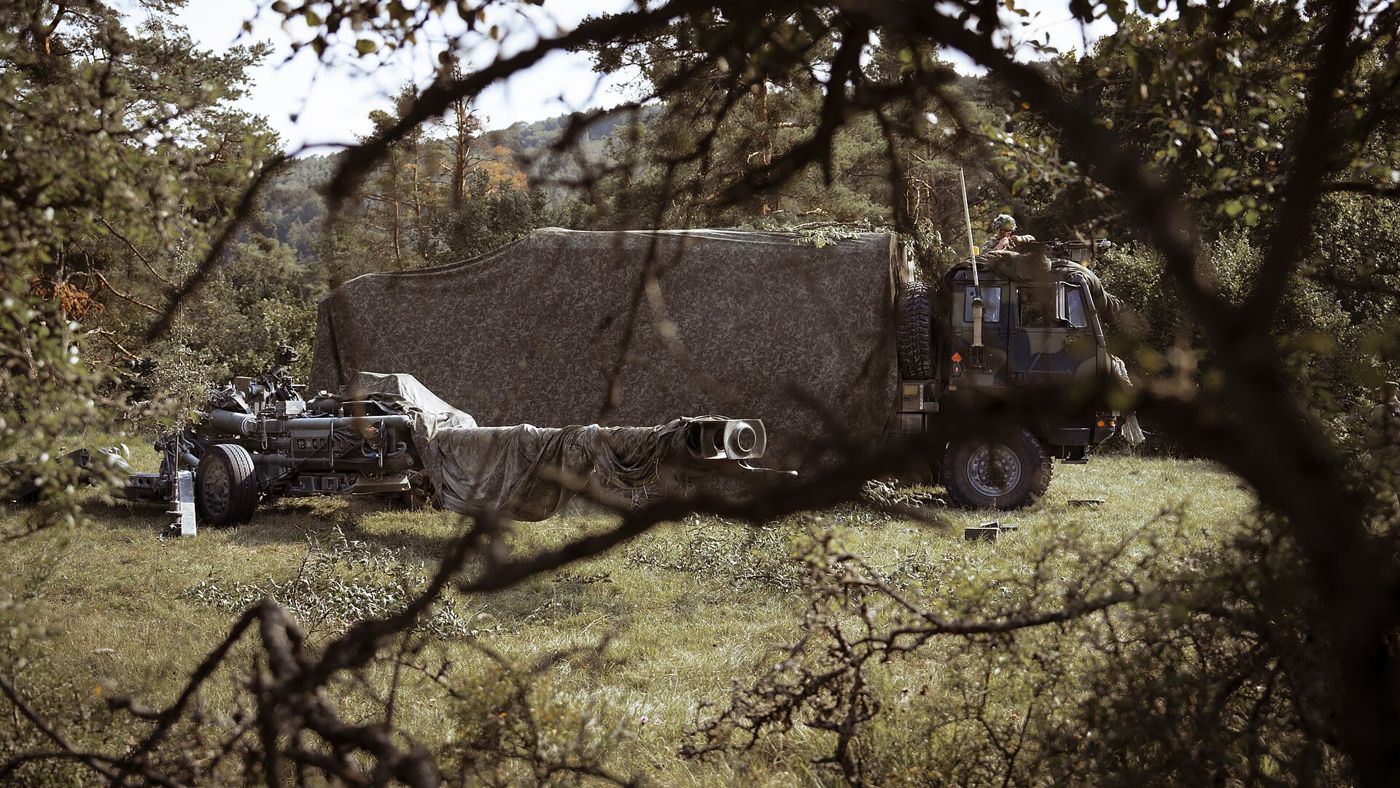
On Wednesday, September 2, 2026, at the Army’s Hohenfels Training Area in Bavaria, 42 soldiers of the 173rd Mobile Brigade (Airborne) were ruled dead in a single simulated strike. They had staged in the open, Stars and Stripes reported from the exercise, and an opposing-force drone operator called the result “wicked.” The brigade was fighting a resident enemy built to copy Ukrainian practice, in a rotation that the head of 7th Army Training Command said included “1,900 autonomous systems.” One of the 173rd’s units was an Unmanned Assault Battalion of about 600 soldiers, created to bring Ukraine’s drone lessons into the Army. Saber Junction was its last assignment in that role. The acting chief of staff, Gen. Christopher LaNeve, had ordered the brigade to refocus on airborne infantry work.
This article first sets out what public evidence shows about the drone-saturated “kill zone” along the front in Ukraine, where the record is consistent on depth and on what happens to vehicles, supply and the wounded, and thin on casualty shares. It then examines how far the U.S. Army has redesigned its brigades in response, and what the departure since April of the officials who drove that redesign leaves undecided.
Fifteen kilometers on each side, and getting deeper
The depths quoted for the zone look inconsistent until the measures are separated. Jack Watling and Nick Reynolds of RUSI, in field notes published in February 2025 after visits to Ukrainian brigades, described “battlefield transparency within 3 km of the line of contact,” with observation thinning out to 15 kilometers. Two months later Le Monde reported from Pokrovsk that the last 5 kilometers before enemy positions were known as the “death zone.” A CSIS brief by Seth Jones and Riley McCabe in January 2026 said vehicle movement had become difficult within 15 kilometers of the eastern front and that infantry walked 10 to 15 kilometers to their positions. In July 2026 a Reuters reconstruction put the strip at about 30 kilometers wide in places, straddling the line of contact, which is 15 kilometers on each side.
So the outer edge has moved little in the public record. What changed is what the edge means. In early 2025 it was where surveillance thinned. By 2026 it was where driving became dangerous. Reuters is careful about its own figure: depth varies with terrain and with the quality of the drone units on each stretch, the reconstruction is a composite built from Ukrainian accounts and battlefield video, and the agency could not interview Russian soldiers.
Beyond that edge the threat is extending. Reuters reports that cheap Russian Molniya drones can fly up to 50 kilometers. Justin Lynch and Kian Molani of the Special Competitive Studies Project, writing for the Modern War Institute on October 8, describe a Ukrainian “middle-strike” campaign that began in April 2026 with low-cost drones reaching as far as 200 kilometers, and say the M14 highway toward Crimea was littered with wrecked vehicles by late May.
Tanks work from hides and the wounded wait for bad weather
On armor, the RUSI authors found tanks and infantry fighting vehicles concealed and dug in, usually within 3 kilometers of the front, driving out to fire and then returning to cover. Reuters, 17 months later, described traditional armored vehicles as almost obsolete close to the line. The RUSI report is also the source of the most quoted statistic, that tactical drones account for 60 to 70 percent of damaged and destroyed Russian systems. It attaches two qualifications that travel less well. Between 60 and 80 percent of Ukrainian first-person-view drones fail to reach a target, and the drones’ share of kills is high partly because Ukrainian units lack artillery; one brigade holding 18 kilometers of front had four working howitzers.
These numbers come from Ukrainian officers and have not been independently audited. The same is true of casualty shares. Le Monde cited drones as causing up to 80 percent of human losses around Pokrovsk, and Reuters says the vast majority of casualties are now caused by drones, but no public dataset allows either figure to be checked.
Supply and rotation are where the zone is most plainly documented. Ukrainian brigades told RUSI that roughly half their casualties were taken in the rear, where rotation and resupply put people in the open, so commanders cut rotations and left troops forward for more than a month. By 2026 a soldier named Serhii Krynitskyi told Reuters he had spent more than 300 days in one position. Ukraine netted more than 1,000 kilometers of road between January and mid-July 2026, according to Lynch and Molani, and Reuters reports that Russian drones fly through holes in the netting.
For the wounded, RUSI found that recovery had become a planned operation run at night or in fog and rain, with the wait running from hours to days. Its conclusion for NATO was blunt: “existing medical doctrine is not executable under modern combat conditions.” Reuters gives one case. Andriy Meskov, a 42-year-old drone pilot, had his knee shattered by a Russian drone last year, hid in a building under fire, and on the second night was carried to an uncrewed ground vehicle that took him about 2 kilometers to an ambulance. Ukraine’s defense ministry claims its ground robots have run more than 100,000 logistics and evacuation missions in 2026; that is a ministry figure.
The Army shrank its infantry brigades and gave them drone companies
The Army’s response has a paper trail. Defense Secretary Pete Hegseth’s memorandum of April 30, 2025, as summarized by the Congressional Research Service, told the Army to field unmanned systems and launched effects in every division by the end of 2026 and to put counter-drone capability in maneuver platoons by 2026 and companies by 2027. The next day Army Secretary Dan Driscoll and Gen. Randy George, then chief of staff, published a letter to the force promising to convert every infantry brigade combat team into a mobile brigade combat team.
CRS lists eight brigades converted in October 2025, the 173rd among them, out of 14 active and 20 National Guard infantry brigades. A separate CRS paper describes the new design: Infantry Squad Vehicles for every rifle squad, a multifunctional reconnaissance company with drone and electronic warfare platoons, and effects platoons holding counter-drone gear and loitering munitions. CRS gives its planned strength as about 1,900 soldiers against 4,500 for the old brigade. Stars and Stripes counted 3,300 soldiers from the 173rd at Saber Junction, a gap the public documents do not explain.
The heavy force has experimented too. In June the 3rd Infantry Division’s 2nd Armored Brigade sent scouts in unarmored Infantry Squad Vehicles 13 to 19 miles toward the opposing force at the National Training Center, Stars and Stripes reported. Its cavalry squadron commander said the unit was “about three times more lethal” than before, a claim no published data supports or refutes. He also said batteries ran short in the heat.
The most useful assessment comes from the other side of those fights. Three officers of the 11th Armored Cavalry Regiment, the training center’s opposing force, wrote in April that they had spoken of a “dead zone” reaching 10 to 15 kilometers behind a visiting brigade’s front, and that drone-equipped brigades had now pushed a similar zone into the regiment’s own rear. Two such rotations produced the highest combined losses in more than two and a half years. Two or three hand-held jammers and shoulder-fired missiles per battalion could not cover a spread-out force, and the authors judged that dispersion “had likely passed its point of maximum utility as a measure of force protection.” All of this happened in the Mojave Desert, without the layered obstacle belts and fortifications of the Ukrainian front.
No public document reviewed for this article says whether the end-of-2026 deadline for every division will be met. CRS adds that it is not known how the Army’s resizing of helicopter medical evacuation units, carried out in seven aviation brigades in December 2025, will affect casualty evacuation.
The officials who ordered the redesign left between April and September
George was forced out on April 2, months after his vice chief. Gen. Christopher Donahue gave up command of U.S. Army Europe and Africa on July 2 without a stated reason. Driscoll resigned, and his last full day was the Wednesday of the Hohenfels strike. Defense One, citing one unnamed source, reported that he left over Hegseth’s removal of the generals tied to his program.
Hegseth told House appropriators on May 12 that “there are some things that we needed to get another look at” in the initiative. CRS wrote nine days later that it was not known whether a formal review would follow. In August LaNeve issued a roadmap, “The Army Azimuth,” which Defense News quoted as calling on the Army to “counter enemies who employ stand-off weapons, including unmanned systems and WMD” while stressing basic soldiering. The same report confirmed the end of the drone battalion, first reported by the Wall Street Journal. Defense News dates its tasking to November 2025; Stars and Stripes says it was established in January.
Four members of Congress from both parties wrote that the unit had been a prudent answer when “the character of warfare is changing faster than a conventional formation’s ability to adapt.” They requested a briefing by September 21 on the data and analysis behind the decision and on whether it originated in the Army or with Pentagon leadership. No public account of that briefing has been located.
The direction above the brigade is different. Hegseth announced an Autonomous Warfare Command on September 30, to stand up by October 2027, and the Army followed on October 9 with a Futures and Autonomous Systems Command. The institution is building headquarters for autonomy while closing a unit that practiced it.
The strongest objection is that Ukraine’s stalemate is not America’s war
The case against redesigning around the kill zone is serious. Antonio Salinas, an active-duty Army officer, and Jason LeVay wrote in War on the Rocks in February: “Drones are thriving because they compensate for institutional weakness.” In their account drones stand in for absent airpower and inadequate maneuver. Retired Lt. Gen. Eric Wesley, who advises a counter-drone company, put it this way: “Drones have made maneuver more costly. They have not made it less necessary.” Amos Fox, in Small Wars Journal, called the mobile brigade a “Potemkin force” with too few soldiers to hold what it takes.
Some evidence supports them. RUSI’s caveats about failure rates and missing artillery point the same way. So does an account by Robert Rose for the Modern War Institute of a Ukrainian operation near Lyman in May 2026 that, by Ukrainian claims, retook up to 250 square kilometers after drones cut Russian logistics well to the rear. Maneuver was possible there. It came, though, after one side won the drone fight in depth, and the Mojave rotations show a contested zone forming between two American-equipped forces with no trenches at all. The dispute is therefore less about whether to adapt than about where the drones and the people who fly them should sit. LaNeve’s order fits a view that they belong inside ordinary formations. The Army has not published the analysis behind it.
What is undecided as the Army gathers in Washington
The Association of the U.S. Army’s annual meeting opens on October 12 with an acting secretary, Adam Telle, and an acting chief. Several questions are open. Army budget documents cited by CRS call for 25 brigades to convert across fiscal 2026 and 2027 and most by 2030, pending further experimentation, and no public statement reviewed here says whether the 1,900-soldier design survives Hegseth’s second look. The House’s defense bill would require an annual transformation report each February 15, but that provision is not yet law. The sources reviewed also do not show who, if anyone, is rewriting evacuation doctrine for a rear area under constant observation while medical evacuation units are being resized.
Those decisions rest with Hegseth, with Telle and LaNeve or their confirmed successors, and with the armed services committees. The nearest thing to a test result is whatever the Unmanned Assault Battalion reported from Hohenfels before it reverted to infantry, and no public version of that report has been located.
This analysis draws on the public sources linked in the text. Send corrections to [email protected].