In early October 2026, soldiers of Ukraine’s 71st Separate Airmobile Brigade sent a ground robot into the Sumy region to bring back another robot that had hit a mine. The operators, working remotely, could not get the damaged machine secured for the tow. According to the brigade’s own account, relayed by United24 Media, the job was finished only after a local woman passing on a bicycle stopped and helped guide them.
The episode is small, and it says more about the state of ground robotics than most demonstration videos do. Getting an uncrewed vehicle from one point to another across open country is now a solved problem often enough to be shown to visitors. What happens when the vehicle stops short is the part that decides whether a unit gains capability or acquires a new chore. The U.S. Army is about to run a fresh round of soldier assessments on logistics and casualty-evacuation robots, and those assessments should count interventions, immobilizations, recoveries and maintenance hours as carefully as they count completed routes.
The ground keeps changing under the software
Aircraft and surface vessels move through media that are mostly empty and mostly uniform. A ground vehicle is in continuous contact with its obstacle. DARPA’s description of its Robotic Autonomy in Complex Environments with Resiliency program makes the comparison with road driving directly: commercial self-driving work benefits from structured, predictable environments, while military off-road autonomy “has lagged due to the challenging complexity of off-road terrain environments.” Grass can hide a ditch, a puddle can be two inches or two feet deep, and the same track that held on Tuesday will not hold after rain.
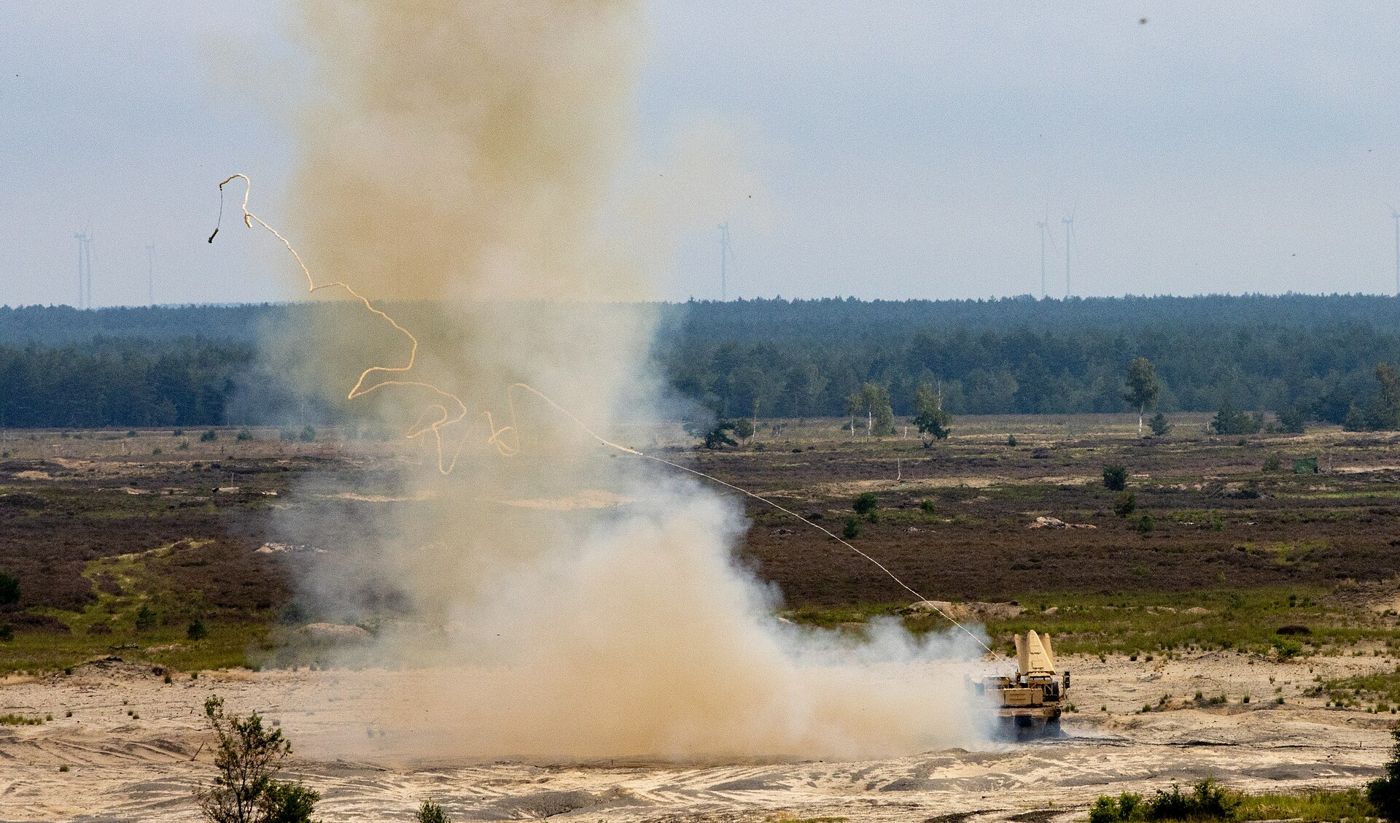
RACER made real progress against that problem. In its fourth experiment, in Texas in late 2023, DARPA reported more than 30 autonomous runs over courses of 3 to 10 miles and more than 150 unoccupied miles at speeds up to 30 miles per hour. By the program’s end it had put a 12-ton tracked platform through a mine-clearing breach with the 36th Engineer Brigade at Fort Hood in October 2025 and had run reconnaissance for the 11th Armored Cavalry Regiment at the National Training Center the following month, as DARPA described when it declared the program finished on January 14, 2026. Those are demonstrations, conducted with soldiers.The closing announcement does not give figures for how often a human had to step in or how often a vehicle had to be pulled out, and those are the numbers a battalion commander would ask for first.
An Army official made the gap plain after a June 2024 software assessment for the Robotic Combat Vehicle. As quoted in the Congressional Research Service’s report on that program, the official said industry was “nowhere near where people think in terms of off-road autonomy.”
What the Army learned before it cancelled the Robotic Combat Vehicle
The Robotic Combat Vehicle was the Army’s most ambitious ground robot effort, and it ended in May 2025. Days after the Army Transformation Initiative was announced, Breaking Defense reported an internal email from the program executive officer for ground combat systems, Maj. Gen. Glenn Dean, saying that “RCV will stop development.” The same report cited an Army source who objected to paying almost $3 million per vehicle to a single vendor. CRS, updating its report on May 20, 2025, judged that the Army was moving in a cheaper direction and that its earlier efforts had been “less than fully successful.”
Cost drew the headlines. The soldier experiments that preceded cancellation were more instructive about workload. In July 2024 a cavalry troop from Fort Cavazos ran reconnaissance and security missions with four robotic vehicles directed from two control vehicles. Brig. Gen. Chad Chalfont later said the unit found it needed a third control vehicle to operate effectively, and it used three for four robots at the National Training Center that September. A robot that requires most of a crewed vehicle to supervise it has moved soldiers back from first contact, which is worth something, but it has not saved any.
The infantry experience pointed the same way. The experimental robotics platoon that the Maneuver Center of Excellence took to Project Convergence in March 2024 assigned nine of its 18 soldiers to the ground section. Its leaders wrote in Infantry magazine that the section was effective but that “there is still much work to be done ruggedizing, powering, and controlling these robots at range.”
The robotic mule is the real test case
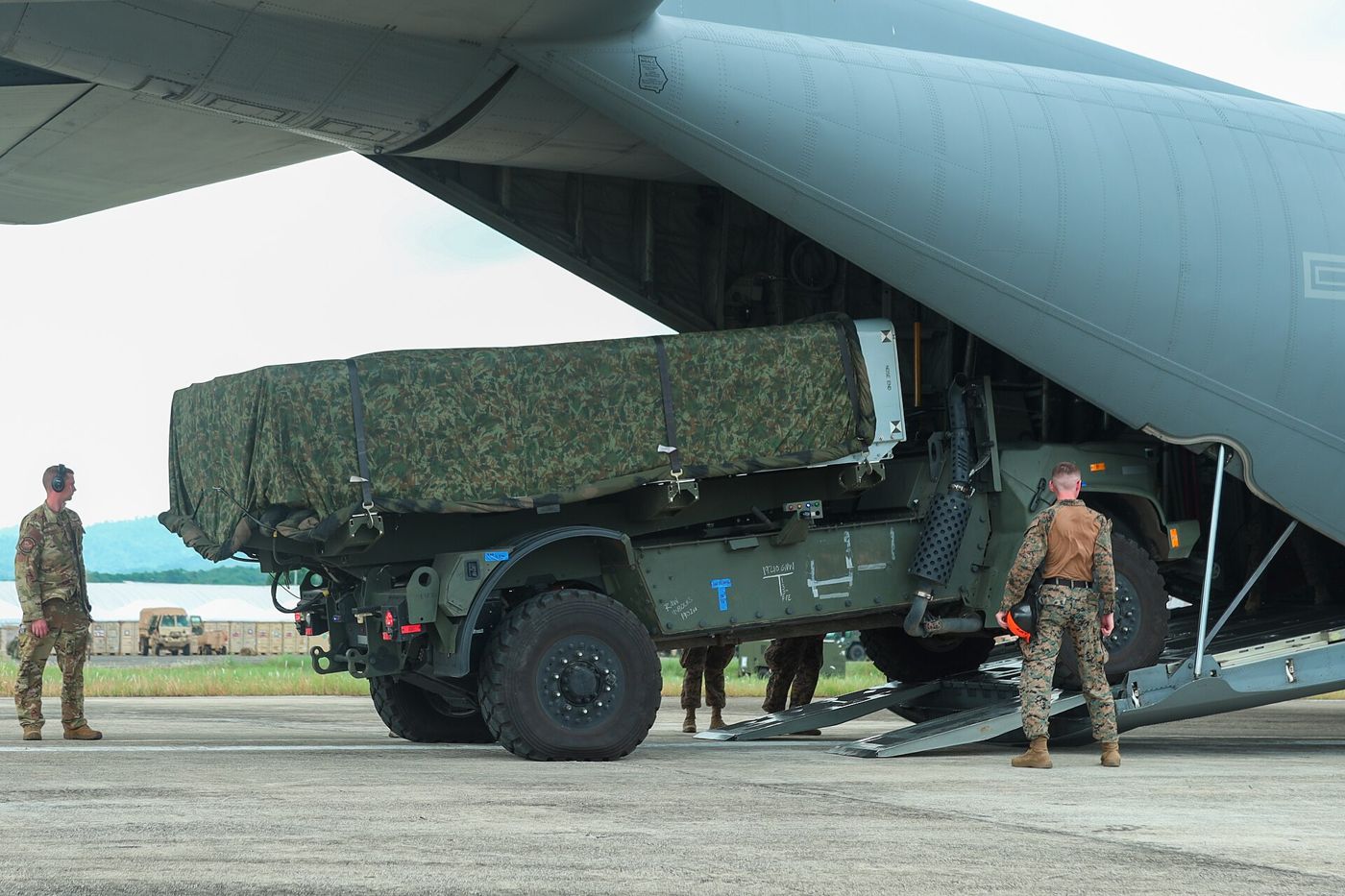
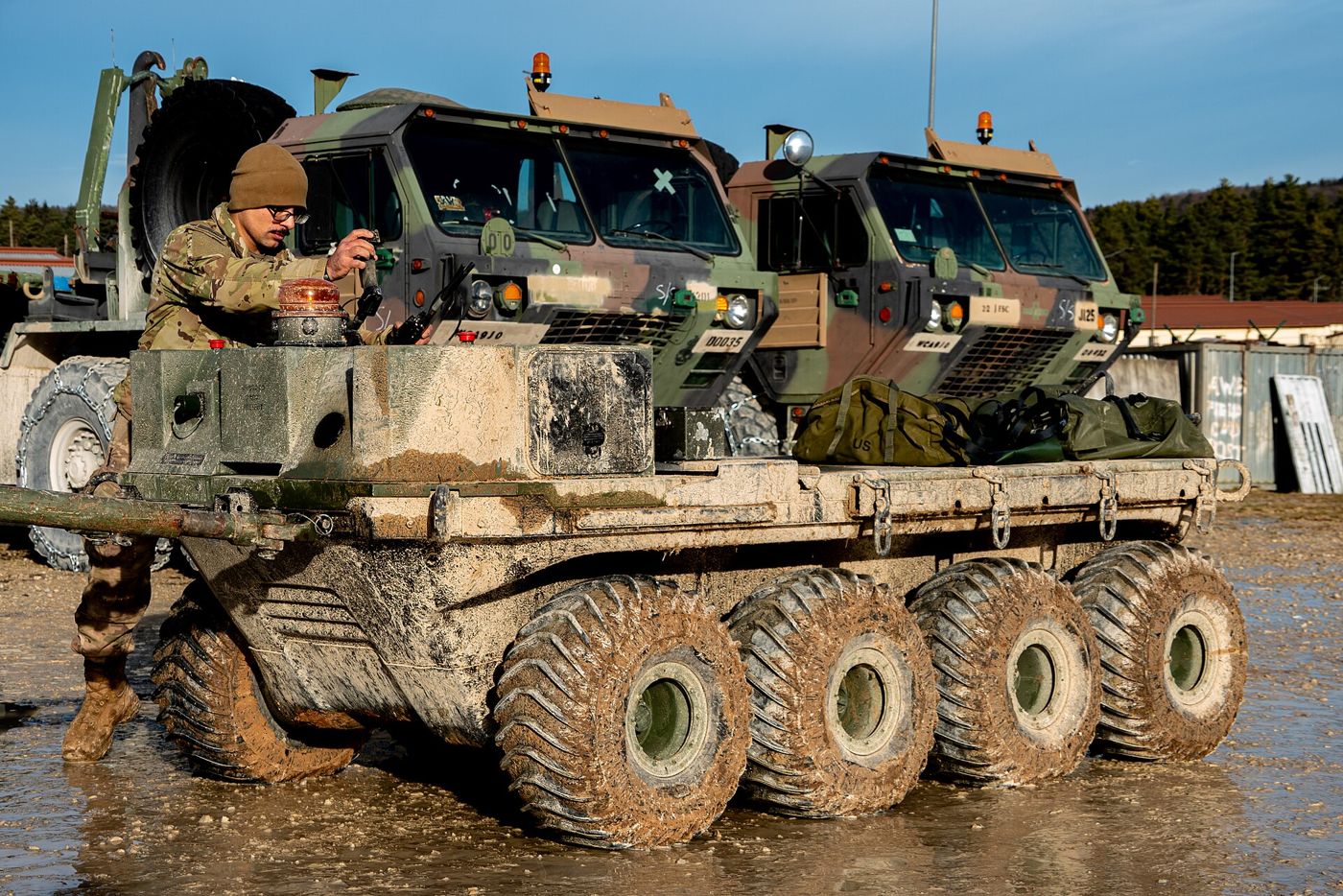
The Army’s current ground robot plans are more modest and more likely to reach units. The Small Multipurpose Equipment Transport is already fielded in its first increment, an eight-wheeled carrier from General Dynamics Land Systems; Task & Purpose reported in November 2022 that the Army had bought 409 across three contracts. In September 2024 the service chose American Rheinmetall Vehicles and HDT Expeditionary Systems to build eight Increment II prototypes each under awards totaling $22 million, with payload doubled to 2,000 pounds, a production decision planned for late fiscal 2027 and an objective of up to 2,195 vehicles. Defense Daily reported in February 2026 that the Army had pulled testing forward to the spring and would send prototypes to a Transforming in Contact unit.
Newer efforts sit alongside it. In July 2026 the Army named vendors for autonomous resupply and autonomous breaching prototypes. In August it selected six companies for the Infantry Last Tactical Mile program, each to deliver four prototypes of a vehicle that can carry supplies forward and bring casualties back, with an operational assessment in an Army unit due to begin in early 2027. The April solicitation asked for a vehicle able to move at least two casualties and navigate without GPS.
The Army has shown it can gather the right kind of evidence. Between May and October 2025 the 75th U.S. Army Reserve Innovation Command contacted every unit fielded with the first-increment mule, collecting 80 responses that it consolidated into 48 company-level datasets and handed to the program office. The public account of that study describes its method and says nothing specific about what soldiers reported. Vendors bidding on the second increment, and units about to receive prototypes, would benefit from seeing the findings.
Ukraine shows the cost of the last hundred meters
Ukraine supplies the only large body of operational data, and it comes almost entirely from remotely driven machines. The defense ministry said in September that ground robots had completed about 112,000 logistics and evacuation missions in 2026, rising from 7,511 in January to 25,143 in August. The volume is real and so is the attrition. Lesia Bidochko, writing in War on the Rocks in September, cited one brigade losing two to five robots a day and listed difficult terrain and broken communications alongside mines and drones as causes. She also described a soldier brought out alive by the seventh robot sent for him, after six were destroyed.
The support structure behind those numbers deserves as much attention as the missions. Jorge Rivero, writing for the Modern War Institute in March 2026, reported that Ukrainian brigades embed engineering workshops of ten to twelve people in their unmanned systems battalions, and that loss of the control link is the most common cause of a failed mission. A ground robotics commander in the 108th Separate Assault Battalion told Euromaidan Press in May that many platforms fail on first use at the front, with wet black soil clogging running gear and soldiers reworking electronics themselves. Ukraine accepts these costs because the alternative is sending people. The commander of the U.S. 2nd Cavalry Regiment drew a similar conclusion after trials of more than 17 vehicles in Europe, telling Breaking Defense in March that cheaper was better because the regiment expects to put robots where it will not get them back.
Count the interventions and the recoveries
An expendable robot and a recoverable one need different support, and an evaluation should force the choice into the open. For the 2027 operational assessment and for the mule’s production decision, the Army should require every trial to log each human intervention with its cause, each immobilization with the time, people and equipment needed to free the vehicle, and the maintenance hours spent per hour of operation. It should record how many soldiers were occupied by the robots at the busiest point of each mission. Trials should include wet ground, night movement and degraded links, since those are the conditions Ukrainian operators describe as decisive.
Results should be reported in that form to the program office, to the vendors and to Congress, which CRS has already advised to examine the viability and affordability of the Army’s next ground robot plans. A vehicle that finishes nine routes in ten and needs a squad and a tow strap for the tenth may still be worth buying. The unit receiving it should know that before it arrives, and should know who is expected to bring the strap.
This analysis draws on the public sources linked in the text. Send corrections to [email protected].