An imagery workflow can become brittle when each supplier requires a different search, format and permissions process. A common interface can reduce that friction, but it must preserve the source, collection details and license that determine whether a particular image is suitable for the intended analysis.
Astro Dynamic’s October account says it signed a reseller agreement with Vantor and made its imagery available through Data Sphere. The company describes access through its existing API and STAC format, with license terms built into platform permissions. Vantor’s WorldView material adds another commercial source. This is an access and distribution development, not the launch of a new constellation or a statement that all archive imagery is freely usable. Read the source account.
Standardized access must preserve the differences that matter
A uniform search result should still retain collection time, sensor characteristics, processing and usage restrictions. Those attributes can change whether images can be compared and whether an analyst may share the resulting product. An interface that removes repetitive integration work is useful only if it keeps that evidence available.
Permission filtering also needs to remain attached to the intended use. Finding an image does not establish permission for every downstream product or recipient. The announcement describes the platform’s licensing approach without publishing a full independent audit of its enforcement. Customers still need to review the actual agreement applicable to their work.
An access layer should make provenance easier to retain
STAC provides a way to describe and discover geospatial assets, but a common format does not make every asset equivalent. Collection geometry, spectral bands, processing and licensing can differ even when results arrive through the same interface. A customer needs those differences to remain inspectable. This is a general workflow consideration, not an independent audit of Data Sphere’s implementation. The announced integration can reduce repetitive access work while still requiring an analyst to decide whether a particular collection is suitable for the intended comparison.
An illustrative change-detection task might compare an older archive image with a recent collection from another source. The analyst would need to account for timing, viewing conditions and processing differences before treating a visual difference as a real change on the ground. A common API can help retrieve both assets without resolving that interpretation automatically. The source does not claim that the reseller agreement eliminates those analytical steps. The article therefore treats access convenience and intelligence quality as related benefits that require different supporting evidence.
The licensing workflow also affects collaboration. A team may be allowed to view an image while a contractor, partner or downstream recipient has a different entitlement. A platform permission can help enforce an agreement, but the relevant use still needs to be specified. A useful demonstration would show a permitted search and delivery together with an appropriately restricted request, preserving the reason for the difference. That is a suggested test, not a reported feature demonstration or legal interpretation of a particular customer contract.
The company’s reference to an established archive is an access proposition, not a guarantee that every location has an image at every desired date and quality. A request can return no suitable collection even when an archive is extensive. The operational value of multiple suppliers is the possibility of additional options, with availability still dependent on the actual search. No coverage percentage, guaranteed revisit or historical completeness estimate is inferred here. Those claims would require a defined area, period and acceptance standard rather than a general statement about archive size.
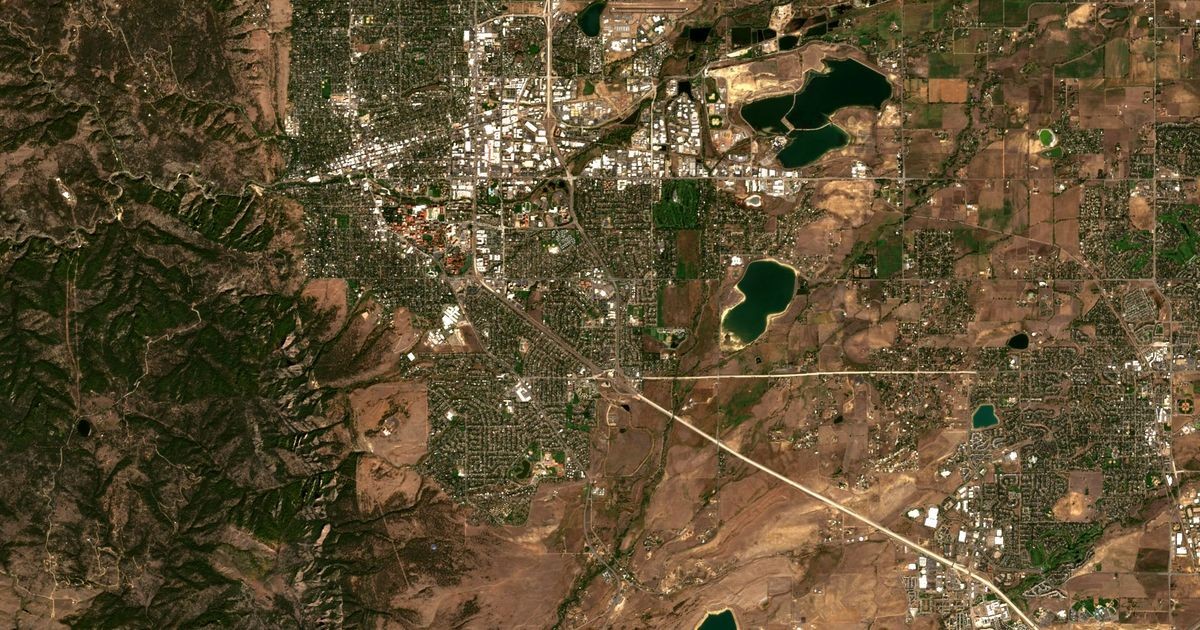
The cover image is deliberately labeled as context: the source identifies the Boulder view as Sentinel-2 imagery. It should not be used to demonstrate the newly added WorldView resolution or suggest that it was collected under the reseller agreement. Preserving that limitation keeps the visual and commercial claims aligned. A later customer example could show the announced integration directly, with the specific collection, license and delivery path retained. That would provide stronger evidence of the workflow benefit than a generic claim that all satellite imagery is now interchangeable.
The next milestone
The next useful evidence is a reproducible search-to-delivery workflow with provenance and permissions intact. A common API could make multi-supplier collection easier to manage. Its intelligence value depends on preserving the differences between sources while simplifying the steps used to obtain them.
What would change the assessment
Look for the next documented configuration, its test conditions and its support responsibilities. The current source establishes the announced stage; later results should identify what changed.
This analysis draws on the public sources linked in the text. Send corrections to [email protected].