An additional radar satellite can create more opportunities to collect imagery, but launch day is not the same as the first dependable customer service. A spacecraft must be contacted, checked and commissioned before planners can rely on its contribution to a collection schedule.
ICEYE announced the launch of four synthetic-aperture-radar satellites aboard Bandwagon-5 from Cape Canaveral on October 20. The release reports communications with the spacecraft and identifies commissioning as the next stage. Two satellites support Portugal’s Atlantic Constellation with CTI and the Portuguese Air Force. The announcement establishes launch and early contact, not completed operational acceptance of every satellite. Read the source account.
Count usable collections rather than spacecraft alone
More satellites can improve collection opportunities while tasking conflicts, geometry, downlink and processing still affect delivery. The useful service evidence is a supported collection-and-delivery envelope for the commissioned configuration. A launch count alone cannot establish how quickly a particular customer will receive an interpretable image.
A sovereign mission also needs a defined relationship between spacecraft, ground systems and the people operating them. Ownership can change control of tasking without eliminating the work of calibration, maintenance and interpretation. The release does not supply a public performance record for the new Portuguese mission’s completed operations.
What commissioning adds to an orbital milestone
Early contact can establish that a spacecraft is communicating without establishing that its imagery is ready for routine use. Commissioning provides the next opportunity to check the spacecraft, calibrate its payload and assess the products generated by the complete chain. The launch release does not publish a completed acceptance package for the four satellites. That distinction matters because a customer buys useful observations, not simply successful orbit insertion. A later service announcement can therefore be a separate substantive milestone even when the launch itself went as planned.
A useful first-imagery account would preserve collection time, processing level and the conditions under which the image was produced. A selected sharp image can show that a sensor produced a result while leaving revisit, delivery and repeatability as separate questions. This is an assessment framework, not a claim that ICEYE has failed any of those checks. The public launch information supports the narrower conclusion that additional hardware reached orbit and entered the next stage of preparation. It should not be expanded into an independently verified service guarantee.
For the Portuguese mission, sovereign control also involves people and ground infrastructure. A customer may need authority over tasking, access to downlink and processing, and procedures for protecting and distributing products. The two satellites’ inclusion in the Atlantic Constellation is a specific program relationship, but it does not by itself describe every national operating responsibility. A useful subsequent account would identify which functions the Portuguese organizations perform and which are supplied as external services. Those details would make the sovereignty claim more concrete without requiring confidential operational information.
An illustrative customer request might concern a coastal area at a particular time. Whether one of the new spacecraft helps depends on its orbit, tasking availability, collection mode and the downstream delivery process. The overall constellation may provide alternatives, but a count of additional satellites cannot answer the request on its own. This example explains why capacity should be assessed through a service envelope rather than through hardware totals. It is not a prediction of a specific collection opportunity or a disclosure of an operational schedule.
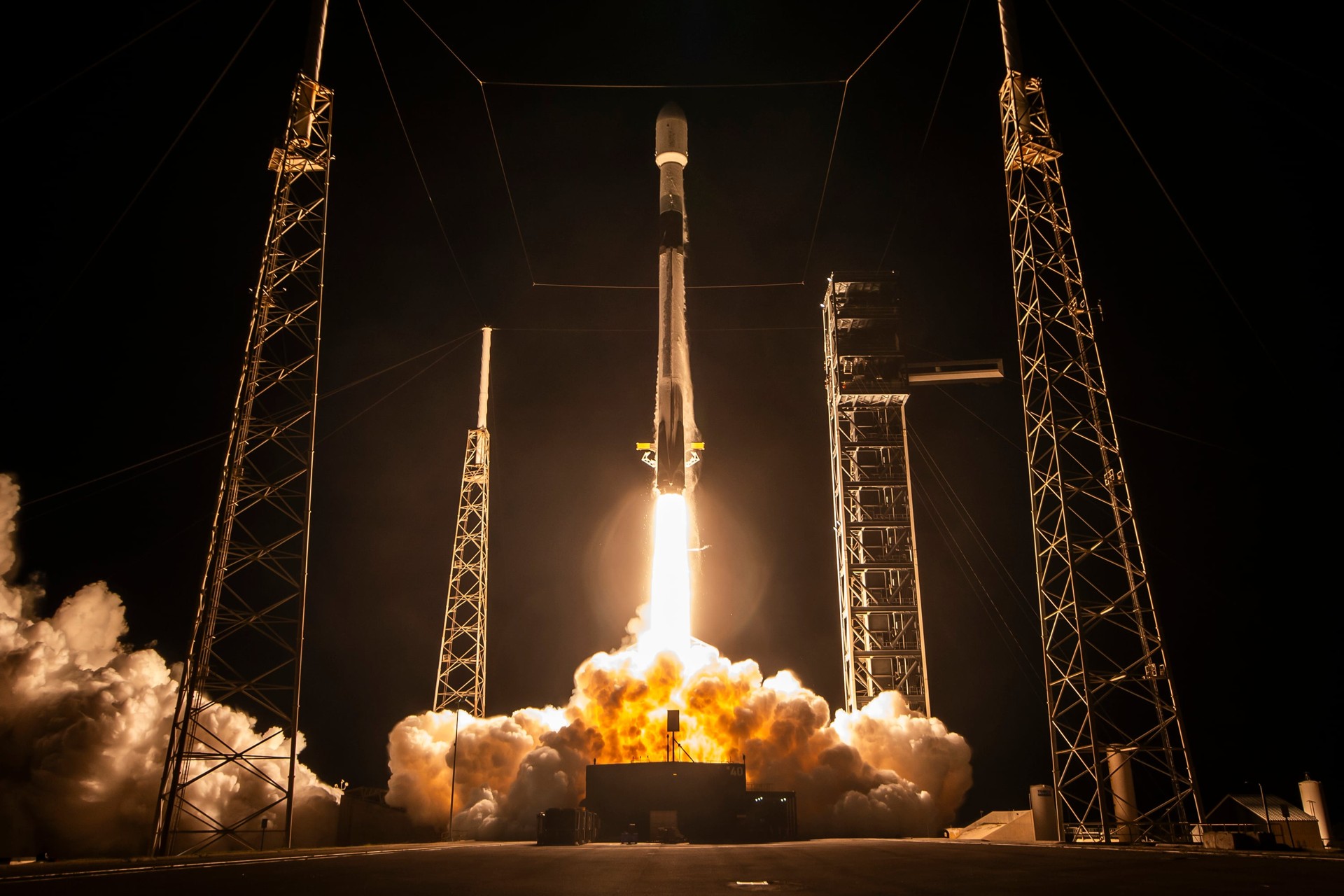
The source image has its own boundary. The credited SpaceX launch photograph documents the launch setting supplied with the announcement; it does not show radar-image quality, commissioning completion or the Portuguese ground segment. Retaining that credit and date helps keep the visual evidence aligned with the reported milestone. The next public evidence can add those later stages when they occur. Until then, the four-satellite launch is a concrete expansion step whose eventual contribution to dependable imagery remains conditional on the work that follows orbit insertion.
The next milestone
The next milestone is commissioning followed by usable imagery and service evidence. If the additional spacecraft enter dependable operations, they can expand available capacity. Keeping that conditional step visible makes the successful launch meaningful without turning an early orbital milestone into a guarantee of continuous observation.
What would change the assessment
Look for the next documented configuration, its test conditions and its support responsibilities. The current source establishes the announced stage; later results should identify what changed.
This analysis draws on the public sources linked in the text. Send corrections to [email protected].