Persistent sensing helps maritime autonomy only when operators can turn observations into useful decisions. A camera's field of view is one part of that problem. Its behavior on a moving vessel and its fit with the crew's work are equally important. HGH's latest naval recognition offers a useful opportunity to demand evidence on those practical questions.
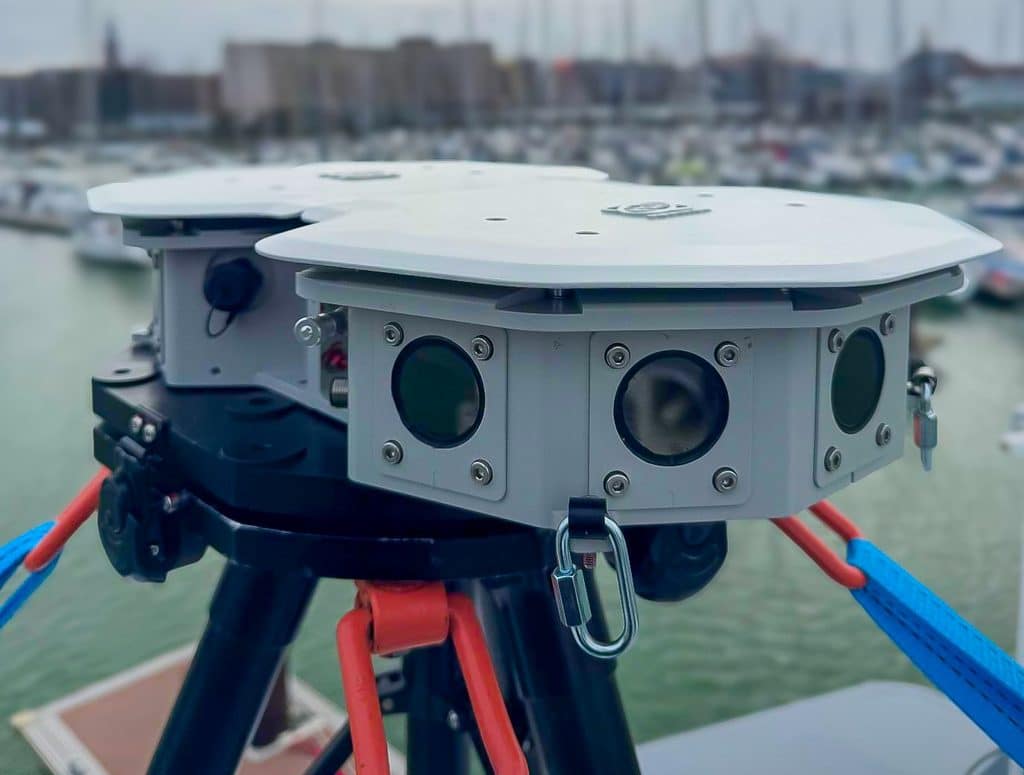
A company release carried by Naval News on November 5 says HGH's SPYNEL-F received the French Navy's Perséus label at a November 4 ceremony. The recognition follows a January 2026 trial aboard a Maritime Gendarmerie patrol vessel. HGH describes panoramic infrared surveillance for vessels and uncrewed surface vehicles, including navigation support and man-overboard detection. Further testing on four vessel types is planned. The recognition is new; the initial trial is older. Read the source account.
What the evidence supports
Our assessment is that the next round of vessel trials could be more informative than the label itself. Different installations can expose how mounting position, vessel motion and the surrounding scene affect the information an operator receives. A common sensor may support several missions, but each mission has a different tolerance for missed observations and unnecessary alerts.
The near-term test
The short-term benefit is a route for user evaluation and integration work. The account does not disclose comparative detection results or a fleet procurement decision. It therefore supports a conclusion about engagement with naval users, while leaving the scale of operational benefit open. Keeping that distinction clear makes the recognition more useful to prospective customers.
The longer-term case
Over time, persistent infrared observations could add to the information available to an autonomous vessel or a remote supervisor. That requires a tested connection from sensing to interpretation and response. A detection that arrives without usable context can add workload. A well-presented observation with known limits could help an operator choose where to focus attention.
A surveillance evaluation should begin with a clearly defined task. Detecting a person in the water, supporting navigation and monitoring another vessel do not present identical visual conditions or response requirements. Success in one task cannot establish equal performance in the others. Customers should ask for the test conditions to accompany any result, including the viewing arrangement and how the relevant object was presented to the operator. This is particularly important when a sensor is proposed for both crewed and uncrewed platforms, where the available supervision and the consequences of a missed observation may differ.
False alerts and missed events should be considered together. A setting that makes more potential objects visible can also increase the material a supervisor must examine. That tradeoff may be acceptable in one mission and impractical in another. We would therefore prefer an account of operator workload during a representative task over a collection of selected successful images. The available release does not provide that account. The planned vessel trials offer an opportunity to produce it, with clear distinctions between what the sensor shows and any interpretation or decision made elsewhere in the system.
Integration evidence matters after the initial detection as well. A remote operator needs the observation to arrive with enough context to act, and a record may need to remain useful when reviewed later. The evaluation should examine delays, lost connections and how the system communicates a gap in coverage. These are proposed tests, not reported features of SPYNEL-F. They would help establish whether a persistent sensor produces persistent awareness in practice. That is the distinction on which the broader autonomy value rests, beyond the merit of the infrared hardware itself.
Our assessment
We would look for results from the planned vessel tests that explain conditions, alert behavior and operator use. That would establish where SPYNEL-F is effective and where other information is still required. The recognition is a constructive step. Evidence of useful surveillance across the intended platforms is the stronger long-term argument.
Sources and reporting dates
Underlying development date: 2026-11-04. Analysis published November 5, 2026. Company performance claims are attributed to their source; assessments and evaluation criteria are ours.
This analysis draws on the public sources linked in the text. Send corrections to [email protected].