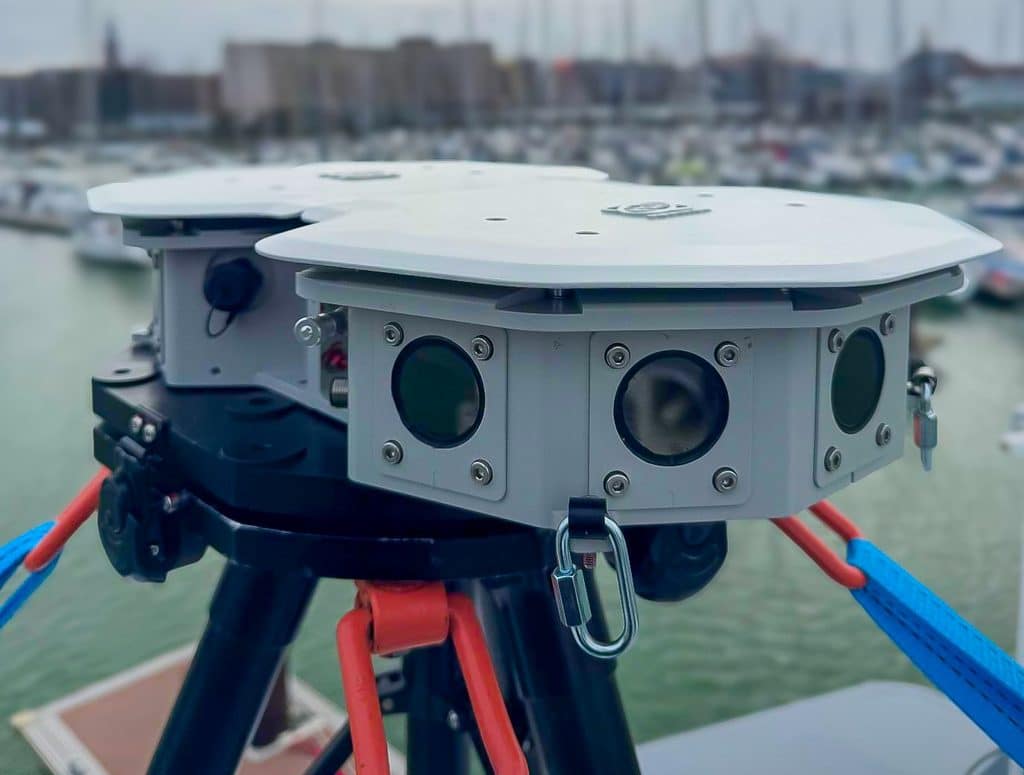
A disconnected intelligence system still needs to explain what it knows and how old that knowledge is. Local processing can keep observations available when a network is unreliable, but a display can also make incomplete information appear settled. That is the central test we would apply to Juno Industries' Guardian and Logan.
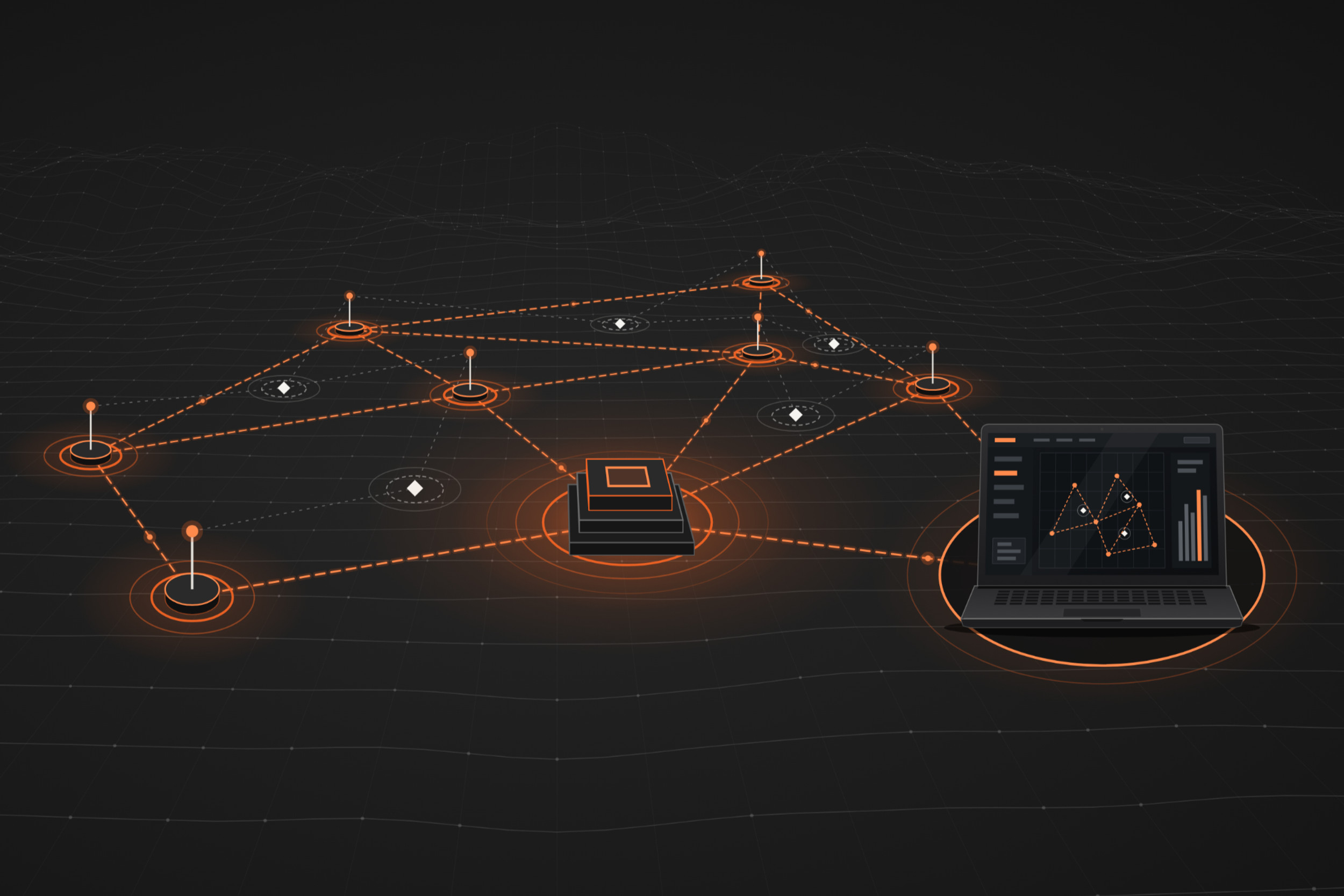
Janes' November 5 reporting examines products announced by Juno on September 29. Guardian combines sensor nodes and edge processing with Logan's aggregation and display software. Juno says the system can operate independently of GPS and address communications problems automatically. The company describes both products as pre-commercial after beta field-testing. Today's coverage assesses the architecture and its limits; it does not present the September launch as new. Read the source account.
What the evidence supports
The appealing idea is to keep useful work close to the sensor. A remote team could retain local processing when a connection to a larger headquarters is interrupted. The harder question is whether different parts of the system maintain a consistent account of events. A self-recovering communications link does not, by itself, prove that observations collected during the interruption have been reconciled correctly.
The near-term test
The immediate opportunity is a focused customer trial. Users should be able to see when information was collected, which sensor supplied it and how uncertainty changes during a disconnection. These are evaluation requirements, rather than capabilities established in the announcement. Public claims about resilience deserve tests that deliberately interrupt the network and then inspect the resulting picture.
The longer-term case
The longer-term opportunity is distributed intelligence that remains useful across remote operating locations. To earn that role, the system needs to preserve provenance, expose stale data and make conflicting observations understandable. Otherwise, local autonomy could accelerate the delivery of a misleading picture. More speed would then increase the burden on the person responsible for the decision.
A common operating picture is most useful when it also communicates disagreement. Two sensors may observe the same event at different times or with different confidence. Combining their outputs into one clean symbol can simplify a display while concealing the reason for uncertainty. An evaluation should therefore examine whether users can inspect the underlying observations and understand why the system reached a conclusion. Juno's public description establishes the intent to aggregate information. It does not provide enough evidence to determine how effectively those difficult cases are represented to a decision-maker.
Disconnection creates a second class of questions. Local nodes may continue collecting information while their shared picture becomes older. When connectivity returns, they need to distinguish new observations from repeated reports of the same event. A useful trial would deliberately create those conditions and ask operators to interpret the result. We would also test how clearly the display signals information age during the interruption. Without that context, a technically functioning system could still leave a user making a decision on a picture whose freshness they misunderstand. That is an information-quality risk worth testing explicitly.
The pre-commercial stage is the right time to make these requirements concrete. A customer can define which observations matter, how much delay the task can tolerate and what explanation is needed before action. The resulting trial can then reveal where automation helps and where human review remains essential. That is a more demanding test than showing a unified display, but also a more useful route to adoption. A successful result would give buyers a bounded, defensible use case. It would avoid asking them to accept a general promise of resilience across every mission and operating environment.
Our assessment
Our view is favorable toward the operational problem Juno has chosen and reserved about the performance evidence presently available. The next persuasive milestone is a documented field evaluation of information quality before, during and after disconnection. A sovereign sensor system earns trust through that continuity of evidence as much as through ownership of the technology.
Sources and reporting dates
Underlying development date: 2026-09-29. Analysis published November 5, 2026. Company performance claims are attributed to their source; assessments and evaluation criteria are ours.
This analysis draws on the public sources linked in the text. Send corrections to [email protected].