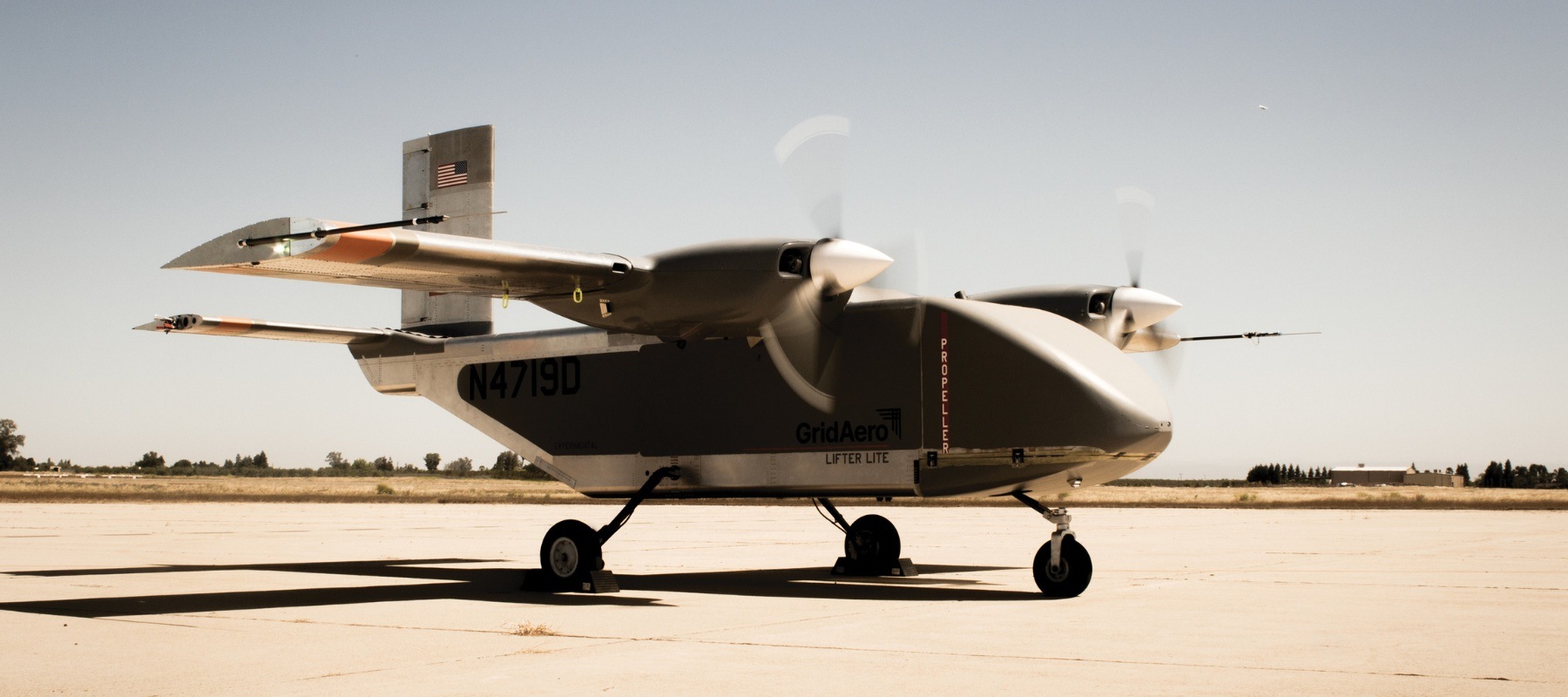
An autonomous logistics aircraft has to be reproducible as well as flyable. If its intended advantage depends on affordable numbers, the design must accommodate available materials, repeatable assembly and a support chain that can keep up with orders. The factory is part of the capability proposition.
Oshkosh Defense and Grid Aero announced a partnership on November 2 to industrialize Grid Aero’s Lifter aircraft. The companies identify design for manufacture, production engineering, supply-chain planning and customer engagement as the initial work. Grid Aero describes a modular, piston-powered design using widely available materials. Oshkosh brings its Wisconsin manufacturing infrastructure and experience producing defense systems. The release sets a pathway toward production readiness without announcing an aircraft order quantity or delivered fleet. Read the primary source account.
Design choices become production choices
Our analysis is that the partnership’s strongest near-term contribution could be finding production constraints while the design can still change. A component that is acceptable on a prototype may be difficult to obtain consistently. An assembly step that works with a small specialist team may be hard to inspect or repeat across a larger workforce. Those issues affect cost and schedule even when the aircraft’s flight behavior is satisfactory.
A modular payload approach raises a related configuration question. Common structure and interfaces can support different missions, but each accepted combination still needs a clear definition. Buyers will need to know what remains common, which payload changes require additional qualification, and how manufacturing records preserve the configuration actually tested. The partnership announcement does not settle those questions.
The companies’ manufacturing ambitions should also be separated from operational autonomy. Industrial scale does not by itself establish navigation reliability, contested-environment performance or successful delivery of a particular payload. The announcement describes the industrial relationship and intended applications; it does not publish a representative mission test protocol or production acceptance results.
What an early customer can assess
The immediate benefit for a potential customer is a clearer account of who would help turn the design into repeatable equipment. A useful next discussion would connect aircraft configuration to an achievable manufacturing plan, including supplier dependencies, inspection and support. Factory capacity in general is less informative than a demonstrated process for the specific article a customer intends to buy.
Over time, a successful collaboration could connect new aircraft design work with established production disciplines. That would matter most if it produced consistent hardware without erasing the cost and adaptability advantages that attracted customers in the first place. Design simplification, manufacturing investment and mission acceptance all have to reinforce one another.
A manufacturing route needs a configuration to repeat
Design-for-manufacture work can expose choices that are difficult to see in a prototype demonstration. Assembly access, inspection steps and component tolerances influence how consistently a production team can reproduce a design. Those considerations can improve an industrial plan without yet establishing a production rate. The partnership announcement should be read as a way to undertake that work.
The next useful evidence would connect a named aircraft configuration to acceptance procedures and a support arrangement. A delivered airframe is only one part of a transport service: operators also need to know how it is maintained, how mission equipment is fitted and which changes affect the approved configuration. The source does not publish a customer acceptance record for a new production batch.
For prospective users, an industrial partnership can reduce uncertainty about who might build and support a platform. It leaves other uncertainty intact, including the quantity ordered, delivery schedule and performance in the intended mission. Keeping those questions separate makes it possible to recognize a meaningful manufacturing step without treating it as an operational logistics network.
The next decisive milestone is a production-representative Lifter with a disclosed customer evaluation or acceptance pathway. Actual output, delivery cadence and support experience would then allow observers to assess the industrial claim. For now, the partnership is a substantive production-planning step, with the evidence for scaled supply still ahead.
Source organizations: Oshkosh Defense, Grid Aero.
Source partnership video
Video supplied with Oshkosh Defense’s Grid Aero partnership announcement. Production planning does not establish an order or completed deliveries.
This analysis draws on the public sources linked in the text. Send corrections to [email protected].