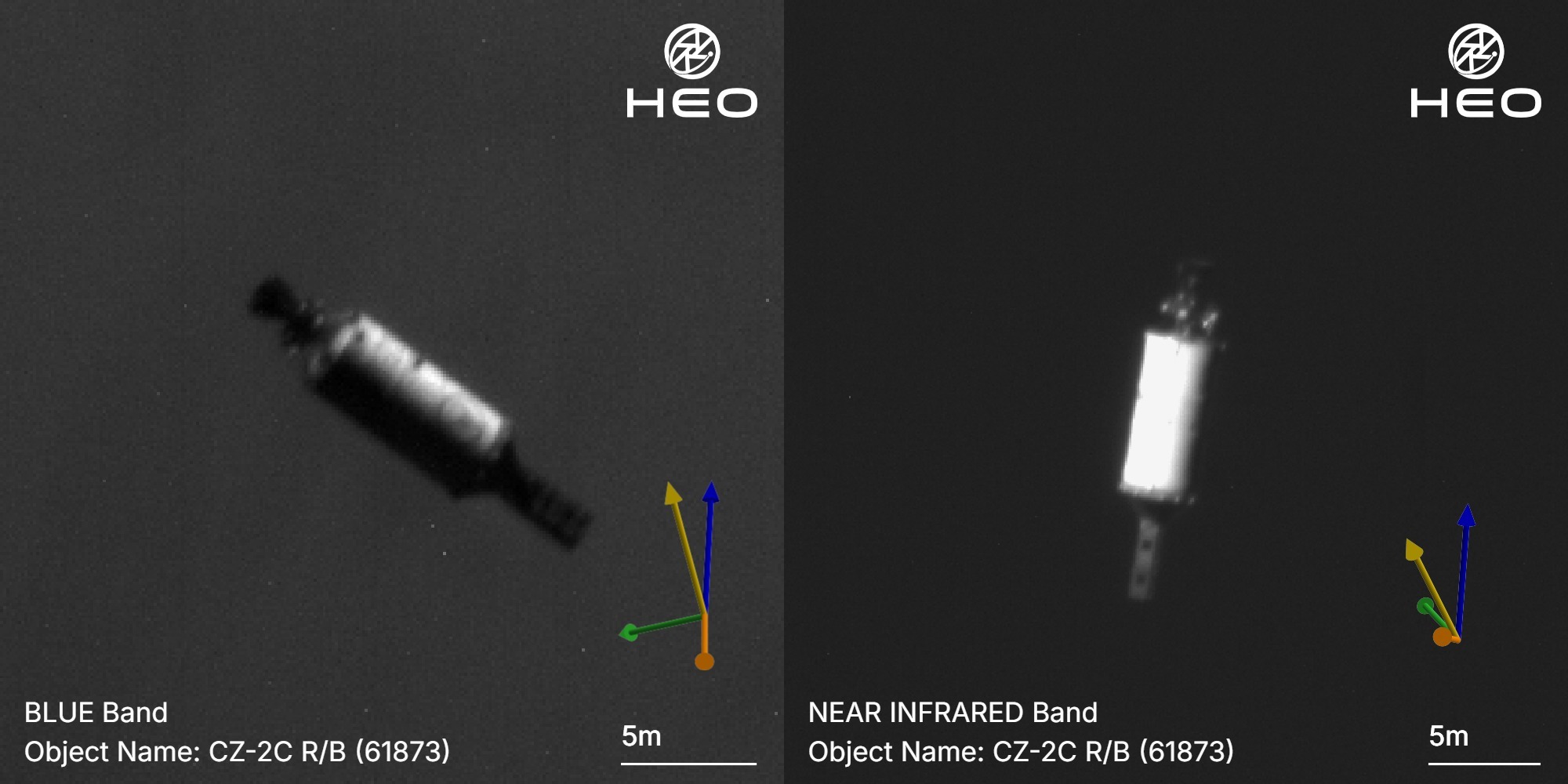
Inspecting an object in orbit requires an opportunity to see it from a useful position, not simply a camera with an attractive resolution specification. A service needs access to collection capacity, tasking and analysis over time. Commercial commitments can therefore matter to space-domain awareness by making the availability of that capacity more predictable. They do not eliminate the physical and analytical limits of a particular observation.
Satellogic and HEO announced a three-year non-Earth-imaging agreement on October 29, running through 2029 with a seven-figure minimum annual commitment. The companies describe expanded access to Satellogic’s constellation and report more than sixteen hundred successful captures under their most recent annual agreement. This is a new capacity and commercial commitment following an existing relationship, rather than the first demonstration that an Earth-observation satellite can image another object in orbit. Read the primary source account.
Access creates opportunities rather than guaranteed views
More available spacecraft can provide additional viewing geometries and collection opportunities. Whether a particular target can be observed usefully still depends on the actual opportunity and the requirements of the customer’s question. The announcement describes the breadth of the access arrangement, while not promising that every target can be imaged at any requested instant or under identical conditions.
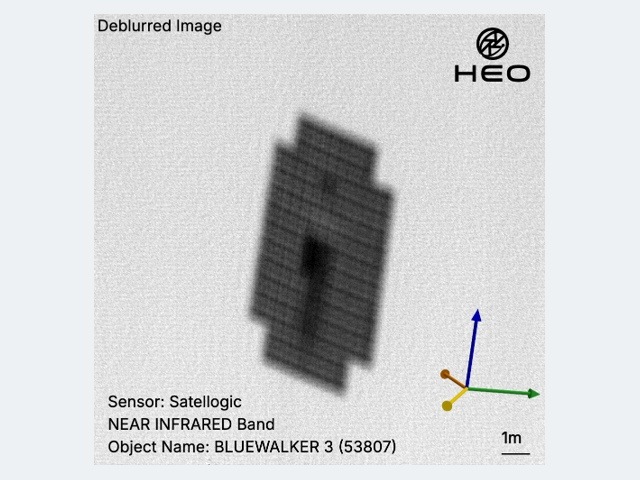
The release includes an image of AST’s BlueWalker 3 captured on October 24 using NewSat 46. The supplied caption identifies a distance of 17.22 kilometres and resolution of three centimetres per pixel. Those conditions belong to that observation. They should not be generalized into a fixed resolution for the entire service or interpreted as evidence that every feature of every observed spacecraft can be identified with equal confidence.
A capture is an input to analysis
An image can reveal information about an object’s visible state while leaving ambiguity about cause, function or intent. The quality of an intelligence product depends on how the observation is interpreted and combined with other evidence. A count of successful captures describes collection activity, not the number of independently confirmed conclusions produced. Both measures can be useful, but they answer different questions about the service.
For a customer, an inspectable product should retain the observation time, viewing conditions and uncertainty attached to the interpretation. That enables later evidence to confirm or revise the assessment without detaching it from its source. It also helps prevent an especially clear image from giving all conclusions drawn from the service an appearance of certainty that the individual observations may not support.
The commitment changes planning incentives
A minimum annual purchase commitment can give the suppliers a more stable basis for planning capacity and development. The public release does not disclose the full pricing structure or guarantee the economic outcome of the arrangement. Its concrete commercial significance is the duration and minimum scale that the companies chose to announce. Claims about margins or total future revenue would require information beyond that disclosure.
The agreement covers several satellite generations, including spacecraft with inter-satellite links. That expands the set of assets named in the relationship without making their operating characteristics identical. An evaluation of responsiveness should connect tasking to the actual collection and delivery sequence. Access to a technical feature is an enabling condition; the useful evidence is how it affects an accepted customer product under representative circumstances.
The relationship began in 2020 with a co-funded engineering effort and an image of the International Space Station, according to the release. The reported growth from roughly thirty captures in 2021 to more than sixteen hundred in the latest agreement gives the new commitment a service history. It remains a supplier-reported activity measure rather than an independent assessment of every resulting product.
The near-term change is a longer, more explicit capacity arrangement for a service already performing collections. The wider possibility is a more dependable commercial layer of orbital inspection information for government and other customers. That depends on useful coverage, timely delivery and well-calibrated analysis, rather than capture volume alone. Subsequent reporting that connects collection opportunities to completed, qualified intelligence products would show how far the new commitment strengthens the practical service.
Source organizations: Satellogic, HEO.
This analysis draws on the public sources linked in the text. Send corrections to [email protected].