A network defender needs more than a warning that software is vulnerable. Somebody must identify the cause, make a change and verify that the system still does its intended job. AI that performs more of this sequence could help defenders handle a large repair workload. Its usefulness depends on the quality of the repair, not simply the number of patches proposed.
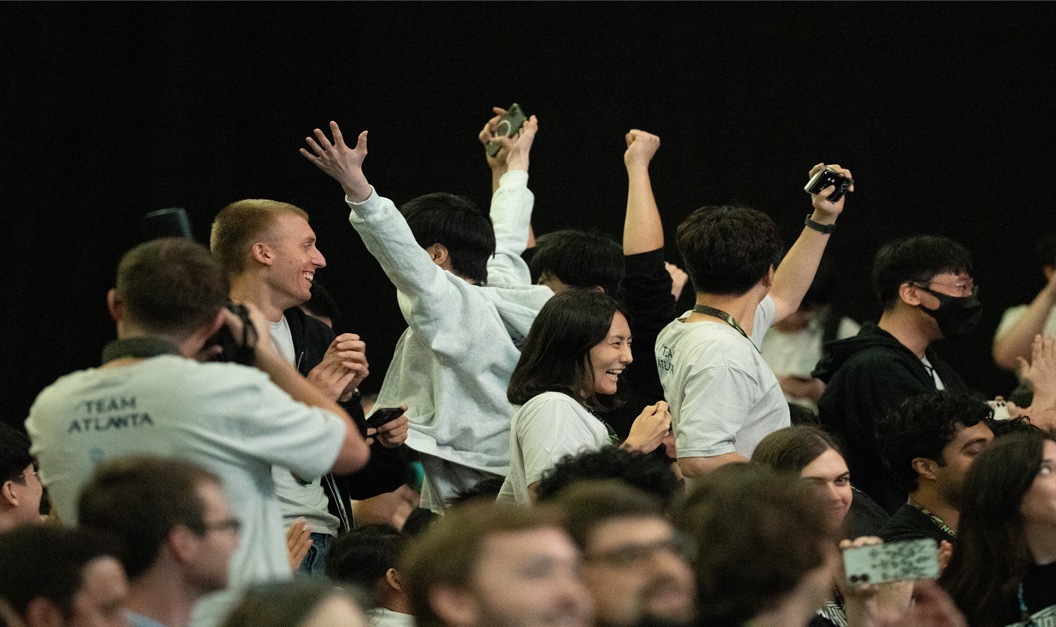
DARPA’s August 8, 2025 AI Cyber Challenge results name Team Atlanta as the winner of a competition for automated vulnerability discovery and repair. A 2026 research account of the competition discusses its design and lessons. These are evidence of a bounded competition and its systems. They do not establish that every tool can safely repair every operational military network.
A patch has two obligations
A vulnerability is a weakness that can let software behave in an unintended way. Repair must prevent that unwanted behaviour while preserving legitimate functions. A change that disables the affected feature might block an attack and still be unusable. An evaluation must therefore distinguish successful security repair from simply preventing the test case from running.
The causal record matters. A defender should be able to connect the proposed patch to the weakness it addresses and the checks used to assess it. That does not mean every internal model step is a reliable explanation. It means the software change, triggering case and verification results remain inspectable. Those artefacts let maintainers judge the repair on evidence.
Competition tests provide useful pressure because systems must produce concrete outputs under common rules. Their scope also creates limits. Selected software, supplied environments and scoring procedures define which abilities are demonstrated. A deployment claim needs to say which of those conditions are retained and which operational differences still require testing.
An autonomous repair system can also consume substantial computing resources while searching. That cost should be compared with time and effort saved by the maintainer. A faster candidate patch is not a complete saving if it produces a large verification burden or many unsuitable suggestions. The relevant denominator is a repair accepted into a maintained system.
Watch the footage
DARPA reviews its AIxCC competition and technology transition. Bounded challenge context, not evidence that these systems can safely repair every military network.
Video: DARPAtv · Original source ↗ · Video watch page ↗Adoption needs a maintainer’s operating method
For intelligence and defense organisations, automated vulnerability work can support protection of the systems used to collect and interpret information. It is defensive software engineering, not evidence that a model has been authorised to change every connected system. Deployment should specify which repositories and actions the tool is permitted to handle and how accepted changes are tracked.
The countercase is using AI for discovery and triage while retaining human patch development. That may provide value earlier, especially in difficult or safety-sensitive code. The appropriate division depends on the cost of checking outputs. A system that reliably reproduces a weakness can help even if its proposed fix is rejected.
One proposed assessment would follow suggested repairs through ordinary maintenance, including rejected patches and the reasons for rejection. Measure regression tests, review time and whether the weakness remains resolved after later changes. This connects competition progress to the lifecycle the customer actually needs to support.
Updates to the repair system deserve evaluation too. A new model or search tool can improve discovery while changing the kinds of patches generated. Retaining the configuration and test evidence makes it easier to compare releases. Otherwise a past competition success can become a permanent reputation attached to a tool whose behaviour has changed.
The public result is important because it makes automated repair concrete and testable. The next evidence should concern repeatable use by maintainers, not an assumption that an impressive challenge score eliminates all integration work. A useful defender reduces the unfinished repair queue without creating a new queue of changes that nobody can trust.
A repair has to survive the next ordinary change
Consider a hypothetical tool that fixes a reproduced crash by rejecting every input containing an unusual character. That may defeat the supplied test while blocking legitimate users. The maintainer needs evidence that the cause was corrected and the required behaviour preserved. The example explains why repair quality cannot be reduced to a count of previously failing cases that no longer fail.
Operational adoption also needs a clear return path. A patch may pass available tests and later expose an unforeseen dependency. The maintenance organisation should retain the proposed change, review decision and a way to recover the accepted configuration. These are ordinary software responsibilities that remain relevant when an AI system generates the code. Automation changes the source of the candidate repair, not the obligation to understand its deployment.
The wider consequence is that AI could reduce some of the labour between finding a weakness and shipping a defensible correction. Competition results make that possibility measurable within a bounded environment. The next step is evidence from maintained software, where review, regression and later changes matter. A smaller repair backlog is valuable when it consists of accepted improvements, rather than a larger pile of unreviewed patches.
What would change the assessment
Measure verified, regression-free repairs and review effort rather than count candidate patches.
The wider impact
AIxCC shows that AI-assisted defense can progress beyond alerts toward concrete software repair. The broader payoff depends on verifiable patches that maintainers can accept and support. Competition results establish a bounded capability; ordinary deployment tests must establish its cost and limits in a new environment. The most useful system repairs a weakness while leaving an evidence trail that explains why the software remains usable.
This analysis draws on the public sources linked in the text. Send corrections to [email protected].