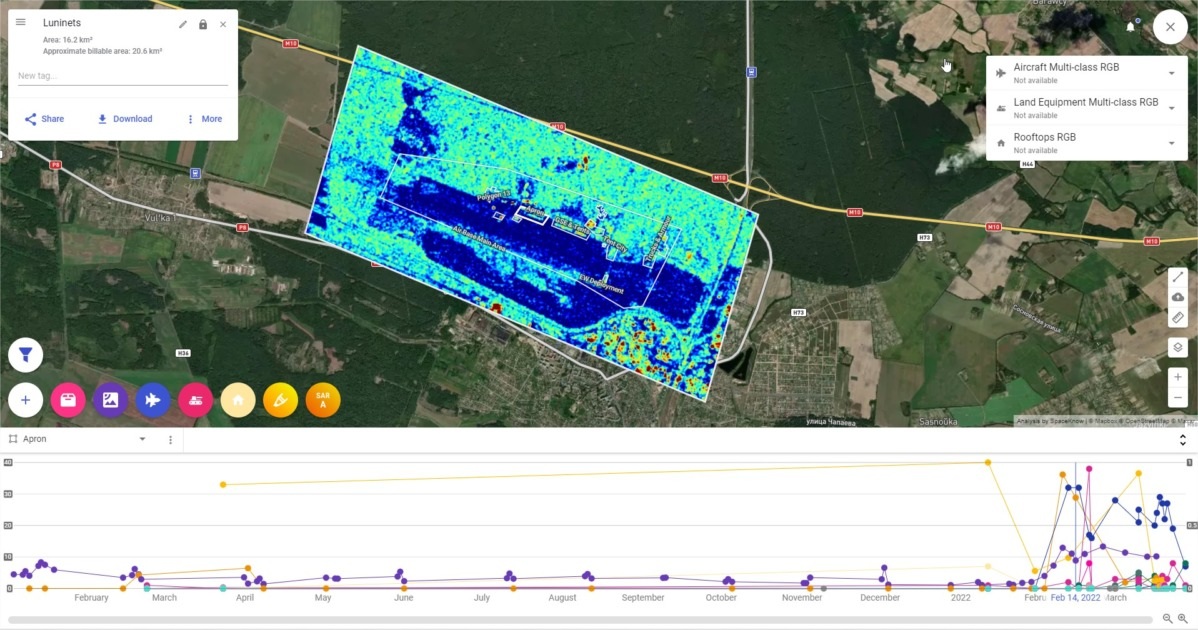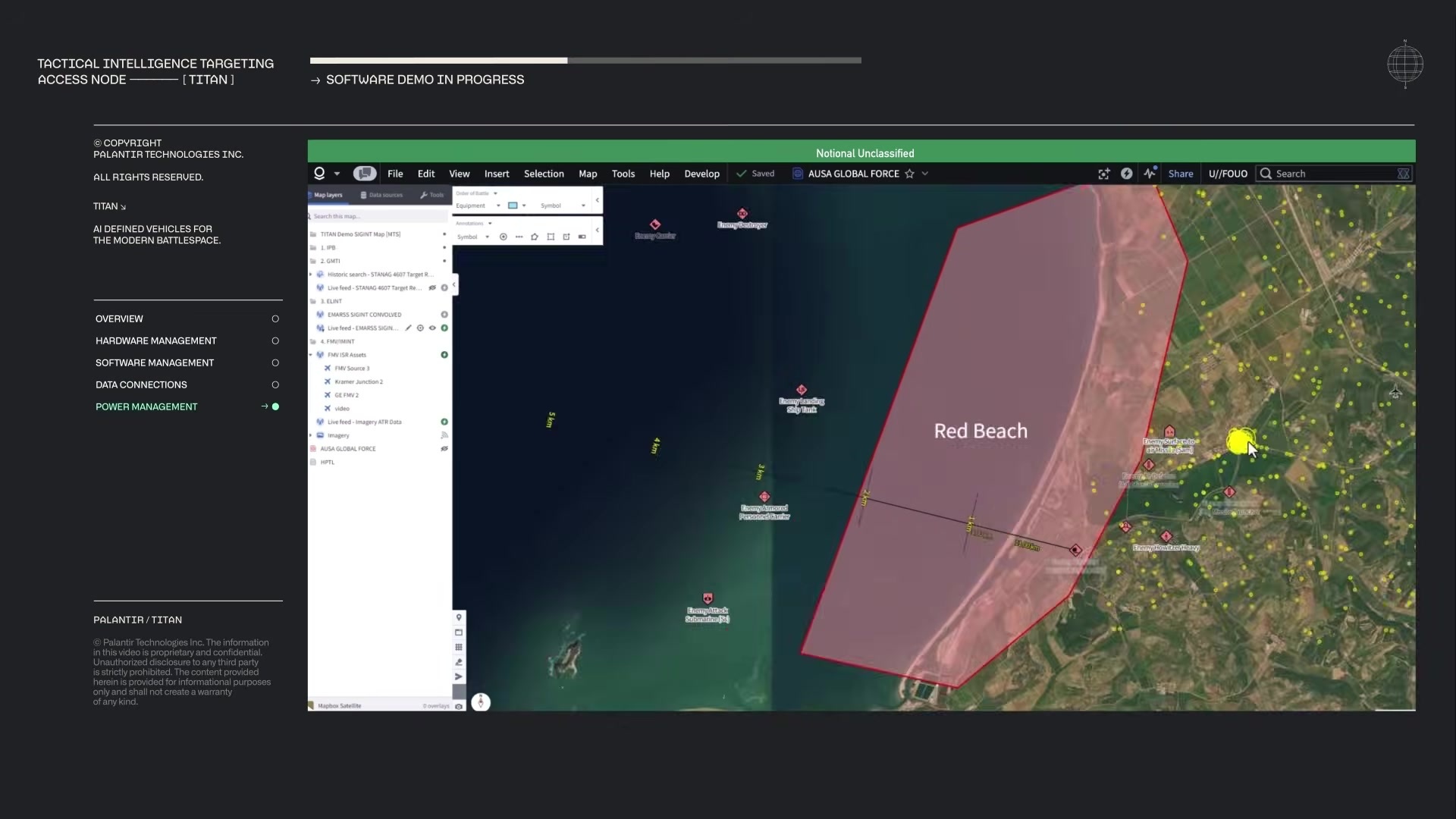
A photograph can show a vehicle without showing whether its radio is transmitting. Radio-frequency sensing can provide another kind of observation: where an emission appears to originate and how that activity changes. Combining those clues can help an intelligence team ask better follow-up questions, provided an emission is not mistaken for a complete account of the emitter’s purpose.
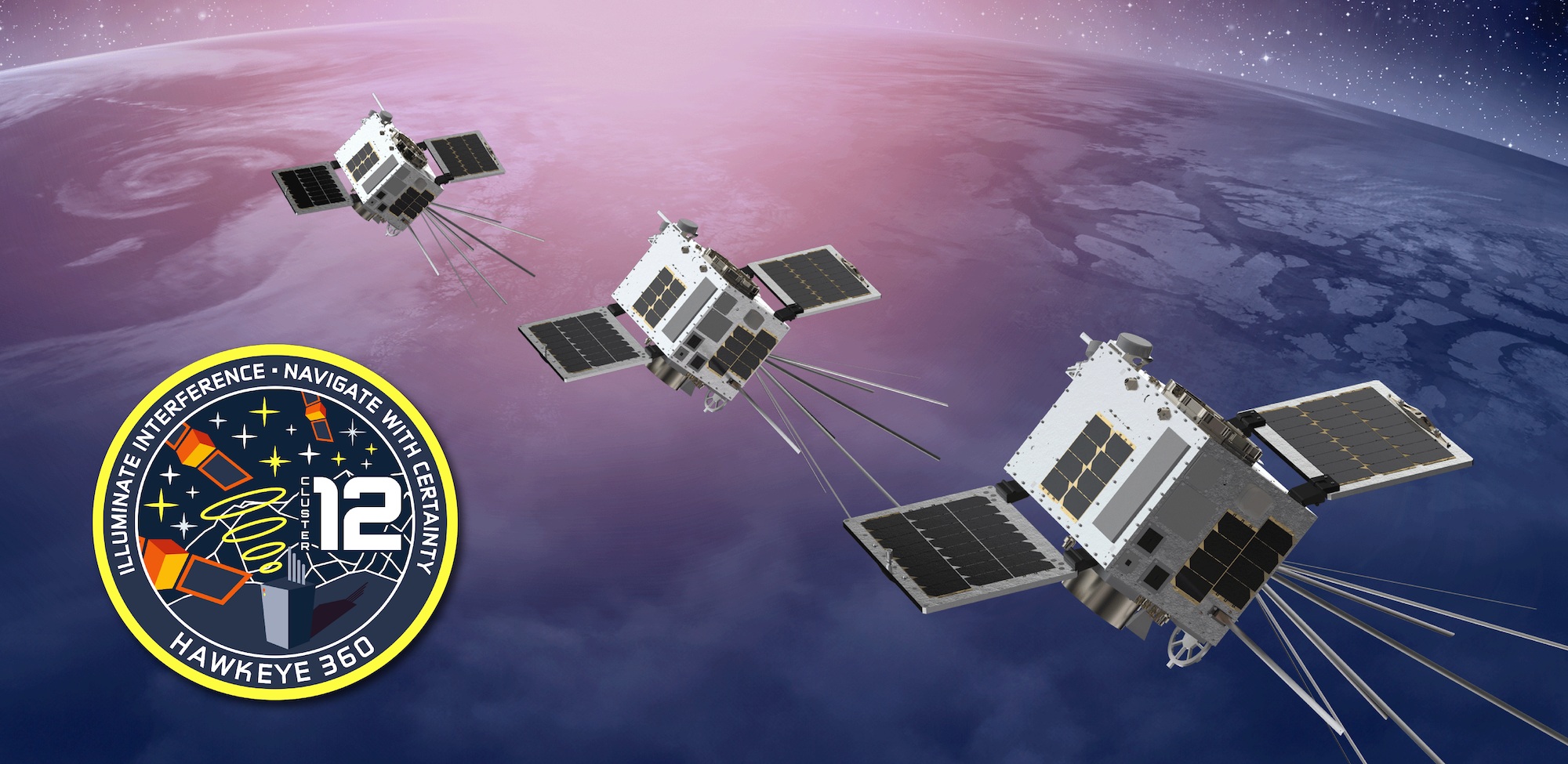
NRO’s August 17, 2026 announcement names HawkEye 360 for an operational commercial radio-frequency augmentation contract. Its 2019 integration-study announcement shows an earlier step in evaluating commercial RF and radar services. The progression establishes an acquisition transition. It does not disclose the award’s full value, coverage or operational error rates.
An emission is a clue with conditions
Radio frequency, abbreviated RF, is the part of the electromagnetic spectrum used by many communications and sensing systems. Measuring emissions can complement visible observations, especially when a question concerns activity rather than appearance. The information remains conditional on a signal being present, detectable and interpreted correctly under the collection conditions.
Geolocation estimates where a signal comes from. Its uncertainty should remain attached to the result. If several potential emitters lie inside that area, combining the measurement with an image can help narrow the possibilities. It does not automatically establish a unique identity. A fusion process should preserve competing explanations instead of converting proximity into proof.
Timing creates another limitation. An image and a radio measurement taken at different times may refer to a changed scene. A moving vessel could leave before the visual observation, or an intermittent transmitter could become quiet. The analyst needs to know the observation times and what relationship is actually supported. A common map can make separate measurements look more simultaneous than they were.
Silence also needs a careful interpretation. An absence of detected emissions can result from collection geometry, sensor limits or a genuinely inactive transmitter. It is not universal evidence that no activity occurred. Automated systems consuming commercial RF should distinguish unavailable evidence from a meaningful negative finding, just as image services should distinguish no change from no observation.
Operational buying raises the evidence requirement
Commercial augmentation can add capacity without requiring the government to own every sensor. That can be useful, but the customer inherits dependencies on service access, processing and delivery. The contract announcement does not settle how those dependencies behave during a surge in demand. Operational evidence should include the time and conditions under which the promised observation reaches the user.
The countercase is relying on imagery or existing government collection when those sources already answer the question. RF is most useful when it changes the interpretation or directs a better next observation. Adding another data feed because it is available can increase complexity without reducing uncertainty. The comparison should show what decision improved with the additional modality.
A useful evaluation would match radio observations to independently known events and retain ambiguous and silent cases. It would report the location uncertainty and analyst effort required to identify the relevant emitter. That proposed design tests the service’s contribution without demanding that it answer questions its measurement cannot settle.
The move from study to operational contract is therefore important but narrow. It says the customer has created a buying route for the capability. The stronger intelligence claim comes later, when the record shows that the additional observations changed a supported judgement under relevant conditions. Acquisition status and analytic authority should remain separate.
A useful second look, rather than a complete identity
Consider an illustrative maritime case. A radio observation suggests activity near several vessels, while a later image shows only two. One explanation is movement between observations; another is that the radio estimate covers a wider area than the image. The commercial feed adds value if it helps the analyst decide which follow-up collection would distinguish those possibilities. It adds less if software automatically selects a vessel name and discards the location and time uncertainty.
That is why the delivery format matters as much as the map display. A downstream system should receive the measurement’s time, an uncertainty area and the interpretation being asserted. It should not have to infer those distinctions from a coloured symbol. This is a proposed integration requirement, not an assertion about HawkEye 360’s classified deliveries. It connects the physical measurement to the authority a consumer can reasonably give it.
The broader shift is a more diverse intelligence picture assembled from government and commercial measurements. Diversity can close gaps when the sources answer different questions. It can also generate contradictions that require additional work. The best evidence of operational value would show that the new modality resolves a meaningful ambiguity, rather than merely increasing the number of observations on screen.
What would change the assessment
Preserve geolocation error, observation time and the meaning of silence in fused intelligence.
The wider impact
Operational RF buying broadens the commercial intelligence toolkit beyond what a camera can show. The larger opportunity is complementary evidence that directs better collection and interpretation. Its limits matter just as much: an emission can constrain an explanation without proving identity or intent. The most useful service preserves those distinctions so a fused finding becomes more informative, rather than merely more confident.
This analysis draws on the public sources linked in the text. Send corrections to [email protected].