Cloud cover and darkness can interrupt an optical intelligence picture at exactly the wrong moment. Radar satellites offer a different way to observe the ground. Their practical value still depends on who can request an observation, how soon it arrives and whether a user can distinguish a meaningful change from the measurement’s unfamiliar appearance.
Rheinmetall’s November 11, 2024 release describes German-funded ICEYE imagery support to Ukraine, including dedicated capacity and constellation access. ICEYE’s July cooperation announcement records an earlier agreement. These are supplier accounts of access arrangements. They do not publish a controlled estimate of battlefield effectiveness or justify attributing particular operational outcomes to the imagery alone.
Radar changes what an image means
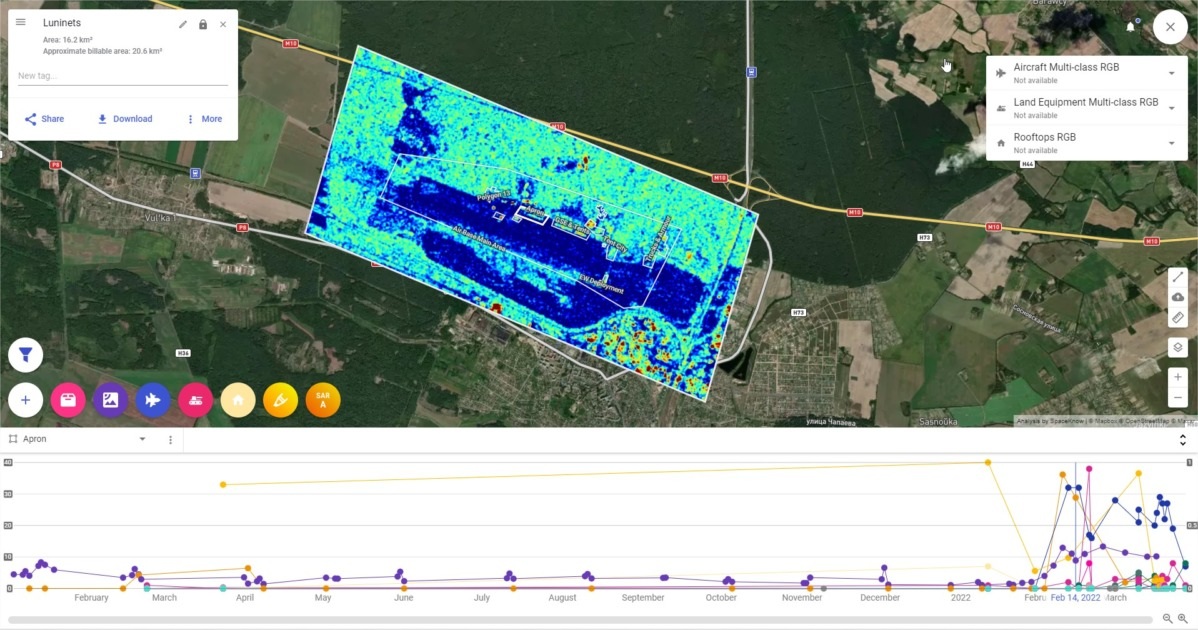
Synthetic aperture radar, or SAR, builds an image from radar returns collected as the sensor moves. Unlike an ordinary photograph, brightness reflects how the scene interacts with the radar. Geometry and material can matter as well as the object’s shape. A change detector therefore needs a consistent way to compare observations rather than assume bright means important.
The advantage is a useful alternative to relying on visible illumination. That does not make interpretation automatic. Observation angle, processing and the scene’s physical condition can alter the result. A system can flag a difference without knowing whether it reflects a vehicle, a changed surface or a measurement condition. The source record should make those possibilities inspectable.
Access to a constellation is also different from a continuous view. A user needs an observation of a particular place at a useful time, with capacity competing against other requests. Dedicated access can improve that arrangement, but the public agreements do not supply a complete tasking and delivery distribution. The distinction matters when a product promise is framed as near-real-time awareness.
A useful operational account would start with the question being asked. Confirming that a large facility changed and tracking a particular moving object require different observations and interpretation. A general statement about radar imagery cannot establish both. The task should specify the times, locations and uncertainty that make the result relevant to a decision.
Watch the footage
ICEYE explains satellite ownership and SAR mission access. Earlier company overview, not footage or measured outcomes of the Ukraine agreements.
Video: ICEYE · Original source ↗ · Video watch page ↗Capacity must become usable evidence
The supplier agreements show that procurement can buy more than raw pixels. Capacity and service arrangements influence whether collection is available when required. The next question is whether a recipient can turn that collection into an assessment quickly enough. More access can expose a processing or review bottleneck that was less visible when images were scarce.
The countercase is using optical imagery when its detail is easier to interpret and conditions permit it. Radar and optical services can complement each other rather than compete for one universal ranking. The best combination depends on the question and collection environment. A fused assessment should say which source supplied each claim and where the evidence still conflicts.
One proposed evaluation would compare representative decisions with and without the added radar access. Count unresolved cases, delivery delay and review effort, not simply images received. Retain cases where the image is inconclusive. That record would show whether the service closes a real intelligence gap or produces more material for the same analyst queue.
It would also help distinguish evidence from advocacy. Suppliers have reason to emphasise their technology’s contribution during a war. Their announcements establish agreements and describe intended value; independent outcome claims require additional evidence. Keeping that boundary clear does not diminish the access milestone. It makes the analysis credible about what the public record can actually support.
The queue behind the radar image
For a hypothetical analyst monitoring an airfield, the useful request might be whether a parking area changed between two comparable observations. A radar scene can help answer that question when optical collection is obstructed. It does not automatically identify the purpose of every bright return. The analyst may need another observation, a different source or local context before assigning meaning to the change.
An automated alert should therefore carry both the before-and-after observations and the collection conditions needed to compare them. A model’s confidence in a detected difference is a separate question from confidence that the difference represents the activity the customer cares about. Keeping those two levels separate makes it easier to use radar automation without presenting every change as a completed intelligence assessment.
The larger implication of the Ukraine agreements is that access arrangements can reshape who gets to ask timely questions of a commercial constellation. That capacity still has to pass through collection planning, processing and interpretation. A credible account should follow that full journey. Radar’s ability to provide another view is strategically important precisely because it can complement other evidence, rather than replace all the judgement around it.
What would change the assessment
Evaluate tasking, delivery and review as well as image quality; do not infer combat outcomes from supplier announcements.
The wider impact
ICEYE’s agreements illustrate how commercial radar can add a collection option when ordinary visual observation is constrained. The larger intelligence gain depends on access, timing and competent interpretation together. Neither a clear procurement milestone nor a sharp image alone proves an operational result. The useful service delivers evidence matched to a question, with enough context for the recipient to understand what it does and does not show.
This analysis draws on the public sources linked in the text. Send corrections to [email protected].