A satellite’s value can depend on infrastructure far beyond its own payload. Communications, navigation and intelligence users need to understand activity near the spacecraft they rely on and preserve access to its services. Orbital inspection and proximity operations can contribute to that understanding, but each mission needs its own evidence of safe and useful operation.
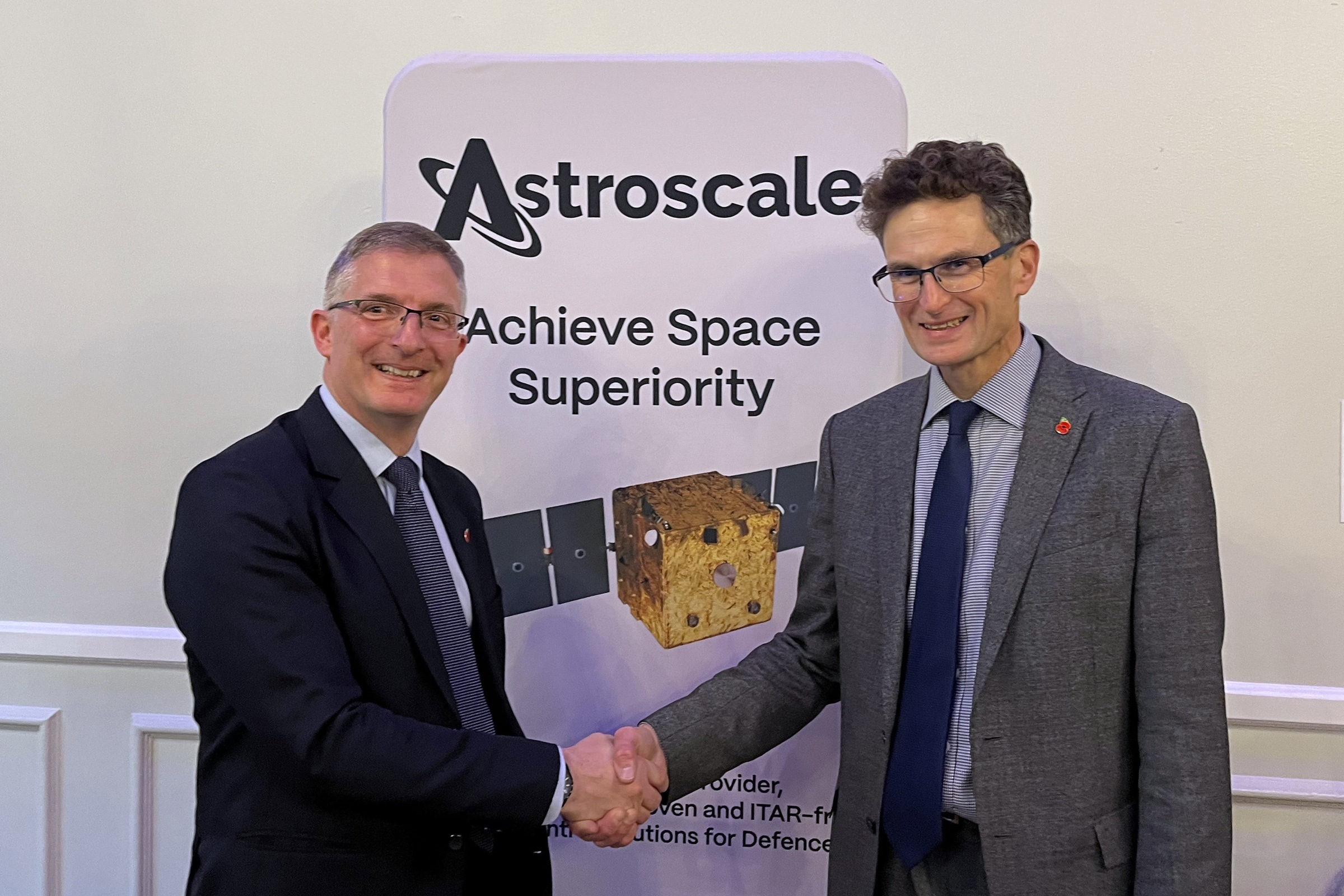
Astroscale’s UK subsidiary announced a £15 million Ministry of Defence contract on October 28 as prime contractor for LEDA, supported by BAE Systems and Open Cosmos. The program builds on the company’s experience approaching, inspecting and operating near other objects in orbit. The release describes LEDA’s manufacture, launch and operation as part of a pathway for understanding orbital warfare and rendezvous-and-proximity-operation threats. It is a contract award, not a report that LEDA has launched or completed its mission. Read the primary source account.
Heritage supplies relevant experience
The company points to ELSA-d’s rendezvous and magnetic capture of a client spacecraft and ADRAS-J’s approach to a non-cooperative rocket body in 2024. Those missions help explain why the team’s flight dynamics, maneuver planning and collision-risk experience are relevant. They should not be presented as LEDA results or as proof that every future spacecraft will operate under the same conditions.
The distinction between cooperative and non-cooperative objects is especially material. A client designed for a particular servicing interaction presents a different problem from an object that does not provide the same assistance or interfaces. The release draws on several kinds of heritage. A useful assessment retains which task each earlier mission actually demonstrated rather than merging them into one undifferentiated capability claim.
The UK team’s ground-segment and flight-dynamics work also shows why orbital operations are not only a spacecraft question. Planning, risk monitoring and the information delivered to people are part of the system. A future result needs to connect those ground activities to the flight configuration, while retaining the uncertainty in any observation of another object.
A program award begins a delivery sequence
The immediate change is funded work with a prime contractor and named partners. That is a more specific milestone than a broad statement of ambition, but the contract value is not an operating-performance measure. The public announcement does not provide enough detail to infer a launch date, complete payload specification or demonstrated response to a particular threat.
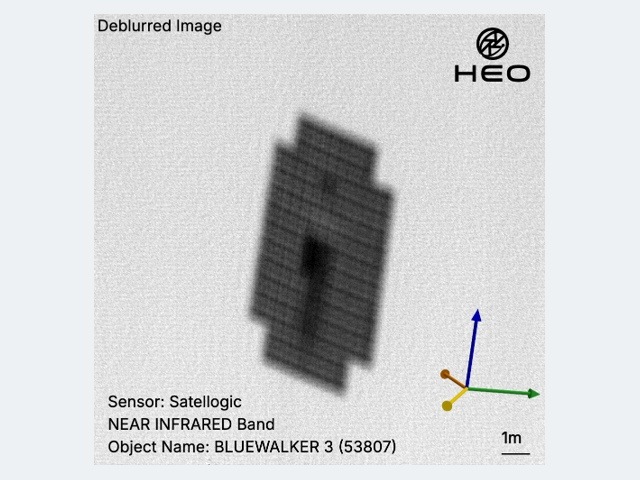
A receiving organization will eventually need evidence connecting the spacecraft’s observations and maneuvers to its stated purposes. For an intelligence user, the distinction between what was observed and what was inferred is essential. A proximity image can show particular visible features while leaving other conditions unresolved. That analytical boundary remains even when the platform can approach an object precisely.
Coordination among the prime and supporting partners creates another interface to evaluate. The program has to combine the right flight, ground and operational components into a configuration the customer can accept. Naming capable organizations identifies the team; it does not establish the maturity of every interface or substitute for the integrated program’s own test and mission record.
The source places LEDA within a wider UK emphasis on space resilience. That strategic context explains the investment, but a strategy allocation should not be treated as additional money awarded to this contract. Keeping the program-specific value separate from broader government plans allows readers to assess the actual procurement milestone without inflating its scale.
The release identifies BAE Systems and Open Cosmos among the delivery partners. Their inclusion makes the supply arrangement more concrete while leaving the complete mission to be engineered and demonstrated. A future account should distinguish an individual partner's delivered component from acceptance of the integrated spacecraft and its service. That distinction matters because rendezvous, observation and the interpretation of another object's behavior form a chain. Successful work at one stage does not independently establish the accuracy or reliability of every downstream assessment.
The next evidence belongs to LEDA itself
The longer-term contribution could be a more informed and resilient way to protect services that depend on orbiting infrastructure. It depends on LEDA’s delivered configuration and operating results, not only its predecessors’ heritage. The next decisive disclosures are concrete program milestones and a bounded account of what the mission demonstrates, preserving the difference between funded development, launch, observation and accepted operational capability.
Source organizations: Astroscale, BAE Systems, Open Cosmos.
This analysis draws on the public sources linked in the text. Send corrections to [email protected].