An intelligence aircraft’s first flight answers an important question about the integrated air vehicle, but it does not establish the quality of every intelligence product the aircraft is intended to deliver. Sensors, processing and the people using their outputs must still work together. Preserving that distinction makes a modernization milestone more useful to the commanders and analysts who eventually depend on it.
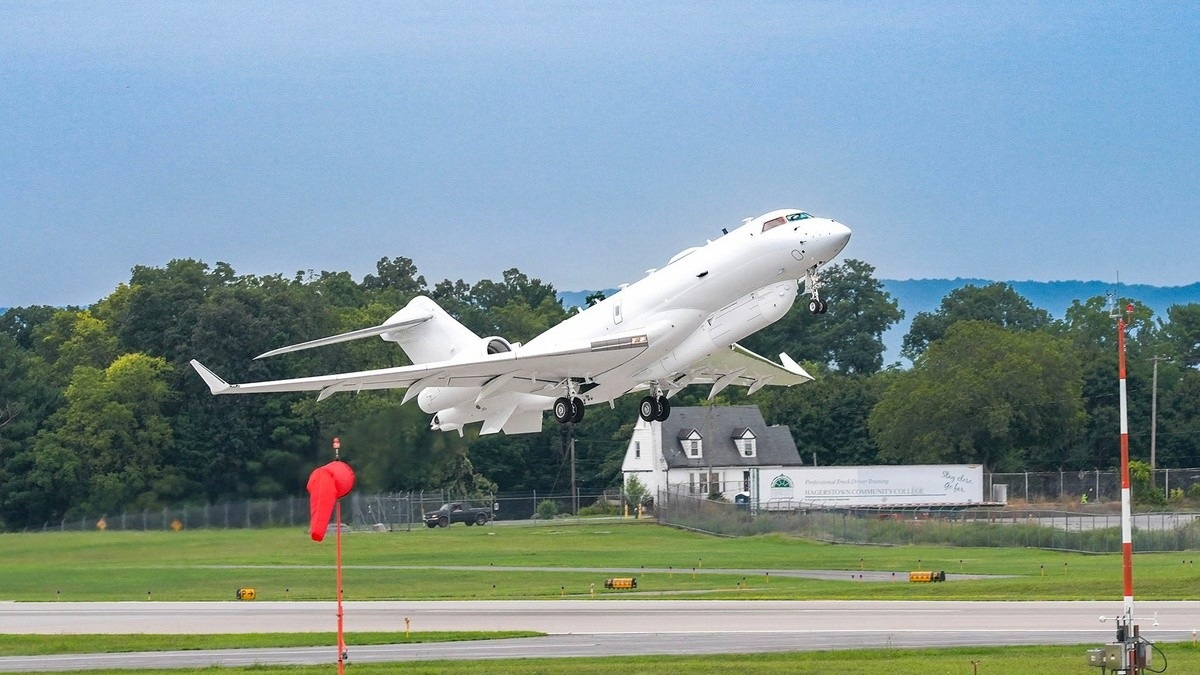
The U.S. Army reported on October 30 that HADES Prototype 1 completed its first flight on September 11. The Fixed Wing Project Office and industry partner Sierra Nevada Corporation led the activity after a flight-readiness review. The event moves the program into mission-system integration and developmental flight testing. The new public account should not be described as a flight that occurred on October 30, nor as proof that all multi-domain sensing and signals-intelligence functions are operationally ready. Read the primary source account.
The air vehicle and the sensing mission have different tests
The Army describes an advanced commercial jet airframe intended to offer more speed, range, payload capacity and operating altitude than legacy turboprop ISR aircraft. Those design advantages explain the modernization direction. The announcement does not publish a complete operational comparison or establish how much additional useful intelligence a receiving unit has obtained in representative missions.
Engineers, test pilots and mission-system architects coordinated structural modifications, hardware integration and preliminary baseline airworthiness verification before the flight. That work matters because the platform must carry the mission configuration safely. It is still distinct from validating what the sensors detect, how their observations are processed and whether the final information meets operational requirements.
The Army explicitly identifies developmental flight testing as the next step for assessing effectiveness, integration and readiness of multi-domain sensing and SIGINT. This is the material qualification in the release. A first-flight photograph can document the aircraft milestone, but it cannot supply the results of evaluations that the source says remain ahead.
More collection reach must connect to usable information
For the program, the immediate change is entry into a new test phase. Teams can now examine the mission system in flight rather than treating the aircraft’s integration solely as a ground activity. That creates an opportunity for more representative evidence; it does not mean every planned operating environment or mission profile has been exercised.
For intelligence users, the useful output is a timely and interpretable observation, with uncertainty retained. A platform’s greater physical reach can change what can be collected, while leaving a processing or analytical bottleneck elsewhere. An operational assessment therefore needs to connect the aircraft, sensors and downstream workflow rather than use airframe performance as a proxy for the quality of every resulting judgment.
HADES is also a reminder that intelligence modernization is not synonymous with autonomous flight. Its relevance to this publication lies in sensing, integration and the increasingly software-dependent information chain around the platform. Nothing in the first-flight account establishes that the aircraft flew without a crew or that machine outputs replace human responsibility for interpreting intelligence.
The dated milestone record will matter as the program progresses. The October 30 release reports a September event and names a subsequent evaluation phase. Keeping both dates and phases visible prevents later summaries from counting one flight as several fresh breakthroughs. It also gives a clearer baseline against which a genuinely new mission-system result can be assessed.
The Army describes a commercial jet airframe chosen for improvements over legacy turboprop ISR platforms in range, speed, payload and altitude. Those platform characteristics create a setting for the sensing mission, rather than demonstrating the performance of the installed intelligence system. A higher operating envelope can change collection opportunities, but the quality and usefulness of the resulting information require their own test evidence. The announced transition into developmental mission-system testing is therefore a substantive next phase, rather than an administrative sequel to the first flight.
Watch for the sensing result, with its scope
The broader prospect is an aerial intelligence service with greater reach and a more capable mission configuration. Its operational value depends on validated sensing, integration and readiness rather than a successful takeoff alone. The next persuasive evidence is the developmental program’s own bounded result: which functions were tested, under what conditions, and how the findings support the next operational demonstration.
Source organizations: SNC, U.S. Army.
This analysis draws on the public sources linked in the text. Send corrections to [email protected].