Protecting an underwater cable begins with knowing what happened near it. A persistent patrol can improve that knowledge without keeping a crewed ship at every location. But observation does not automatically create a response. The sensor network must connect an unusual event to someone able to investigate, distinguish innocent activity and decide what to do.
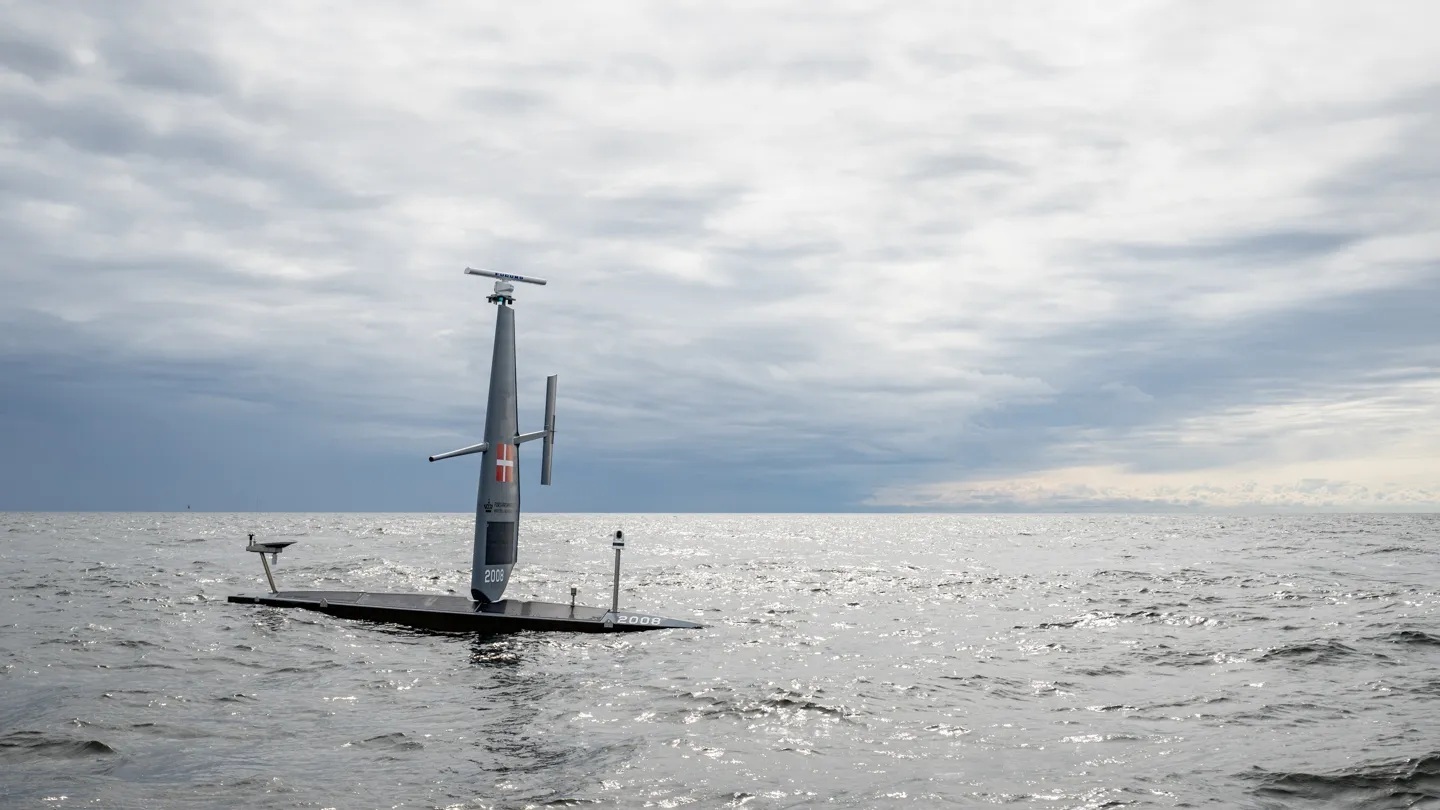
Defense News reported NATO testing Baltic surveillance drones in July 2025, including Saildrone Voyagers. NATO’s Task Force X account sets the experimentation within Baltic Sentry. These sources establish trials and their security purpose. They do not publish a measured rate of sabotage prevention or show that every event can be attributed from drone observations alone.
Presence and interpretation are different jobs
A patrol’s endurance can increase the chance that a relevant event is observed. The value depends on where the vehicle is, what its sensors can distinguish and whether the record reaches an analyst in time. Days at sea are therefore an input to the mission, not the finished intelligence outcome. Persistent presence without useful evidence can still leave the main uncertainty unresolved.
An unusual track may deserve attention without proving hostile intent. A ship can slow for many reasons; an apparent change in course could reflect weather or normal work. Adding observations can help distinguish explanations, but it can also generate more ambiguous alerts. A useful system should preserve why an event was marked and what evidence would make the interpretation stronger or weaker.
Different sensors can provide complementary evidence. A surface observation, a transmitted vessel identity and an underwater measurement may disagree. That disagreement should not automatically be removed to create a cleaner common picture. It may be the most useful clue that another check is needed. The fusion system needs a way to retain uncertainty rather than merely combine everything into one confident label.
Response timing is part of the comparison. An alert delivered after the relevant ship has departed can still support investigation, but it serves a different purpose from an observation that directs an immediate check. The customer should identify which purpose the service is expected to meet. Otherwise an archival success may be mistaken for a demonstrated ability to interrupt an event.
The patrol should be evaluated against its decision
One proposed assessment would follow representative alerts through the entire workflow: initial observation, interpretation, request for another source and the final disposition. Include innocent activity and uncertain cases, not only obvious threats. That makes it possible to measure whether additional patrol coverage improves decisions or mainly expands the review queue.
The countercase is spreading too many sensors across too much water while retaining the same investigation capacity. A sparse network focused on high-value locations may be more useful than broad coverage with weak follow-up. The appropriate design depends on the threat and the available response organisation. More vehicles do not automatically make that choice easier.
Shared allied operation adds another interface. Partners may have different permissions, data formats and evidence requirements. A sensor record useful to one navy may need more context before another agency can use it. That issue is distinct from simply establishing a technical link. The operational test should include the people and institutions expected to consume the finding.
The drone trials are therefore best read as an experiment in a wider protection system. Their importance is not limited to whether individual boats navigate well. They can reveal where observation is missing, which evidence can be shared and what investigation capacity becomes the next constraint after sensing improves.
From suspicion to a supported decision
Consider a hypothetical unusual movement near protected infrastructure. A drone's observation might justify a closer look, but it does not by itself explain intent. The useful chain preserves the time, location, source and uncertainty of the report so that another team can compare it with other information. That reduces the chance that an initial suspicion becomes a confident conclusion merely because it passed through several interfaces.
An exercise should therefore measure more than the number of detections. It could record how many reports were resolved, how long corroboration took and which observations became unusable because context was missing. It should also count ordinary traffic handled correctly. A system generating frequent alerts can consume attention without making a response organisation more effective.
The deployment's broader significance is organisational: persistent observations can change where people direct scarce investigative and patrol resources. That benefit depends on a credible process for deciding when to act and when to stand down. More eyes on the water become a stronger security capability only when the subsequent decisions are informed by the evidence actually collected.
What would change the assessment
Assess alert-to-disposition workflows and investigation capacity rather than equating patrol days with prevention.
The wider impact
Baltic patrol drones could make previously intermittent observation more continuous. The broader security gain depends on the response chain around them. Trials should show which decisions become better or faster and where uncertainty remains. A useful autonomous patrol does more than stay at sea: it delivers an inspectable reason for attention to an organisation capable of acting on it.
This analysis draws on the public sources linked in the text. Send corrections to [email protected].