An intelligence team needs more than a detailed image. It needs the right observation, delivered in time to answer a question and accompanied by enough context to support a defensible interpretation. The path from requesting a collection to using the result is therefore as important as the sensor’s advertised resolution. A limited pilot can expose how that path behaves before an agency makes a larger commitment.
BlackSky said in an October 8 release that it had won a six-figure Gen-3 On-Demand imagery-services pilot with a new international intelligence customer. The company described a short performance period, global tasking access and 35-centimeter imagery, with information feeding secure workflows. It did not name the customer or disclose an exact contract value in that release. These are supplier-reported service and contract claims; the announcement does not publish customer evaluation results.
Resolution answers only part of the question
A resolution figure describes an aspect of the imagery product. It does not, on its own, establish how reliably a particular object can be recognized or how confidently an analyst can explain a change. Viewing conditions, geometry, the question being asked and the material available for comparison can affect the usefulness of an observation.
Those considerations are not a finding that this pilot has underperformed. They explain why a procurement milestone and an intelligence outcome require different evidence. An agency evaluating a service might find that an image is technically adequate while the collection arrives too late for one workflow, or that rapid delivery is useful but interpretation still requires substantial human work. Neither example is a reported result from the unnamed customer.
The same distinction applies to automation. Connecting tasking, processing and delivery can reduce manual handoffs, but the public announcement does not quantify the customer’s time saved or the accuracy of its resulting assessments. An automated transfer of a product also does not confer authority to act on its contents. The consuming organization still determines the decision process.
What a short pilot can reveal
The immediate significance of the agreement is access to a real service relationship with a bounded period of evaluation. For a customer, that period can provide evidence about requesting collections, receiving products, handling exceptions and integrating the output with existing systems. The usefulness of the evaluation depends on which questions it asks and whether its conditions resemble the intended continuing workload.
A meaningful account of performance would distinguish request time, collection time, product availability and analyst use. Combining these into a single speed claim can hide where a delay occurs. It would also identify unsuccessful requests and the circumstances in which the service could not supply the desired observation. These are analytical criteria for understanding a future result, not details disclosed in BlackSky’s release.
For BlackSky, a pilot is also a commercial foothold. However, the agreement described here is not proof of a multi-year renewal, exclusivity or a particular national deployment. The customer's identity remains undisclosed, so it would be speculative to infer its country, operational targets or mission outcomes.
The longer-term test is repeatable usefulness
If repeated collections help the customer answer its questions within the required time, a continuing service could provide capacity without the customer having to own the collection hardware. That possibility still depends on access terms, competing demand, integration work and the customer’s assessment of value. A larger contract would establish a further commercial step; it would not by itself validate every claimed intelligence benefit.
The next evidence to watch is therefore both contractual and operational: whether the relationship continues, what service measures are disclosed and whether the customer or an independent evaluator describes the outcomes. The pilot matters because it creates a setting in which imagery can be evaluated as a workflow. The announcement alone cannot supply the evaluation’s answer.
Sources and limits
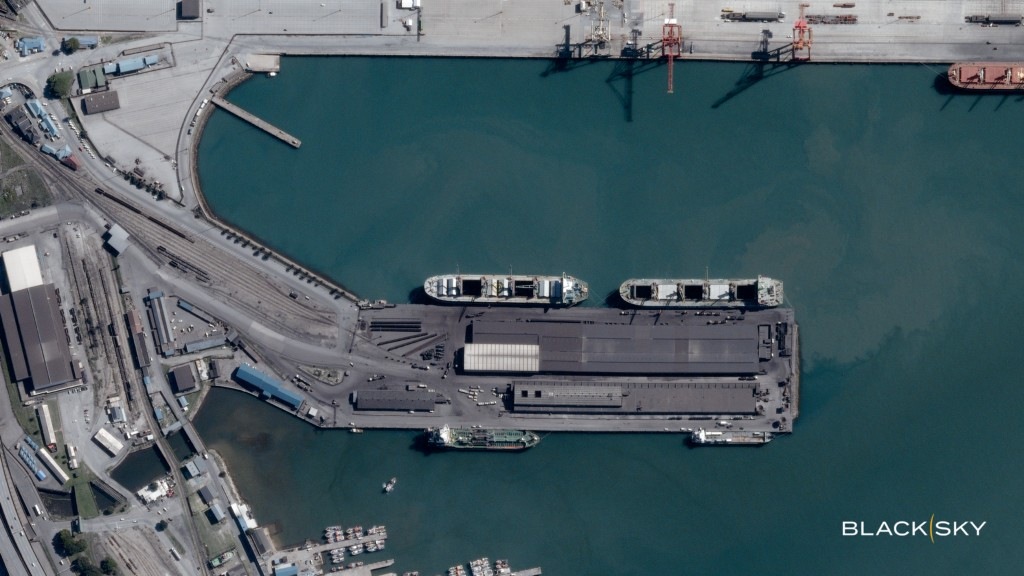
This article relies on the company’s announcement and separates those facts from conditional analysis. No customer interview, classified information or independent service test was available for this report. The cover is BlackSky’s March 9 Gen-3 image of Gqeberha, used as sensor context; it is not imagery from the unnamed pilot customer.
What would change the assessment
Watch for renewal decisions and disclosed collection, delivery and customer evaluation results; the customer’s identity remains undisclosed.
This analysis draws on the public sources linked in the text. Send corrections to [email protected].