A long perimeter creates a problem that cannot be solved simply by asking a person to watch harder. Activity continues through changes in light, weather and staffing, while the significance of a sighting depends on context. For defense organizations, the attraction of an autonomous tower is therefore bigger than a clearer camera picture: it is a chance to make continuous watch more manageable, while keeping responsibility for the response visible.
Skylark Labs places Scout MK II in that conversation. Its product page describes a solar-powered, elevated platform combining radar, visible-light and thermal sensing for borders and open perimeters. This is a physical autonomy story because sensing and alert generation are intended to happen at the installation, rather than depending on a remote team watching every frame. It is not evidence that a tower independently understands the legal or operational meaning of everything it sees.
The main contribution: bringing interpretation to the perimeter
The important idea is to package elevation, energy and local computation as one relocatable installation. In principle, this changes the purchase from a stream of imagery into a source of candidate events that a team can assess. The practical value would be measured in useful attention saved: fewer routine observations demanding human review, earlier awareness of significant changes, and a clearer record of why an alert was raised.
Skylark advertises MK II as a long-range configuration with a tower described as more than 60 feet high, adjustable up to 100 feet, and deployable in under four hours. Those are manufacturer specifications, not independently verified installation times or guarantees of detection performance. The same page describes the smaller Scout MK I separately; its battery and deployment claims should not automatically be assigned to MK II.
Watch the footage
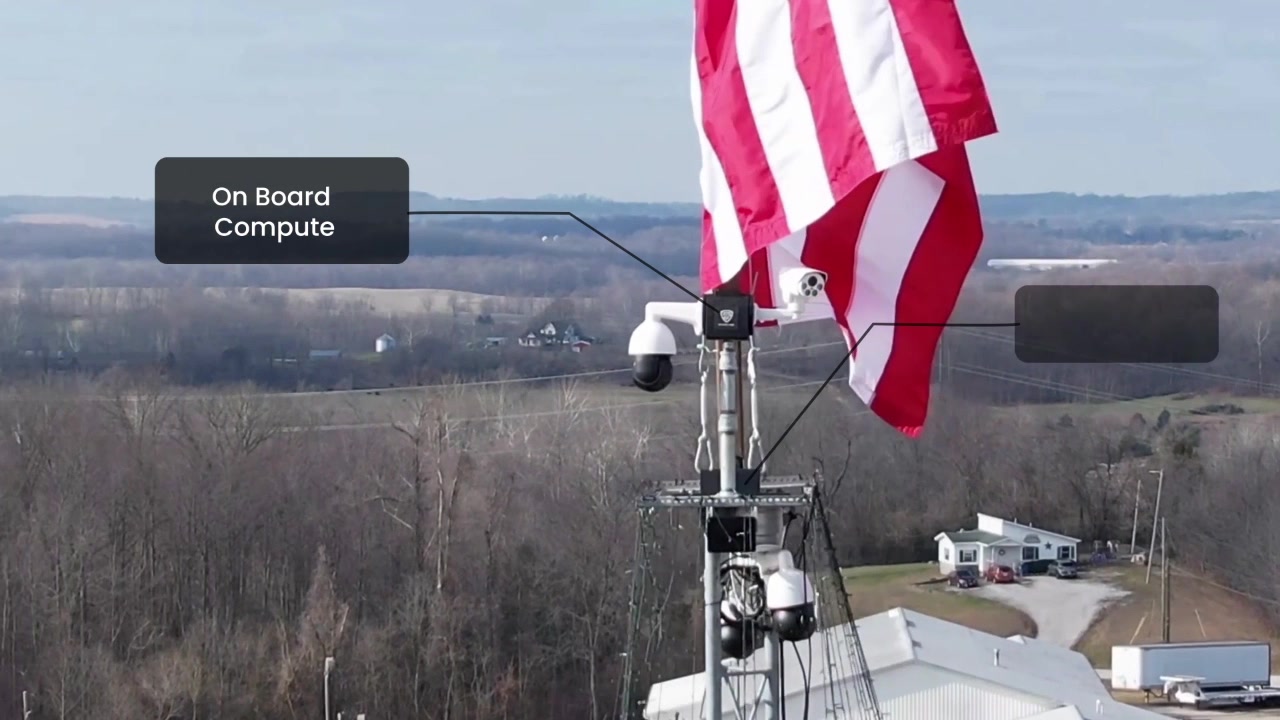
Skylark Scout platform sensor mast. Company platform context, not footage of the specific border deployment or an independent range test.
Video: Skylark Labs · Original source ↗ · Video watch page ↗Why multiple sensors do not automatically mean certainty
Our analysis is that combining observations can make a watch system more useful only when it also handles disagreement. One sensor may report an object another cannot resolve. A thermal shape can be ambiguous; an elevated view can still be obstructed. An intelligent system should help a reviewer understand these limits instead of converting every imperfect observation into a confident label.
That makes the quality of the interface as important as the height of the mast. A meaningful alert should let an authorized reviewer inspect the underlying evidence, see the time and location associated with it, and distinguish a current observation from a stale one. Otherwise, a faster alert can simply move confusion more quickly through an organization. This is an assessment criterion, rather than a claim that Scout already provides every element described here.
What the official footage can and cannot establish
The official Scout page supplies tower and long-range sensor videos. They are useful for understanding the vendor's physical presentation of the product and the kinds of scenes it wants customers to imagine. A product film does not establish a sustained probability of detection, a false-alarm rate or staffing requirements across seasons. Readers should treat illustrative overlays and edited sequences as product communication unless a documented test explains how the result was measured.
The public product material reviewed for this article does not publish a full MK II evaluation protocol, an independently audited performance distribution or a detailed accounting of results across weather conditions. That is a limitation of the available evidence, not proof of poor performance. It means the most consequential purchasing questions remain open and should be answered through observed operation in representative conditions.
Deployment is a service problem as well as a sensing problem
For a defense installation, the full system includes maintenance, communications, access control, training and handover between shifts. Solar power can reduce dependence on a fixed electrical connection, but it does not remove the need to understand energy availability, inspection schedules or what the service reports when it becomes unavailable. A relocatable tower also needs a reliable inventory of where it is and what area it is currently authorized to observe.
An apparently successful automated watch can fail organizationally when nobody owns the next step. Who acknowledges an alert? Who checks whether it duplicates another report? Who records that a conclusion was mistaken? These questions should be settled before a large deployment, because the promise of autonomy is partly a promise about workload. Adding alerts without clarifying responsibility can increase the burden on the very teams the installation was intended to help.
Sources & evidence
What would change the assessment
Independent results for the exact configuration, with operating conditions and limits disclosed, would strengthen this assessment.
The wider impact
Skylark's MK II proposition deserves attention because persistent physical sensing can become a foundation for more responsive perimeter operations. The useful comparison is not simply tower height against tower height. It is the complete process: coverage, interpretation, review, action and correction. Buyers should ask whether the installation improves that process over time and whether the improvement can be measured without relying on promotional examples.
The bigger picture is a shift from collecting more observations to organizing attention around evidence. If Scout MK II can deliver reliable, understandable alerts with manageable upkeep, it could let people spend less time scanning routine scenes and more time making consequential judgments. Its contribution should ultimately be judged by that institutional result, with the limits of automation kept as visible as its successes.
This analysis draws on the public sources linked in the text. Send corrections to [email protected].