A vessel's sensors can be limited by the height of their viewpoint. Raising a camera can extend what an operator sees, but adding an aircraft creates a second machine to launch, power and recover. The interesting autonomy question is whether the two platforms work as a dependable observation service, rather than merely appearing together in a demonstration.
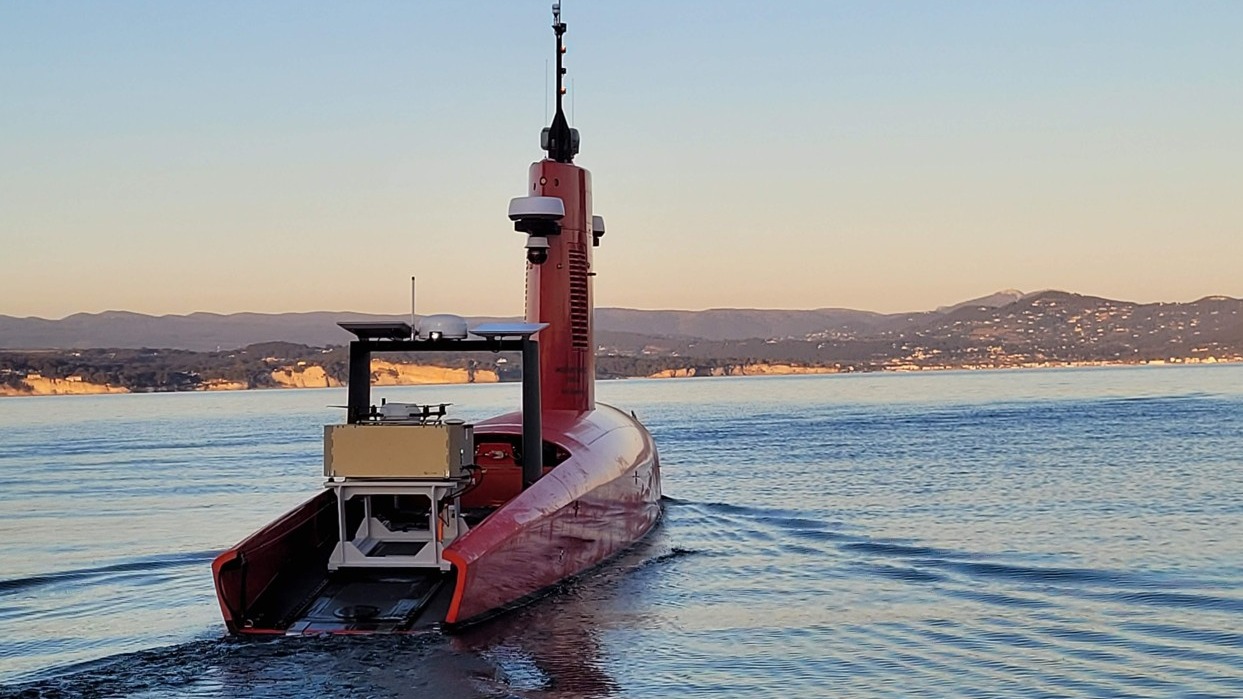
Elistair's July 21 announcement describes integrating its Khronos automated tethered DroneBox with Exail's DriX uncrewed surface vessel. The company says the aircraft can remain above the vessel while it moves, drawing power through its tether and sending imagery to remote operators. This article examines that dated integration; it is not reporting a new October launch. Read the primary announcement.
Persistence is a system property
Elistair describes operation up to 24 hours at a height of 60 meters. These are manufacturer-stated operating claims. The announcement does not publish a sea-state test matrix, independent endurance study or customer availability record for the complete pairing. It would be misleading to turn a maximum-duration statement into a promise of uninterrupted coverage in every maritime setting.
The tether changes the aircraft's relationship to the vessel. Power no longer depends solely on a flight battery, while the aircraft's useful position is tied to a moving host. That makes the combined operating envelope more informative than either platform's specification in isolation. Launch, recovery and the interruption of observation all belong in an assessment of the service.
A practical new perspective
For maritime operators, the immediate contribution is an integrated option to examine for surveillance missions. They can compare the added aerial perspective with the work needed to operate and maintain it. The source identifies applications including coastal monitoring and search and rescue; it does not establish measured outcomes across each of those uses.
Remote operation also relocates work rather than eliminating it. An operator still needs to interpret an observation, distinguish an uncertain identification and coordinate an appropriate response. The record should show which decisions remain with people and what information is available when a connection or sensor is interrupted. Those are evaluation questions, not failures reported in the announcement.
Coverage and useful coverage are different measures
A higher viewpoint can change the geometry of observation without resolving what an object is or whether it deserves attention. The resulting image still has to reach an operator or an interpreting system with enough context to support a decision. Weather, visibility and the motion of the host can affect the usefulness of that view. This is why the meaningful result is an interpretable observation over time, rather than a larger claimed surveillance horizon alone.
The pairing also joins two maintenance schedules. A surface vessel may remain available while the aerial equipment requires attention, or the reverse. A service record should distinguish vessel availability, aircraft availability and periods when the complete surveillance chain is usable. Otherwise, a strong endurance figure for one platform can obscure interruptions in the combined mission. These are proposed reporting categories, not downtime figures measured in this integration.
An integration trial could also clarify how observation resumes after an ordinary interruption. Returning to a mission with a known gap is different from silently presenting stale information as continuous coverage. Documented recovery behavior and visible gaps would give a remote team a more trustworthy picture. They would also explain what work persists on shore after the crew has been removed from the vessel.
Beyond a useful demonstration
If vessel and tethered-aircraft integration proves reliable across the required conditions, a small surface platform could support a wider observation role. The longer-term benefit depends on how much useful coverage it adds per operating and maintenance hour, compared with alternatives. More time airborne is one input, rather than a complete outcome measure.
The next evidence would be a documented operating envelope and sustained mission record for the combined configuration. That would show whether the raised viewpoint remains useful through ordinary interruptions and recovery. The larger goal is a more dependable maritime picture, with its gaps and human responsibilities still visible.
Sources and scope
Official organizations: Elistair, Exail. Primary source, 2026-07-21. Manufacturer results and plans remain attributed; this publication did not independently test the equipment.
What would change the assessment
The next evidence would be a documented operating envelope and sustained mission record for the combined configuration. That would show whether the raised viewpoint remains useful through ordinary interruptions and recovery. The larger goal is a more dependable maritime picture, with its gaps and human responsibilities still visible.
This analysis draws on the public sources linked in the text. Send corrections to [email protected].