A more capable intelligence aircraft can collect information from farther away and carry a different mix of sensors. That improvement becomes useful only if operators understand what to collect and the organisation can interpret what arrives. Changing the aircraft can therefore require a different workforce and workflow, not just a new flight schedule.
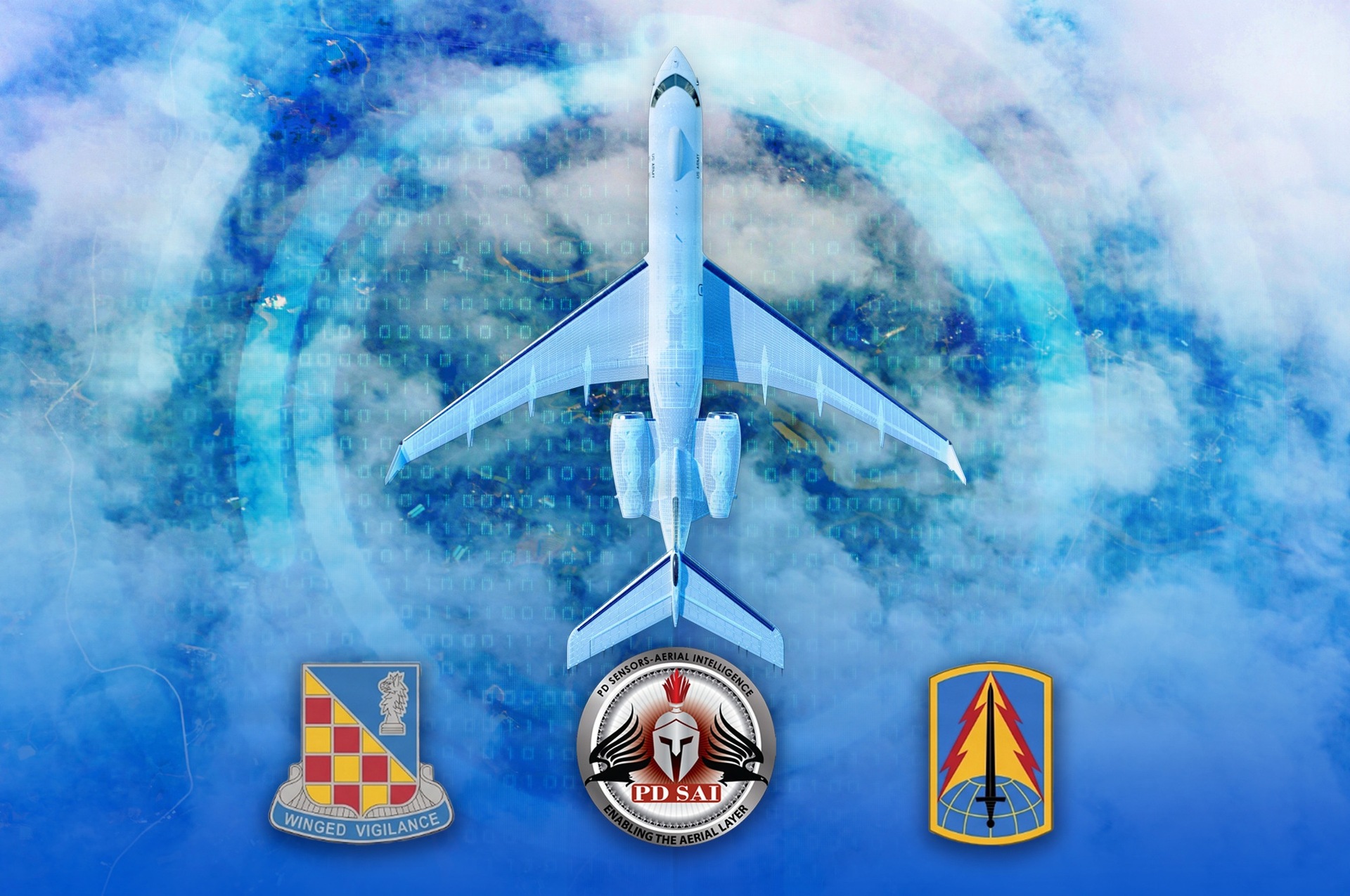
The Army’s May 14, 2026 training account describes preparation for the transition to HADES, the High Accuracy Detection and Exploitation System. Its May 2025 acquisition account explains the contractor-operated bridge platforms used to develop and support the approach. The transition is between operating models as well as equipment. It is not evidence that all HADES capability is already fielded.
A sensor changes the operator’s question
Aerial intelligence, surveillance and reconnaissance, abbreviated ISR, includes collecting information that supports an understanding of activity. Different sensors provide different evidence. A radar observation and a radio interception cannot be interpreted as identical forms of confirmation. Operators need to understand what each can resolve, which conditions matter and when another source is required.
More collection reach can alter tasking. A system able to observe a larger area gives planners more options, but also more decisions about priorities and timing. A crew needs a practical way to connect the commander’s question to sensor settings and then to a product the recipient can use. The new aircraft does not make that translation automatic.
Operating responsibility matters because contractor support can contain tacit knowledge. Experienced personnel may recognise an unusual output or know which configuration solves a recurring problem. A government-operated system needs to retain or rebuild that knowledge through training, documentation and diagnostic records. Hardware delivery alone does not reveal whether the transfer has occurred.
The processing organisation also changes. A more capable sensor can expose a shortage in data handling or interpretation. The bottleneck may move from observing the area to sorting uncertain contacts. An acquisition should therefore compare complete intelligence outputs rather than celebrate increased sensor capacity without measuring who can consume it.
Watch the footage
Official Army HADES programme film describing integration underway. Programme context, not a claim that the sensor-operator training transition or full fielding is complete.
Video: Capability Program Executive - Intelligence & Spectrum Warfare · Original source ↗ · Video watch page ↗Training is part of the accepted capability
A useful training outcome is demonstrated competence on representative tasks, not merely attendance. Operators should be able to distinguish an unavailable observation from a negative finding and explain which limits belong in a report. That connects sensor use to the quality of the eventual judgement. It is a proposed evaluation criterion, not a score published in the training announcement.
The countercase is retaining contractor operation because it supplies scarce expertise efficiently. Government operation can offer control and continuity, but requires investment in personnel and sustainment. The appropriate comparison includes knowledge transfer, availability and the customer’s ability to change missions. Neither ownership model is automatically superior for every requirement.
One informative transition test would repeat a mission with both organisations under comparable conditions. Measure the resulting product, time to delivery and assistance required. Retain disagreements and identify whether they come from sensor settings, interpretation or support practices. This would expose which skills have transferred and where the new workforce still needs help.
Software and sensor changes continue after transition. Training should therefore prepare personnel to recognise configuration differences rather than teach one frozen sequence of button presses. A model or processing update can alter which observations are reliable. The operating record needs to connect personnel competence to the accepted configuration, without assuming a qualified crew has been trained on every future release.
HADES also shows why intelligence modernisation is not synonymous with autonomous flight. Its relevance to autonomy lies in the sensor, data and decision work around the platform. A crewed aircraft can participate in an increasingly automated intelligence chain, while human specialists remain essential to judging its evidence.
An exception reveals whether the knowledge transferred
Consider an illustrative training scenario in which a sensor returns an unexpected pattern after a configuration change. A crew that memorised the standard display may produce a confident but unsupported interpretation. A crew that understands the measurement can identify what changed, request diagnostic support and limit the report appropriately. That distinction is a better indication of transferred expertise than completion of a familiar scripted mission.
The support system should make that response practical. Operators need access to accepted settings, configuration histories and a route for resolving unusual outputs. The organisation also needs to know which tasks still depend on external expertise. Those dependencies need not invalidate the transition; making them explicit helps planners understand readiness and where further training would have the greatest effect.
The broader importance of HADES is that modernisation can move the bottleneck from the platform to the people and processes around it. Greater reach and different sensors expand the questions the Army can ask. Workforce preparation determines whether it can turn those questions into timely, credible assessments. The transition should therefore be judged through the intelligence product as well as the arrival of the aircraft.
What would change the assessment
Assess sensor competence, product delivery and knowledge transfer alongside aircraft capability.
The wider impact
HADES’s workforce transition makes a less visible part of intelligence modernisation concrete. The broader gain comes when improved sensing is matched by competent operators, usable processing and support knowledge the customer can retain. An aircraft milestone and a training milestone are different pieces of that capability. Their connection is what determines whether greater collection reach becomes a better-informed decision.
This analysis draws on the public sources linked in the text. Send corrections to [email protected].