For intelligence users, a collection opportunity matters only if the resulting information arrives while it remains useful. Satellite capacity and data delivery therefore need to be considered together. Adding a sensor can increase the volume collected without necessarily reducing the delay experienced by the person waiting for an answer.
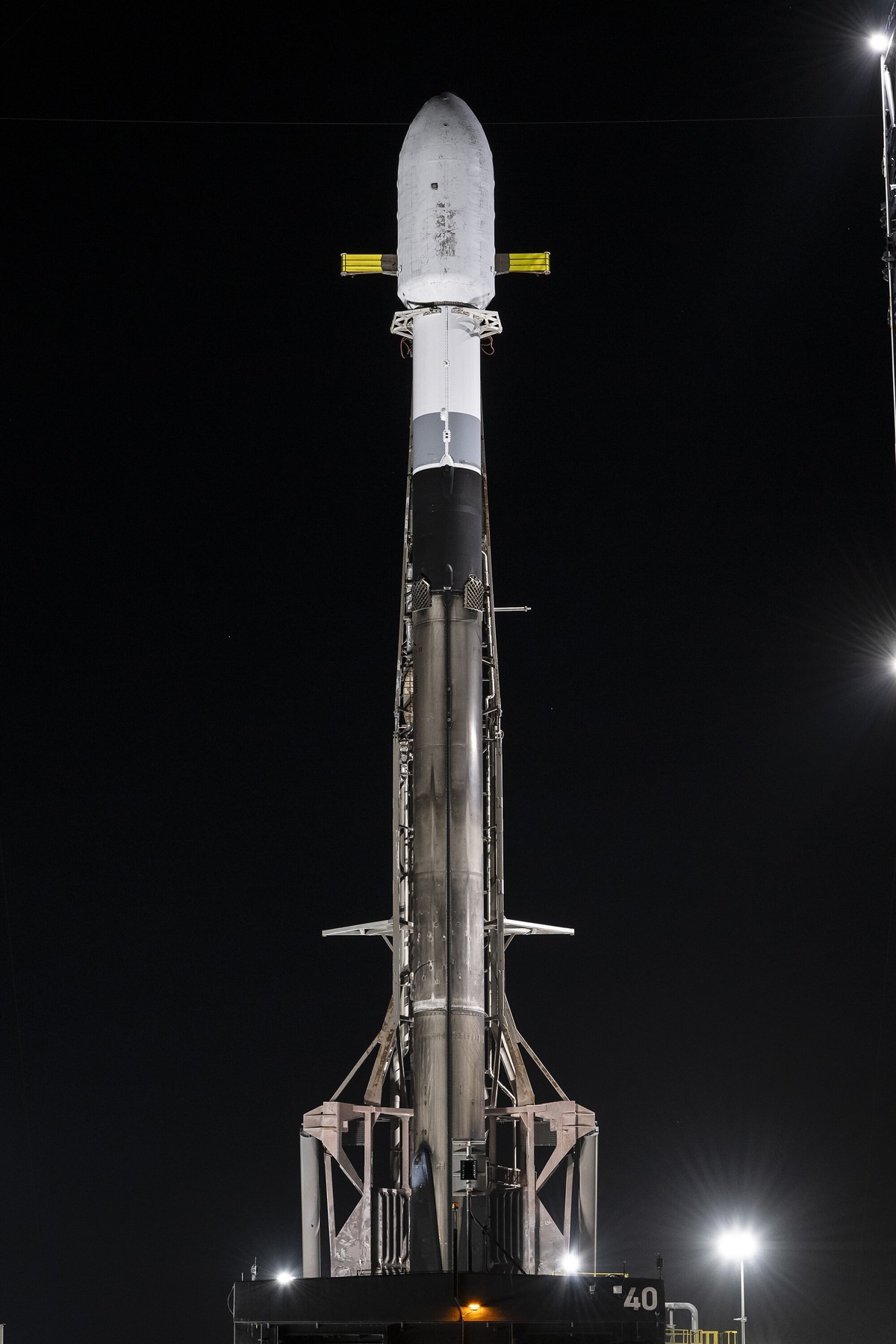
HawkEye 360 announced the launch of its three-satellite Cluster 15 on October 20 aboard SpaceX’s Bandwagon-5 mission. It reported communications with all three spacecraft and the start of commissioning. The company describes antenna capabilities supporting simultaneous RF collection and mission-data downlink, with dedicated collection capacity under a multi-year customer arrangement. These are launch milestones and design intentions; operational service performance awaits commissioning and subsequent use. Primary source.
Committed capacity changes the service question
Shared resources can require competing requests to be prioritized. A dedicated-capacity arrangement aims to make some of that availability more predictable. Its value depends on what the service commitment actually covers: access to a collection window, delivery of data or a usable analytical output. Those are different promises and should not be combined into one availability figure.
Users also need to understand how exceptions are handled. A committed resource can still be affected by equipment faults, scheduling constraints or ground processing delays. Transparent reporting should distinguish each stage so that an overall delay can be traced to its cause rather than assigned to the constellation in general.
Commissioning is a meaningful boundary
Establishing spacecraft communications is an important step, but it is not equivalent to proving the intended service. The relevant next evidence is that the satellites, ground systems and processing chain work together under the conditions expected in use. A launch announcement should not be read as a completed operational evaluation.
A useful customer-facing measure would follow the time from a request to a qualified result, with the range of outcomes visible rather than only an average. Capacity utilization and periods of unavailability would add context. These are suggested evaluation measures, not figures supplied in the release.
Availability needs a clear definition
A dedicated allocation can mean different things in different contracts. It may reserve a portion of a resource while still depending on shared processing or communications elsewhere. Without the contract terms, readers should not infer exclusivity across the whole service. The relevant distinction is between a priority at one stage and a guaranteed end-to-end result under specified conditions.
An illustrative review would separate collection opportunity, successful acquisition, downlink, processing and delivery. A delay in any stage could dominate the user’s experience. Measuring each stage makes improvement work more targeted and helps explain why additional collection capacity does not always produce the same proportional reduction in delivery time. The release does not supply enough performance data to quantify that relationship for Cluster 15.
The usefulness of an observation also depends on its interpretation. Faster delivery cannot remove ambiguity inherent in the evidence. Users should receive information about quality and uncertainty alongside the result, particularly when combining it with other sources. A service that is predictable about what it cannot establish can be more useful than one that presents every output with the same apparent confidence.
After commissioning, repeated performance reporting would help distinguish the capabilities of the new design from short-term variation in demand or operating conditions. A comparison should use equivalent definitions and disclose interruptions rather than selecting only successful collections. That would allow customers to judge whether the dedicated-capacity approach improves the particular timeliness problem it is intended to address, rather than assuming the launch has already resolved it.
Cluster 15’s significance lies in connecting collection design with a more explicit capacity commitment. If that architecture produces predictable delivery after commissioning, it could improve how users plan around commercial RF services. The evidence should come from the complete information pipeline, rather than satellite count alone.
Source and scope
HawkEye 360 source announcement, 2026-10-20. Analysis published October 21, 2026. Company claims remain attributed; proposed evaluation criteria are editorial analysis, not independent test results.
What would change the assessment
Cluster 15’s significance lies in connecting collection design with a more explicit capacity commitment. If that architecture produces predictable delivery after commissioning, it could improve how users plan around commercial RF services. The evidence should come from the complete information pipeline, rather than satellite count alone.
This analysis draws on the public sources linked in the text. Send corrections to [email protected].