A robot's decisions depend on what its sensors can observe, but a better sensor component is not automatically a better intelligence result. The image must remain useful after it passes through the host platform, processing software and operator workflow. That is why a camera-core development program deserves attention before it becomes a finished vehicle or surveillance product.
Leonardo DRS announced on October 13 that the Army's DEVCOM C5ISR Center awarded it a contract supporting the Delivering Unmatched Thermal Capability Hastened, or DUTCH, initiative. The company will demonstrate high-definition, high-frame-rate uncooled thermal camera cores. The stated purpose is development and transition of sensing technology; the release does not disclose the award's value or publish completed demonstration results. Read the primary announcement.
A component with several possible hosts
The source lists potential applications across crewed and uncrewed systems. Those examples describe intended integration opportunities, rather than evidence that a single camera configuration has been accepted for each one. A host's power, processing and environmental requirements can change what is practical. This article makes no inference about a particular system's recognition range or targeting performance.
Uncooled thermal sensing is relevant to the size, weight, power and cost choices surrounding a payload. The useful comparison would examine the complete installed component under specified conditions. A high frame rate or a striking example image does not by itself establish better detection, fewer false alerts or a lower workload for the person interpreting the output.
The immediate effect is on development
The award gives an identified program a concrete demonstration path. For prospective integrators, the next practical information is the tested configuration, available interfaces and conditions under which the component's stated performance holds. Those details would support an engineering decision without treating the manufacturer's development goal as an accepted operational result.
DRS also describes camera assembly and test capacity in Dallas and Melbourne, Florida. That is relevant industrial context, but the announcement supplies no production yield or delivery-rate result for the new DUTCH work. Manufacturing continuity and sensor performance require separate evidence. A second assembly location cannot, by itself, establish either.
An example image is not an evaluation protocol
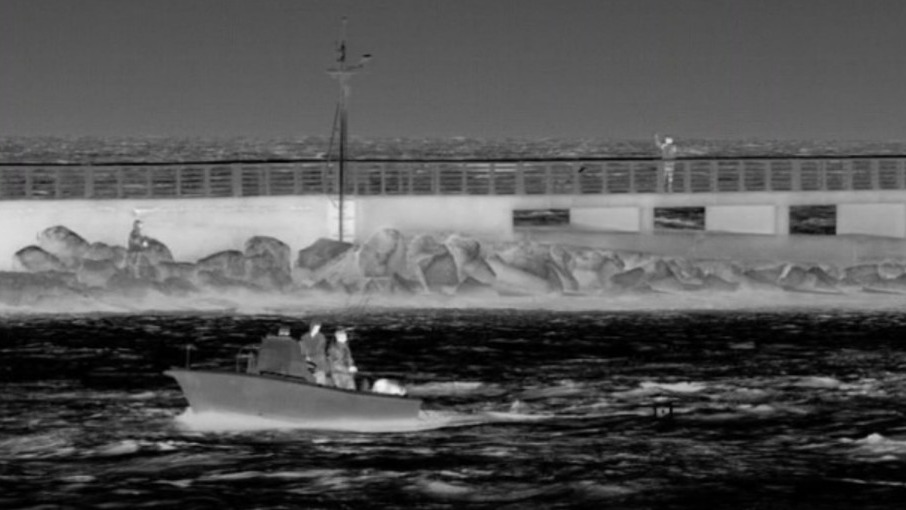
Thermal imagery can be visually compelling while leaving the comparison undefined. To assess a new core, an integrator would need to know the optics, processing, scene and conditions associated with a result. A supplied image does not show which part of that chain accounts for what the viewer sees. The source illustration is therefore retained as an illustration, with no claim that this publication reconstructed or independently verified its capture conditions.
Higher responsiveness can also change demands elsewhere in the host system. More image information is useful only if the receiving processor and interface can handle it in the intended workflow. That is an integration consideration, not a claim that DRS's component overwhelms a particular platform. A complete evaluation should identify the host configuration rather than treating the camera's characteristics as properties of every future installation.
Production evidence needs comparable specificity. Assembly and test capacity are inputs to supply continuity, while accepted units, quality consistency and support arrangements are outcomes. Reporting those separately would help customers distinguish investment in capacity from demonstrated delivery of the new product. It also provides a clearer route from the DUTCH development award to the supply conditions that a future fleet would depend on.
From pixels to useful observations
If the development delivers a component that can be integrated, produced and supported consistently, it could widen the options for platforms that need thermal observation. The larger effect would depend on how those platforms use the imagery and how uncertain observations are communicated. A component improvement should not be presented as independent proof of an autonomy improvement.
The next milestone to watch is a disclosed demonstration result with its conditions, followed by transition or integration evidence. That progression would connect the award to a usable sensing capability. The larger intelligence problem remains obtaining observations that people and systems can interpret with appropriate confidence.
Sources and scope
Official organizations: Leonardo DRS. Primary source, 2026-10-13. Manufacturer results and plans remain attributed; this publication did not independently test the equipment.
What would change the assessment
The next milestone to watch is a disclosed demonstration result with its conditions, followed by transition or integration evidence. That progression would connect the award to a usable sensing capability. The larger intelligence problem remains obtaining observations that people and systems can interpret with appropriate confidence.
This analysis draws on the public sources linked in the text. Send corrections to [email protected].