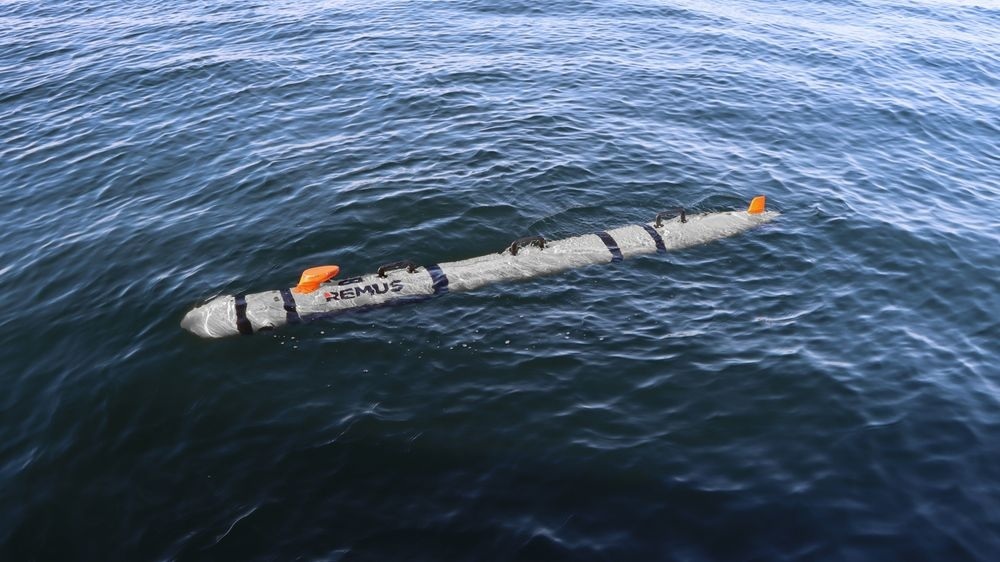
A small underwater robot can let a unit examine water without waiting for a large specialist ship. Portability is therefore more than convenience: it can change who gets access to sensing and how soon they can use it. But distributing vehicles also distributes launch, recovery, maintenance and the work of turning their observations into decisions.
HII’s October 11, 2023 Lionfish announcement described an initial nine vehicles, with options for up to 200 and a potential value above $347 million. The Defense Innovation Unit’s account distinguishes the initial $19 million award from that ceiling. Lionfish is based on REMUS 300. Options and ceilings are procurement possibilities, not evidence that every vehicle was delivered.
Portability changes the distribution of work
A two-person portable machine is attractive when the alternative is moving a much larger platform. The comparison must include everything required to produce a useful survey. A vehicle carried by two people can still rely on additional staff, transport, charging equipment and specialists interpreting the result. The advertised carrying team and the complete operating organisation answer different questions.
That distinction becomes more important as numbers grow. A central specialist team may support several units efficiently when missions are infrequent. More frequent demand can expose queues for processing, repairs or mission approval. Buying more hulls will not necessarily shorten those queues. The acquisition needs a view of where the work accumulates, rather than an assumption that each additional vehicle adds equal usable capacity.
Open architecture means designing interfaces so components and software can be changed or connected more easily. It can help preserve a vehicle’s usefulness as sensors improve. It does not make every payload interchangeable without testing. Weight, electrical demand, data rates and navigation can change the behaviour of a small underwater machine. A new configuration still needs its own operating evidence.
The same logic applies to software. A unit should know which build produced a survey and what conditions its interpretation tools were tested against. If a detection algorithm changes, old comparisons may no longer mean the same thing. Retaining original measurements alongside derived findings makes it possible to revisit an assessment without pretending the previous output was a direct observation.
Watch the footage
HII explains the modular REMUS 300 platform underlying Lionfish, including an animated energy-section exchange. Manufacturer visualization, not footage proving a Navy mission configuration or operating endurance.
Video: HII · Original source ↗ · Video watch page ↗A ceiling is not a fleet
The contract structure is meaningful because it creates a route to scale after the initial purchase. The countercase is treating that route as settled demand. Options allow a customer to respond to results and funding; they do not tell an outside reader what the eventual force will contain. A credible industrial account should distinguish vehicles ordered, delivered, accepted and actively supported.
Operational evaluation could report completed surveys per operating team, turnaround between missions and the time spent reviewing uncertain contacts. Those measures connect portability to utility. A failure record should explain whether the vehicle could not launch, the sensor could not answer the question or the processing team could not deliver a result in time. Each implies a different remedy.
There is a useful way to test the expansion case. Compare a unit with access to the portable system against its previous method on similar survey needs, counting all support. The gain might be faster availability rather than a more detailed image. That would still be valuable, but it should be described as the gain actually observed.
A portable fleet also needs common training without assuming identical waters. Local conditions can affect which survey is credible and how a result should be interpreted. The most effective distribution model may combine local operators with retained specialist support. Whether that arrangement scales is an organisational question that a vehicle specification cannot answer.
Compare teams completing the job
The practical unit of comparison is a team completing a job. A vehicle that two people can move may still require additional personnel for planning, checking sensor data and maintenance. That does not make portability meaningless; it means portability answers one question within a larger workflow. An evaluation should count those supporting tasks explicitly so that moving the launch point closer to the mission is not confused with eliminating the work behind it.
A useful comparison would give two trained teams the same survey objective and record preparation time, equipment movements, usable data returned and the effort needed to interpret that data. The exercise should include an interrupted sortie as well as an uncomplicated one. Recovery from a problem often reveals whether a small system is truly easier to operate or simply easier to carry.
The wider buying choice is between concentrating expertise in a few specialist units and distributing an achievable task to more teams. Lionfish is interesting because small vehicles could support the latter approach, provided the entire operating process can be learned, repeated and supported away from the development organisation.
What would change the assessment
Measure surveys delivered per supported team and keep initial orders separate from contract ceilings.
The wider impact
Lionfish’s significance is a potential wider distribution of underwater sensing through an established acquisition path. The public contract supports that direction without proving the eventual fleet or support cost. The broader return will be visible in useful surveys delivered by ordinary units with a manageable burden. Portability becomes operational scale only when the interpretation and sustainment system can grow with the vehicles.
This analysis draws on the public sources linked in the text. Send corrections to [email protected].