An intelligence user wants an answer, not necessarily a list of commands for individual spacecraft. As satellite fleets grow, choosing which sensor should observe which place becomes more complex. AI could help translate a request into a collection plan. Its success depends on recognising what evidence the question requires and when the available observations cannot provide it.
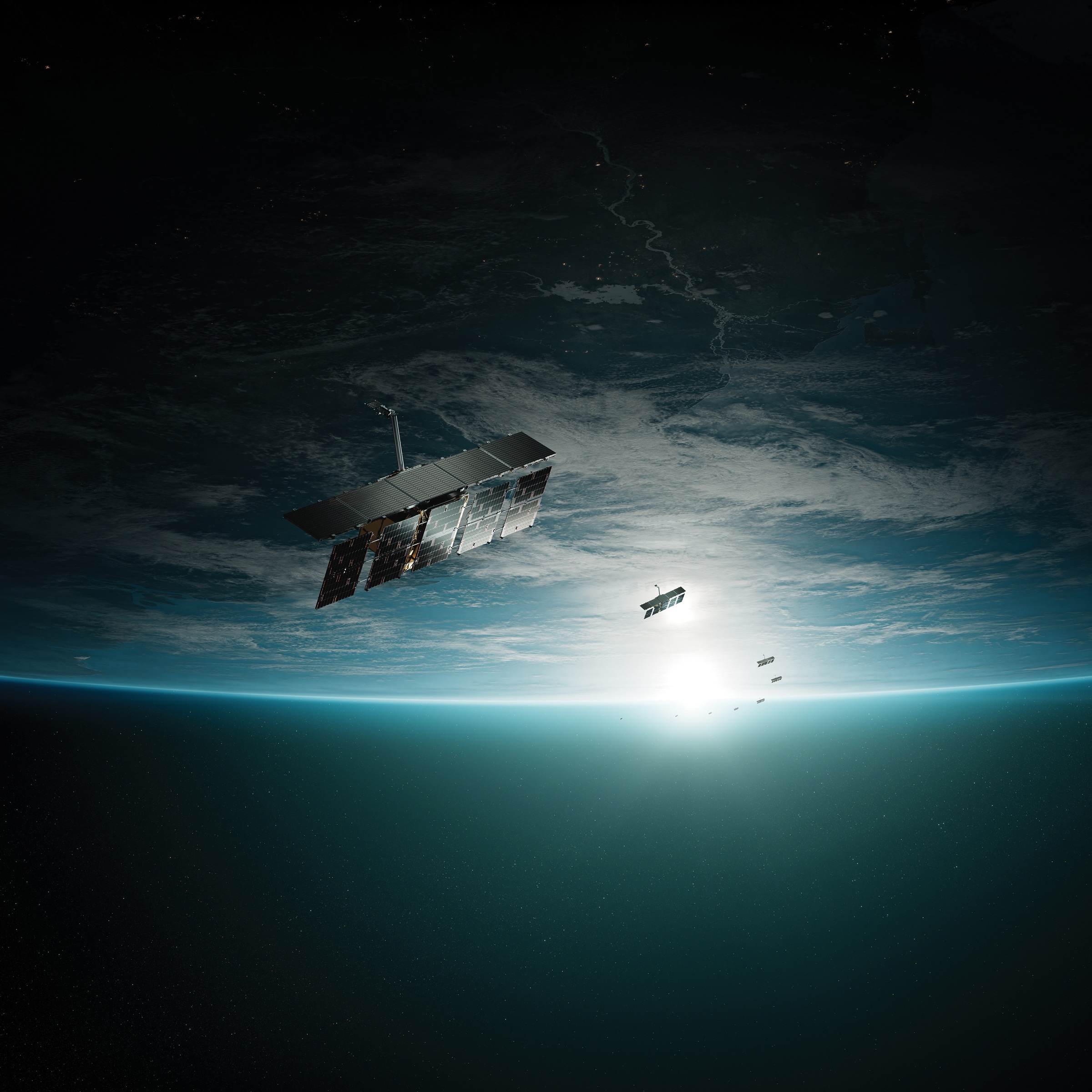
In September 22, 2025 reporting, NRO director Chris Scolese described an ambition to let users pose a question to the constellation rather than command each satellite separately. NRO’s architecture material explains the expanding collection context. The statement is an operating vision, not public evidence that a fully automated question-to-answer service has already been validated.
A request needs a measurement plan
Asking how many ships occupy an area sounds simple. The collection planner must still define the area, relevant time, types of vessel and treatment of uncertain detections. It must choose observations that can distinguish those cases. A fluent interpretation of the sentence is only the start of the task.
Tasking also competes with other priorities. The best observation for one request might consume capacity needed elsewhere. An automated system needs explicit objectives and constraints rather than an assumption that every question can be answered immediately. A useful interface should explain when the plan changes because of priority or availability, instead of returning a confident answer divorced from the collection process.
The answer may require several measurements. A wide-area source can identify candidate locations while another supplies detail. The planner must understand what each observation adds and whether it is independent of the others. Repeated records of the same event should not be treated as extra confirmation merely because several processing channels delivered them.
Time remains part of the meaning. A count assembled from observations taken at different moments is not automatically a count at one instant. Objects can enter, leave or be counted twice. The collection and analysis system should preserve the temporal basis of the result and identify which assumptions bridge gaps. That is a proposed requirement, not a claim about undisclosed NRO software.
The useful automation may admit an incomplete answer
A system that reports insufficient evidence can be more useful than one that always completes the requested sentence. The operator needs to distinguish a measured count, a partial count and an estimate relying on assumptions. Treating all three as the same answer would turn convenient tasking into an additional source of analytic error.
The countercase is retaining specialist tasking for difficult requests while automating routine ones. That could deliver meaningful efficiency without delegating the entire collection strategy. The right division depends on whether exceptions are rare enough and sufficiently clear for people to handle. A large fleet does not itself establish that every request should follow the same automated path.
An informative assessment would compare proposed plans with plans created by experienced operators, then examine actual results under matched constraints. Count missed opportunities, duplicated collection and unsupported answers as well as response time. Retain the sequence from request to selected observations so disagreements can be traced to interpretation, scheduling or analysis.
This approach would also expose the cost of a superficially easy interface. If users can ask more questions, demand may rise faster than capacity. The planning system needs a way to communicate that constraint. A question-driven constellation is valuable when it makes capacity easier to use wisely, not when it hides the reasons some questions remain unanswered.
The interface should expose a choice
Consider a hypothetical request to determine whether activity at a location increased. The planner might seek more frequent observations, more detailed observations or a complementary measurement. Those alternatives use capacity differently and answer different parts of the question. A useful system would expose the trade-off when it affects the answer, rather than silently choose a convenient plan and present its output as complete.
The human role can then become more focused. A specialist need not manually direct every routine collection, but should be able to revise a misunderstood objective, challenge an assumption or recognise that the available sensors cannot distinguish two explanations. Those interventions require access to the proposed plan and its constraints. A conversational interface without that visibility could make tasking easier while making errors harder to diagnose.
The wider impact is potentially a more accessible collection service for users who understand their information needs better than spacecraft operations. That is worthwhile if it preserves the relationship between the request and the evidence obtained. The achievement would be fewer avoidable collection and interpretation errors across the workflow, not simply a fluent answer arriving at the end of a much larger constellation.
What would change the assessment
Preserve collection plans and unsupported gaps rather than equate a natural-language request with a verified answer.
The wider impact
NRO’s tasking vision points to a change in how users interact with space intelligence: state the need and let software organise collection. The broader opportunity is more effective use of a complicated fleet. That needs explicit priorities, measurement requirements and honest incomplete answers. Automation should make the evidentiary path easier to inspect, even as it makes the commands less visible.
This analysis draws on the public sources linked in the text. Send corrections to [email protected].