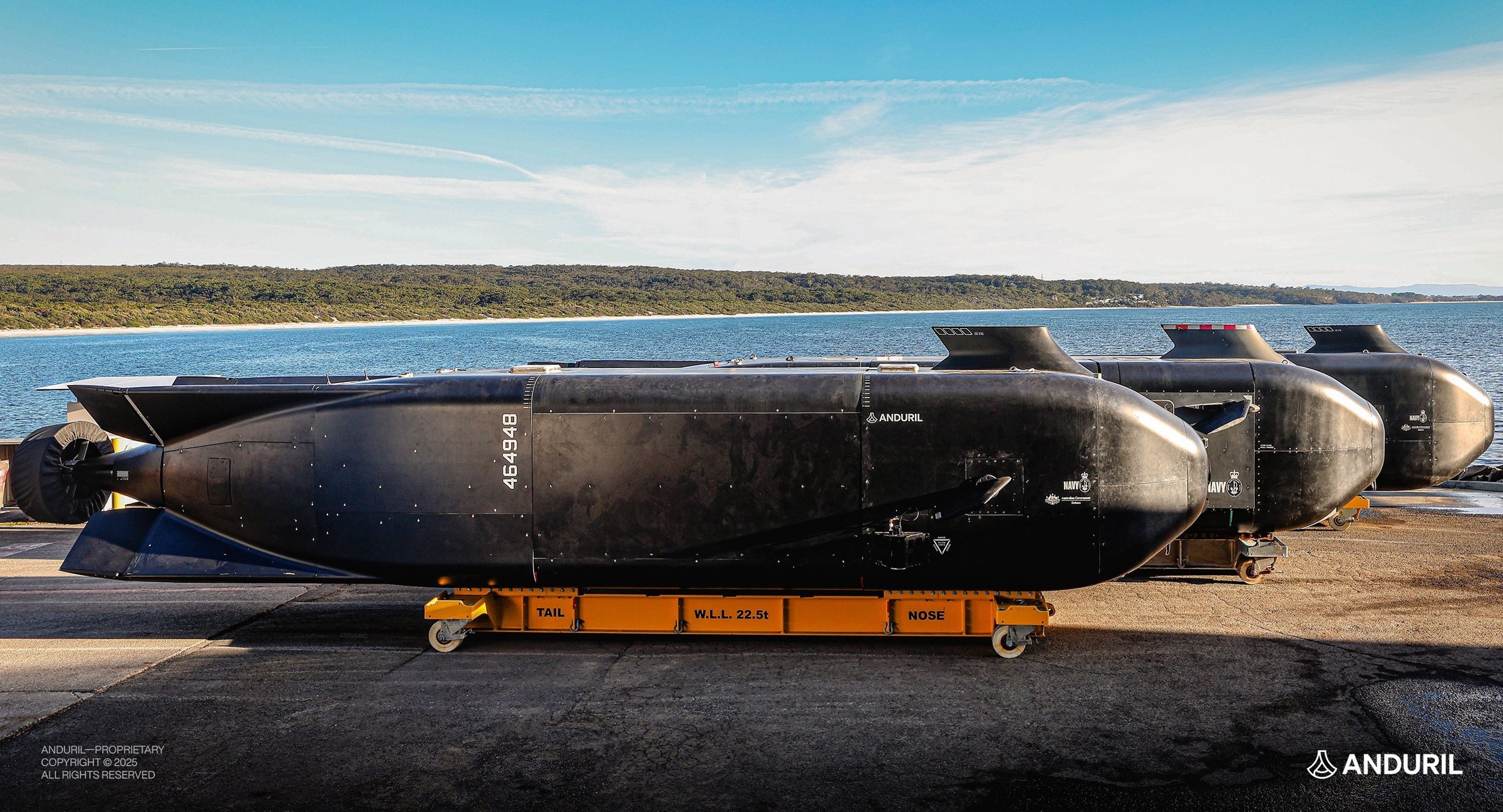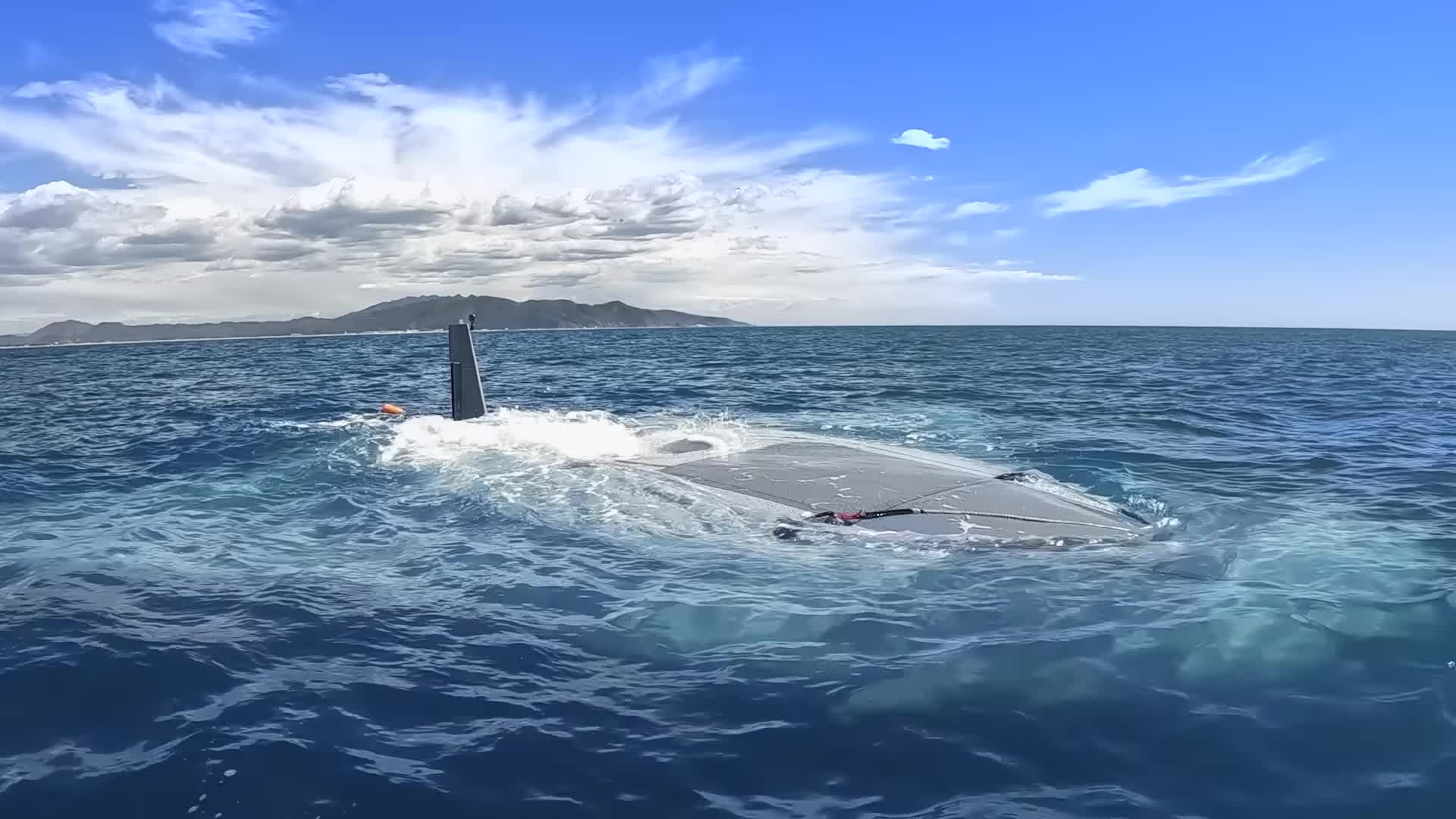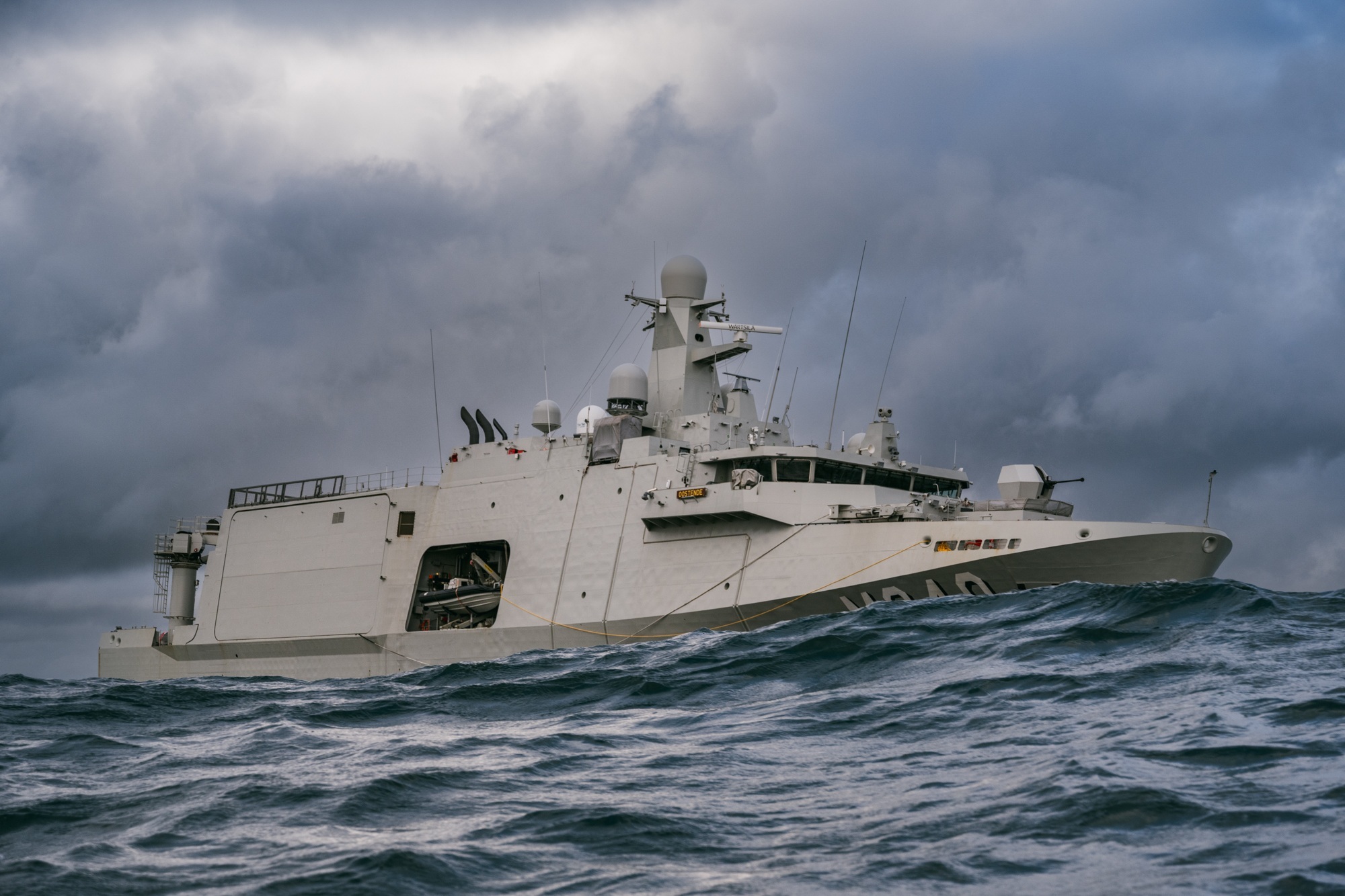
A drone mothership can keep sailors away from a minefield while carrying the machines that enter it. That arrangement is useful only if the ship can repeatedly launch, communicate with and recover the right equipment. The operational unit is therefore the ship and its robotic toolbox, including the people who make those tools work together.
Belgian Defence’s 2026 account of Oostende’s drone trials describes integrated work at sea with the mine-countermeasures module team. Naval Group’s November 4, 2025 announcement records the earlier arrival milestone in the Belgian-Dutch replacement programme. Together they make an important distinction visible: receiving the ship precedes learning how the full robotic system performs at sea.
The toolbox is an operating concept
Replacement mine countermeasures, abbreviated rMCM, is the programme’s name rather than a claim that every previous task has already been replaced. Different tools inspect, classify and neutralise threats. Their combination can provide flexibility, but it also creates scheduling and information exchanges that a traditional single-platform comparison can miss.
Consider an illustrative survey with several suspicious contacts. A surface vehicle can cover an area while an underwater vehicle investigates one contact in detail. The support team must decide when to interrupt broad coverage, which contact deserves attention and whether another tool will improve confidence. More platforms create options; they do not eliminate those priorities.
Launch and recovery are also constraints on parallel operation. The sea can make a theoretically independent vehicle temporarily inaccessible. If several machines require support at once, the ship needs procedures and equipment that prevent the recovery queue from dominating the mission. The useful metric is how much working capacity remains under representative sea conditions, not how many drones fit aboard.
Data compatibility has a physical consequence. Two vehicles may describe the same contact using different locations, timings or confidence terms. Their operators need to recognise whether the records refer to one object or separate objects. A common display can conceal this uncertainty if it merges observations too eagerly. Integration should preserve source measurements and their errors as well as presenting a coherent picture.
Sea tests should expose the handoffs
The reported test activity is meaningful because it brings the combined system into its intended environment. It does not provide a complete public rate of operational clearance or a cost per mission. A photograph of a launched robot cannot answer those questions. Reporting trial conditions and the required assistance would make the milestone more useful to other navies assessing a similar approach.
A useful operational test would retain the full sequence from a contact’s first observation to the final disposition, including unsuccessful follow-up. It would identify which tool was selected and why. That allows evaluators to distinguish a poor detection from a good detection passed through an unreliable interface. Both can produce an unfinished mission, but need different repairs.
The countercase is a simpler collection of tools with fewer interfaces. It may perform fewer roles but be easier to train, repair and deploy. A broad toolbox becomes worthwhile when its flexibility is used often enough to offset that complexity. The buyer should assess realistic mission mixtures rather than assuming the largest possible collection of equipment is always best.
There is also a training advantage if the ship and module team build repeatable ways to diagnose those interfaces. That knowledge can travel to later vessels in the programme. The first ship’s learning value is therefore partly organisational: how much of what its team discovers can be taught without recreating the same difficult trial on every subsequent hull?
Testing the toolbox as one operation
A mothership concentrates equipment, people and decisions in one place. That can help an operating team coordinate several tools, but it can also create a queue if the same handling equipment or specialists are needed for every launch and recovery. An informative trial would therefore report the sequence of work, including occasions when one system waited for another. Counting embarked drones alone would not reveal the resulting throughput.
The most useful demonstration would change the task after the first vehicle returned new information. Could the team select another tool, prepare it and preserve the relevant contact record without starting again? That tests the toolbox as an operating method rather than a collection of individually promising machines. It is a proposed evaluation, not a result asserted for Oostende.
There is also a choice about how many tasks should happen simultaneously. More concurrent vehicles may increase coverage while creating more decisions for the same watch team. The right operating balance is the one that produces dependable clearance evidence and manageable recovery work, rather than the greatest number of systems visible in a photograph.
What would change the assessment
Track toolbox handoffs, recovery queues and transferable training rather than equating hull delivery with mission readiness.
The wider impact
Oostende makes the shift from entering danger with a ship to managing a set of remote tools concrete. The larger payoff depends on whether the combined toolbox delivers usable clearance repeatedly, not merely whether its parts can be demonstrated. Integrated sea trials can produce the launch, data and recovery knowledge a fleet needs. Those records are what turn a new mothership into a reusable operating method.
This analysis draws on the public sources linked in the text. Send corrections to [email protected].