A common operational picture becomes more useful when it can return a task to the system that supplied an observation. That bidirectional link changes the integration problem: positions and detections must retain their meaning, while commands must reach the intended system with the right authority and acknowledgement.
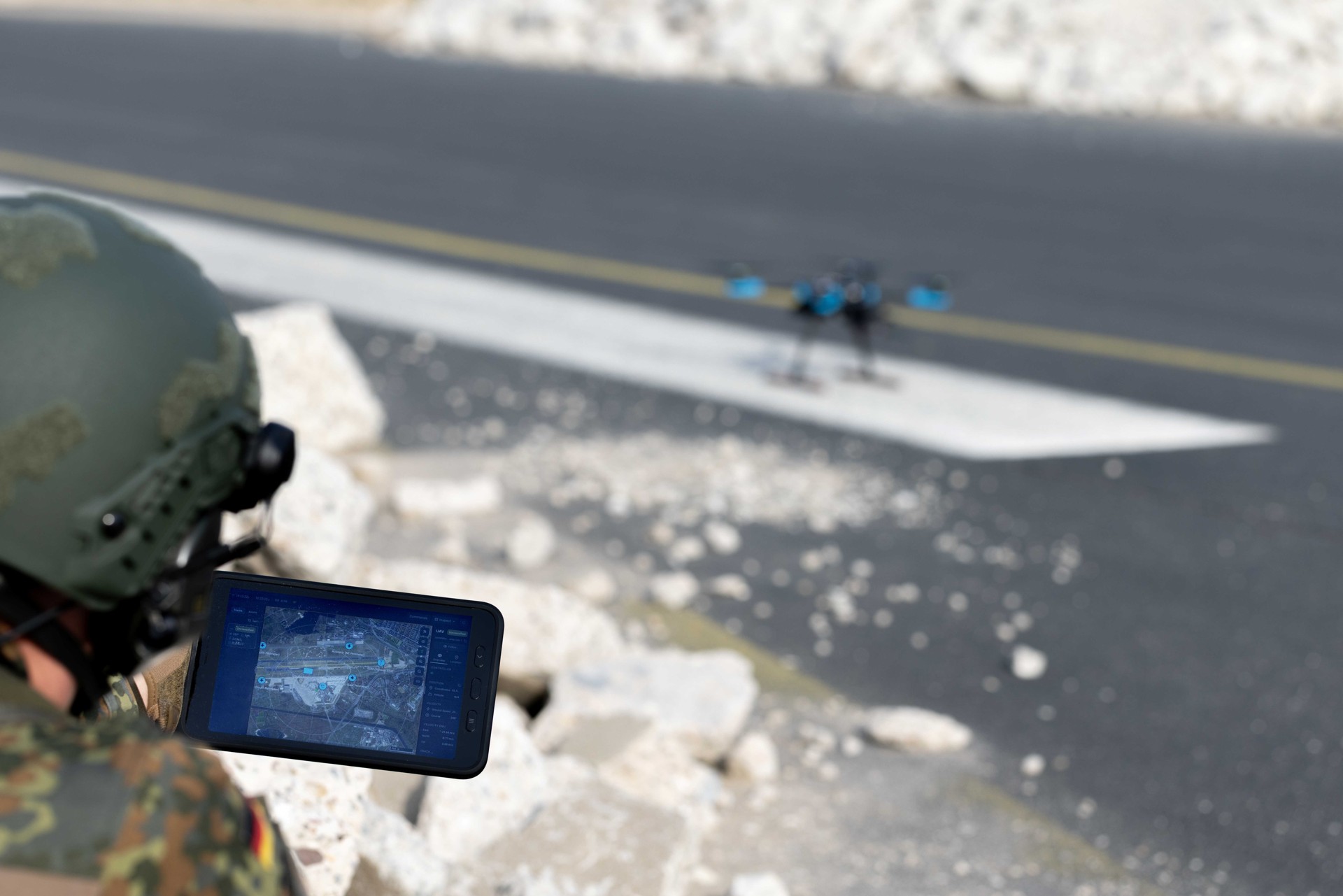
Project Q and Auterion announced on October 19 that they completed a first milestone under their August memorandum. A connector links Auterion Mission Control and HYDRIS, exchanging sensor detections, drone positions and tasking commands in both directions. The release establishes a named integration between two platforms. It does not establish compatibility with every third-party sensor, aircraft or command system. Read the source account.
An open architecture still needs tested interfaces
Open-source foundations can make an interface inspectable and easier to extend, but each connected product still has versions, data conventions and limits. A customer needs to know which configurations were tested together and how a change on one side affects the other. Licensing alone does not answer those operational questions.
Tasking also requires more than forwarding a message. The operator needs to distinguish a command that was accepted, rejected, delayed or superseded, especially when the operational picture includes stale tracks. The announcement does not publish a detailed failure-handling test or measured delivery performance. Those remain useful next questions rather than established weaknesses.
A connector should preserve the state of a task
Consider a sensor detection that prompts an operator to request another observation. The receiving mission system must distinguish the original track from a later update and return an intelligible task status. This is an illustrative workflow, not a documented test sequence from the announcement. It shows why interoperability involves the meaning and lifecycle of information, rather than merely proving that two systems can exchange messages. An operator needs to know whether a request is still pending before issuing another one.
Command authority also needs to survive the connection. If several users can view a track, it does not follow that each should be able to task an aircraft against it. A connector must fit the permissions and accountability arrangements of the receiving organization. The companies’ release does not disclose a complete authorization model or an independent security assessment. That absence limits what can be concluded from the announcement; it is not evidence that the integration lacks controls.
Version management is another practical part of openness. A platform update can change a field, status code or timing assumption even when the underlying source remains available. Customers need to know how the partners test compatibility and communicate changes to connected systems. A documented interface and reproducible integration test can reduce the effort of adding another supplier. The fact that software has an open-source foundation makes inspection possible, but the operational benefit depends on maintaining that interface over time.
The next demonstration could therefore show a complete task exchange, including a rejected command or a lost connection, using an identified release of each platform. Reporting those bounded exceptions would make the successful connection easier to trust and reuse. It would also help customers distinguish a connector ready for a stated workflow from a general claim that all systems in a future ecosystem are already interoperable. The announced milestone supplies a concrete starting point for that evidence, with the broader integration work still ahead.
Customers could also ask whether the connector can be operated and diagnosed by their own support staff. A successful engineering integration can remain dependent on the original developers if its status, errors and recovery procedures are opaque to users. Demonstrating ordinary maintenance and an upgrade would address that practical concern. It would not establish universal compatibility, but it could show that this particular connection is supportable beyond the team that first built it. That is a useful and appropriately bounded adoption milestone.
The next milestone
The immediate value is a concrete connector that customers can investigate instead of a general promise of openness. The next evidence should show repeatable integration with identified systems and explicit handling of degraded communications. That would turn a software connection into a more transferable operational capability.
What would change the assessment
Look for the next documented configuration, its test conditions and its support responsibilities. The current source establishes the announced stage; later results should identify what changed.
This analysis draws on the public sources linked in the text. Send corrections to [email protected].