An uncrewed vessel can navigate as an individual platform while leaving unanswered how several vessels share a mission. Coordinated operation needs compatible information, responsibilities and control arrangements around the hulls. A software partnership can define a route toward that capability without establishing that the combined fleet has already been evaluated.
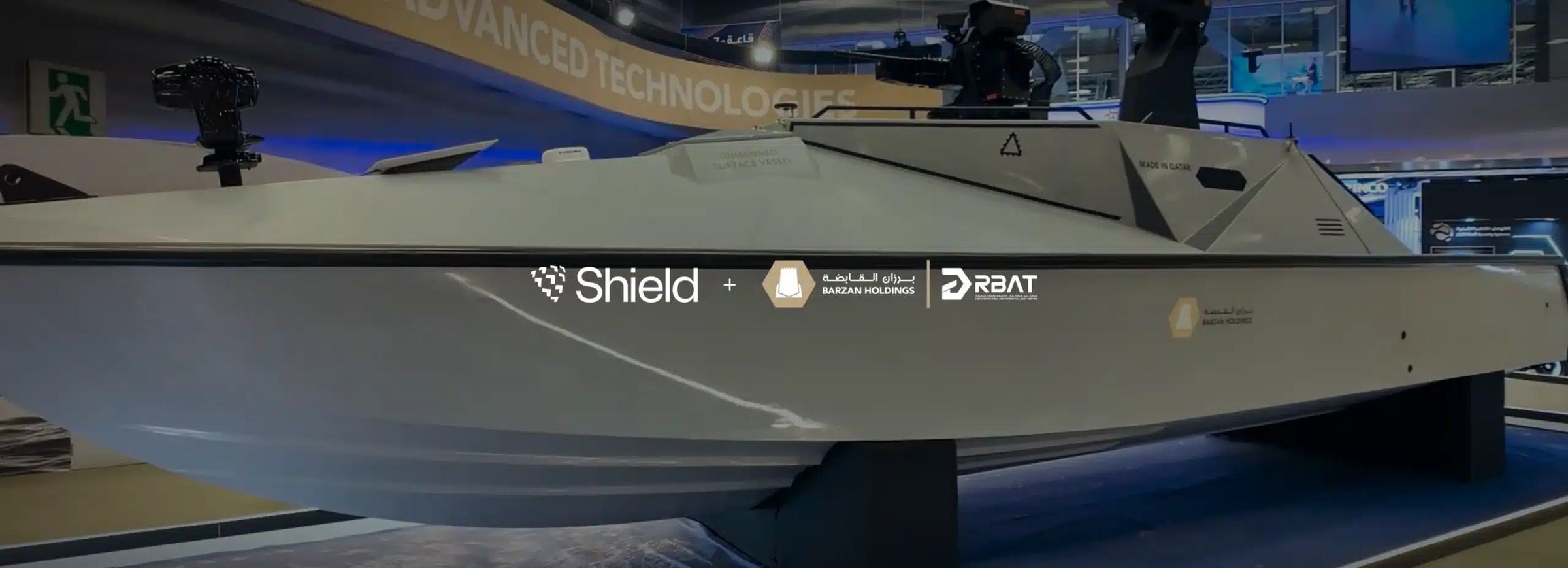
Shield AI and Rheinmetall Barzan Advanced Technologies signed a memorandum at Milipol Qatar, announced on October 28, to explore integrating Hivemind into Qatari-designed maritime autonomous defense and security solutions. RBAT is a joint venture between Barzan Holdings and Rheinmetall. The release connects local engineering with Shield’s autonomy software and describes coordinated operations as a goal. It does not announce a completed Qatari multi-vessel trial, a delivered fleet or a named procurement award. Read the primary source account.
An integration plan must identify the receiving system
Hivemind’s use on other platforms provides program context, but the capabilities of an earlier demonstration do not transfer automatically to a new vessel configuration. Hull behavior, sensors, communications and the mission interface affect what the integrated system can do. The memorandum establishes an intention to explore that work, rather than a public matrix of already supported Qatari platforms.
The local engineering role is material because autonomy software must fit the receiving platform and its operating arrangement. Integration is not finished when a software component starts running. It has to receive the right observations, issue commands through accepted interfaces and communicate enough status for people to understand the system’s condition. The announcement does not publish results for those interfaces.
The companies refer to protecting coastal waters and critical infrastructure. Those intended uses identify the problem they want to address; they are not evidence of a particular protection outcome. A prospective operator needs to distinguish the vessel’s observation and movement functions from the authority to decide what follows an observation. The release does not disclose a complete customer-specific control policy.
Coordination changes the unit of assessment
A useful fleet-level evaluation would preserve how vessels share information and what happens when one cannot participate. A successful single-platform demonstration cannot establish whether a coordinated arrangement remains understandable when observations disagree or communications become incomplete. These are assessment questions arising from the stated direction of the partnership, not failures reported by the companies.
The immediate change is a named collaboration between an autonomy supplier and a local engineering organization. It can help define what should be integrated and who will carry out the work. It does not yet tell a purchaser the accepted configuration, deployment schedule, training burden or recurring support cost. Those details belong to later engineering and commercial milestones.
The memorandum can also support domestic capability development if the participating teams retain practical knowledge of integration and maintenance. That is a conditional industrial benefit, rather than something established by the signing ceremony. Evidence of sustained capability would connect training and engineering responsibilities to work the receiving organization can repeat and support after the supplier’s demonstration team leaves.
Prior Shield maritime collaborations are relevant as heritage, but they should remain attached to their own locations, dates and test conditions. The Qatar agreement should not borrow the appearance of a completed result from a different vessel or partner. Keeping those records separate makes later progress easier to assess and reduces the risk of treating every new partnership as another fielded capability.
RBAT brings an existing local engineering and command-and-control role to the proposed work. That creates a specific interface question for coordinated vessels: whether the receiving command environment and the autonomy software share the same interpretation of a task and its status. A common operational picture is useful only when those meanings remain clear across the integration. The memorandum establishes the partners' intention to explore that connection; it does not publish an accepted interface specification or a multi-vessel operational trial.
What would make the next announcement informative
The longer-term possibility is a locally integrated maritime-autonomy system that supports coordinated missions while remaining controllable and supportable. The decisive evidence will identify the actual platforms, functions exercised and human-control arrangement, then distinguish test completion from customer acceptance. For now, the October memorandum provides a direction for that work, with the integration outcome still to be demonstrated.
Source organizations: Shield, Barzan Holdings, Rheinmetall.
This analysis draws on the public sources linked in the text. Send corrections to [email protected].