The first useful observation of a suspected explosive hazard can require someone to move closer to it. That exposure makes search support a consequential military robotics task, even before a machine can handle an object. Skylark Labs' humanoid demonstration addresses that initial stage. Our assessment is that using familiar equipment under specialist supervision is a practical starting point, with dependable search performance and reduced operator burden still the tests that would establish field value.
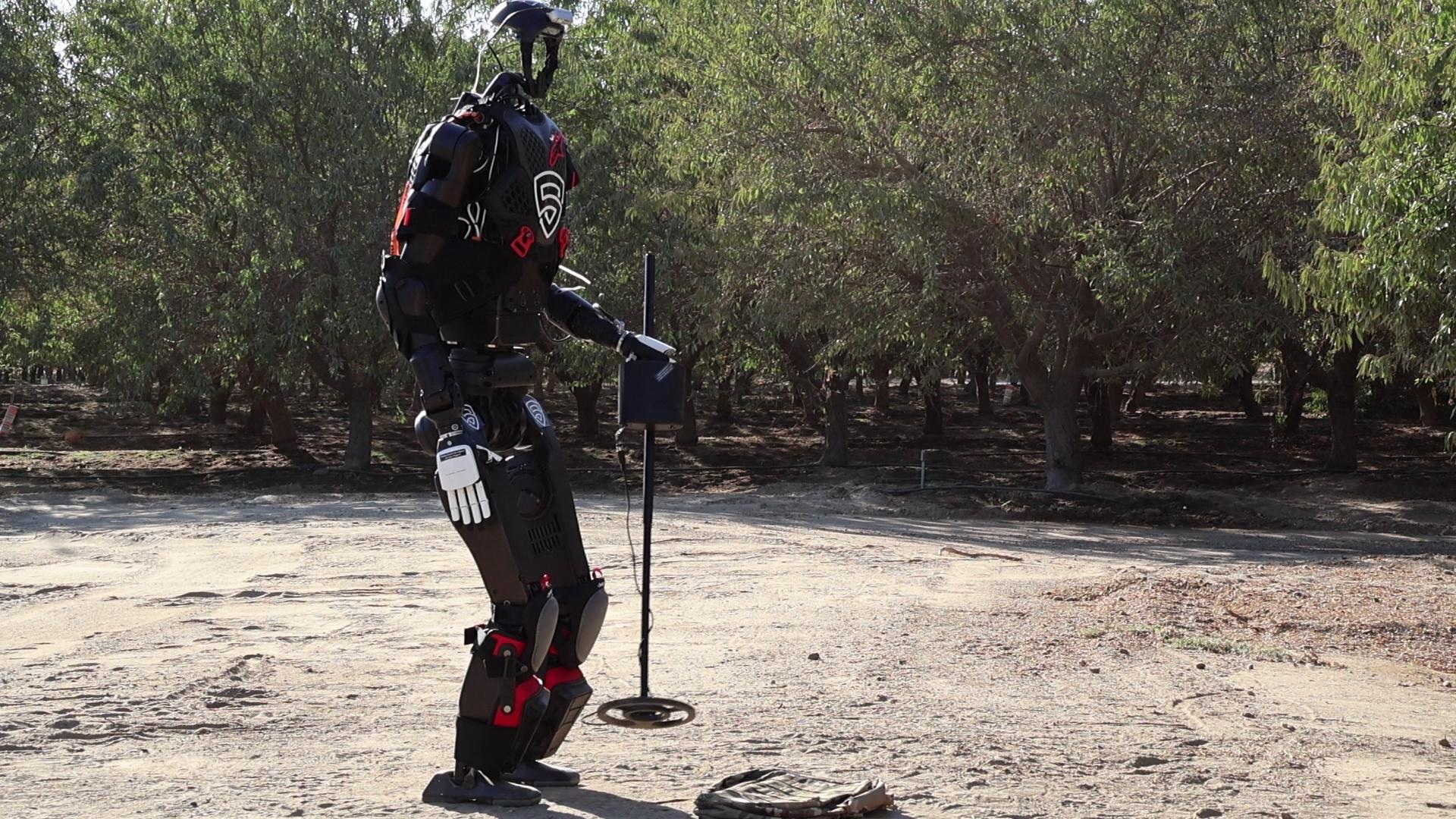
In a company-authored, sponsored account published by Breaking Defense on November 20, Skylark describes a humanoid using a standard handheld metal detector. The reported experiment involved picking up the instrument, sweeping an assigned area and responding to its alert without a separate command for every movement. The account describes human supervision and demonstration-based learning. It establishes a reported search-support demonstration, not a fielded disposal capability or an independently validated explosive-identification rate.
Familiar tools make the operating concept understandable
The detector is central to the demonstration because it gives the robot an existing human tool and a recognizable task. The technical question is how well perception and action remain connected throughout that task. A machine must respond appropriately to its equipment and environment while the specialist retains the authority to assess the situation. The demonstration provides a concrete example to evaluate, rather than an abstract claim that a humanoid could perform dangerous work.
A detector alert should not be confused with identification of an explosive device. The observation is an input for trained assessment. Keeping that distinction visible protects both the operator and the evidential value of the trial. We would want a record of the conditions, attempts, assistance and incomplete tasks before estimating how much exposure or workload a deployed system could avoid.
Independence within a task needs a boundary
Carrying out a sequence without a command for each movement could reduce the amount of detailed teleoperation required. It does not mean the robot should decide the purpose or scope of the mission. A useful operating model identifies the assigned task, the conditions under which it may proceed and the point at which a specialist takes responsibility for interpretation. Those boundaries belong in evaluation from the start.
The AI behind the demonstration is Skylark's Continual Field-Adaptive Models, or CFAMs. The company and research authors describe learning from limited demonstrations and adapting verified experience on the device. Their broader robotics results are separate from validation of this EOD search task. This article does not treat a manipulation benchmark as a measurement of explosive detection, nor assume that a learning mechanism alone establishes safe field behavior.
Evaluate the whole supervised task
The strongest objection is that a limited demonstration may depend on prepared conditions. That is a reason to widen testing carefully, not to dismiss the initial skill or assume it generalizes. A trial record should distinguish what changed between attempts and whether corrections were required. It should also preserve evidence of tasks the robot could not complete, since those cases define where human exposure may remain.
We would compare the proposed workflow with the current search-support process, including setup, supervision and recovery effort. The relevant benefit is a change in the specialist's work and exposure, not a count of autonomous movements. Supportability also matters: familiar detectors may ease one integration problem while maintenance and training for the robot introduce others.
Skylark's account leaves physical handling and disposal as development goals. The next persuasive milestone is therefore a representative search trial with a clear denominator and a reviewable supervision record. The demonstration deserves attention for giving the military a specific task to assess. Its promise will be established by dependable support to specialists who remain in charge of the judgment and response.
Disclosure
Skylark Labs supplied the demonstration media. This publication has no ownership or employment affiliation with Skylark Labs and has not independently reproduced the reported performance.
Sources and media credits
Unaltered still from Skylark Labs’ supplied humanoid detector-handling demonstration, at 2 seconds in the supplied clip. Demonstration context; not an independent explosive-detection trial. Image: Skylark Labs
This analysis draws on the public sources linked in the text. Send corrections to [email protected].