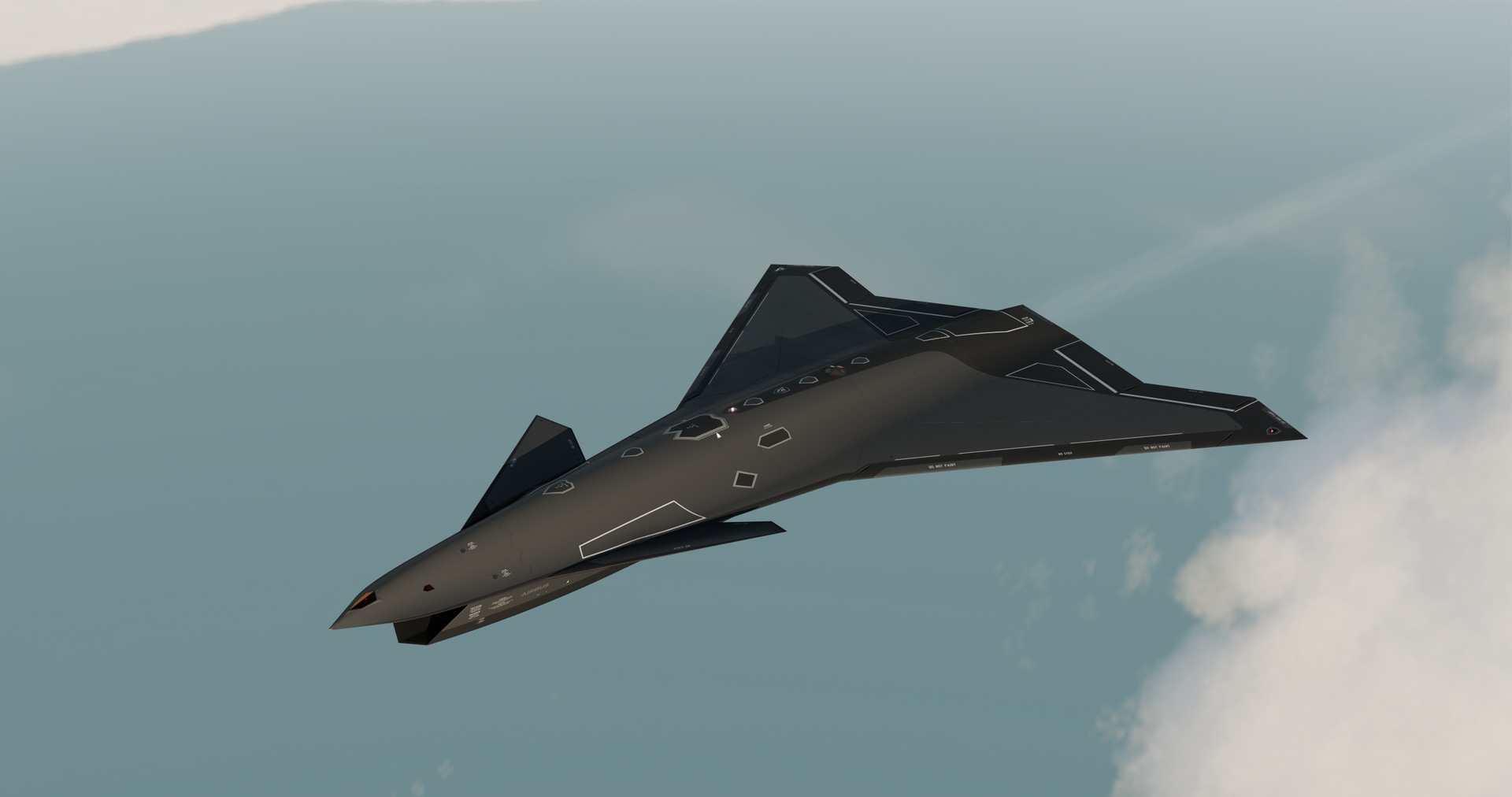
A future fighter program can promise important capability while leaving an air force with a gap before that aircraft arrives. An uncrewed partner for fighters already in service could bridge part of that interval. Airbus’s Wingman concept is consequential as that kind of proposal. Its practical value depends on which near-term problem it solves, rather than whether a striking display model resembles the aircraft a future force hopes to own.
Airbus’s June 2024 published source unveiling describes a full-size concept model and explicitly compares it with a design exercise. It presents support for crewed fighters before the later combat-air system. A separate published source agreement with Helsing addresses artificial intelligence for crewed-uncrewed teaming. These establish a concept and software collaboration. They do not establish a flown prototype, a government production order or a validated operational interface for every proposed mission.
A bridge should have a specific destination
An interim system earns its case through a task that an existing force cannot do well enough or cannot afford to do often enough. Carrying another sensor, another weapon or an electronic-warfare payload are different tasks, with different integration demands. The concept should identify which comes first. Trying to promise all of them immediately can recreate the complexity that makes a next-generation program take so long.
Our assessment is that the pilot’s interface is part of that initial requirement. The fighter pilot already manages the aircraft, its sensors and a tactical situation. A supporting drone should therefore be tasked through a small number of understandable decisions. The useful question is what the pilot delegates, what information returns and which exception demands attention. A product called a wingman still needs evidence that it behaves like a helpful participant rather than another cockpit chore.
The software agreement opens work rather than finishes it
An artificial-intelligence collaboration can bring skills needed for planning, perception or decision support. It does not itself prove those functions are reliable in the aircraft configuration. Airframe constraints, sensors and communication all shape the data and choices available to the software. An integration record should show which partner supplies each function and what tests establish the behavior the customer will receive.
Consider a proposed reconnaissance support role. This is a hypothetical evaluation scenario, not an Airbus Wingman result. The drone might move within an assigned area and report contacts while the pilot remains focused on the primary mission. The test should include ambiguous observations and a request to change the task. It would measure whether the supporting aircraft saves attention, not merely whether it can send more data into the cockpit.
Keep the design model’s evidence level visible
A concept model can usefully communicate intended size, layout and equipment options. It is not evidence of aerodynamic performance, mission endurance or maintainability. The explicit design-exercise language in the unveiling helps a reader retain that distinction. A later development decision should produce a separate record covering physical flight tests and the configured mission system.
The industrial strategy also matters. An interim aircraft may need to complement national fighters while remaining usable within an allied operation. Those goals can require different security permissions and integration rights. A customer should ask which capability is meant to be sovereign, which interfaces are shared and how the aircraft can be updated without stranding the fighter integration. That connects the proposed bridge to the force that would actually use it.
Choose the first useful interim mission
An interim aircraft can reduce a capability gap only if it solves a problem that exists before the larger future program arrives. That requires a clear role: adding another sensor, carrying equipment or creating another tactical option produces different requirements. A broad companion-aircraft concept can make the possibilities visible while leaving the first affordable, achievable mission undecided. Choosing that mission is a procurement decision as well as a technical one, because it determines which features are essential now and which can wait.
The relationship with a crewed aircraft should also be designed around the pilot’s limited attention. An additional platform is useful when its status and task are understandable without turning every maneuver into another cockpit procedure. A defined operating envelope could offer a meaningful contribution earlier than an attempt to automate every possible role. Airbus’s Wingman concept matters as an industrial option for that path. Its wider impact would be a credible bridge from today’s force to future combinations of crewed and uncrewed aircraft, supported by specific mission evidence and upgrade choices that remain useful as the longer-term program develops.
What would change the assessment
Treat the display model and collaboration as development intent; seek mission-specific flight and workload evidence.
The wider impact
Wingman’s larger opportunity is to deliver a useful increment before the next generation of crewed aircraft arrives. That works when the first role is narrow enough to validate and important enough to matter. A credible bridge would add demonstrable options to today’s force while preserving a path into tomorrow’s architecture.
This analysis draws on the public sources linked in the text. Send corrections to [email protected].