A small unit may need aerial observation or a delivery without owning a runway. An aircraft that takes off vertically and cruises efficiently could supply that option from more places. DARPA’s ANCILLARY work is consequential for that reason. Its accelerated EVADE demonstrations also expose a broader acquisition choice: learning sooner about useful missions can be sensible, provided the conditions deferred to gain speed remain visible rather than disappear from the requirement.
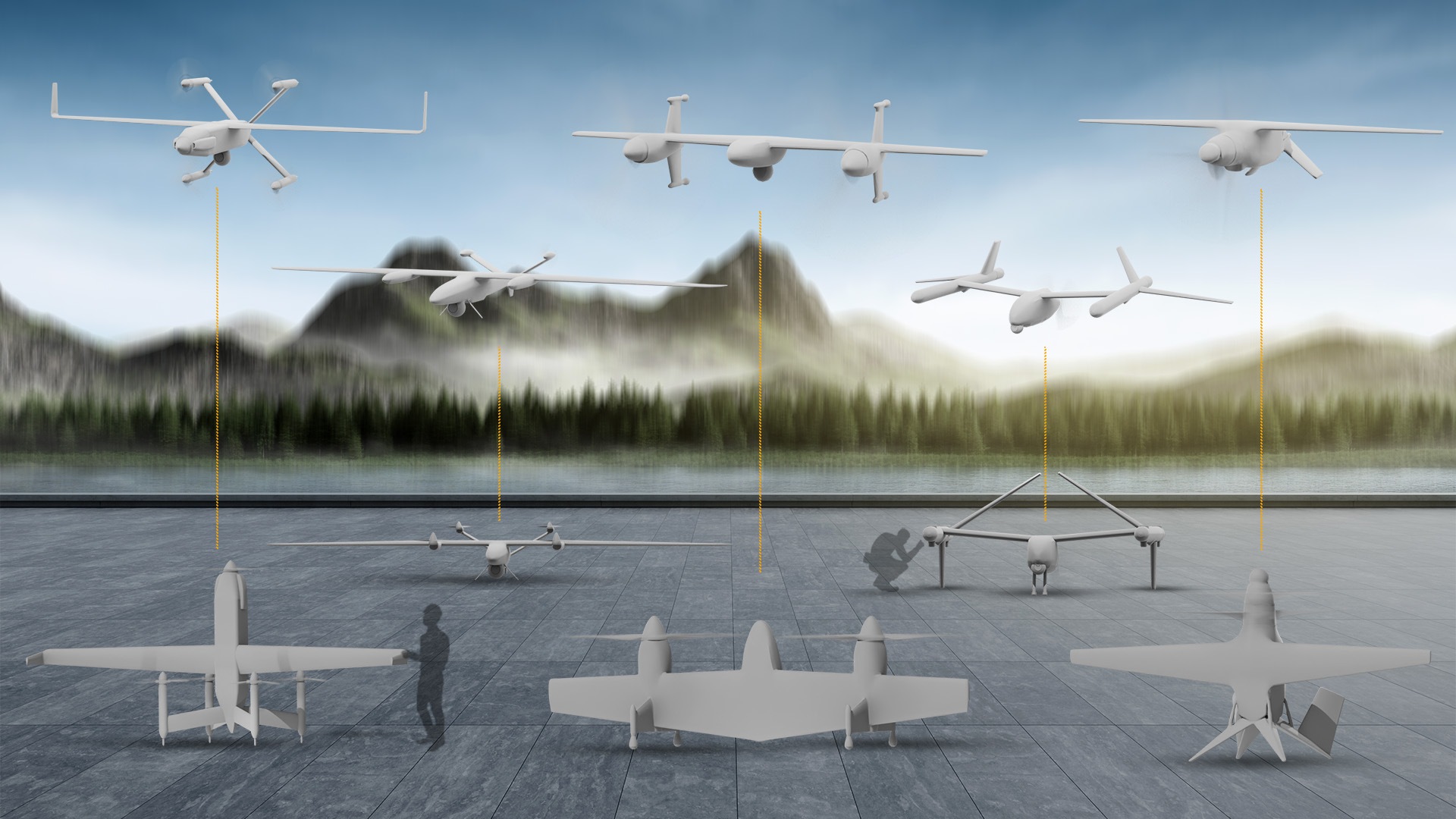
DARPA’s June 2025 published source account describes EVADE as an acceleration of ANCILLARY, using common Sikorsky MATRIX flight-autonomy software across five performer designs. It explicitly postpones some physical-dimension requirements and autonomous takeoff and landing in high sea states. The published source program description explains the larger runway-independent aircraft objective. These are development plans and scope statements; the intended transition date is not proof that every promised capability subsequently entered service.
Separate mission learning from full operating conditions
Vertical takeoff and landing means the aircraft does not need to accelerate along a runway before becoming airborne. Efficient forward flight can then make it useful over longer distances than a purely hovering design. The combination introduces transitions between flight modes. A system that manages those transitions must also deal with the environment at its departure and arrival points, including a moving ship if that is part of the intended mission.
Our assessment is that a common autonomy stack can make comparisons between airframes more informative. Different designs can be tested against a similar control foundation, reducing one source of variation. But shared software does not make their aerodynamic responses, payload effects or landing behavior identical. Each combination remains a specific system. A software result from one performer cannot automatically establish the envelope of another aircraft that uses the same name for its autonomy.
Deferred conditions still belong to the decision
Postponing rough-sea takeoff and landing may let a program test payload usefulness sooner. That is an explicit trade rather than necessarily a failure. The buyer needs to distinguish what the demonstration proves now from what a future shipboard requirement still demands. A calm-airfield mission can show useful collection or delivery while leaving launch-and-recovery performance at sea unresolved.
Consider a communications-relay task from a ship. This is a proposed evaluation scenario, not an EVADE result. The aircraft might extend a connection once on station, but the complete mission also needs safe departure, return and recovery while the ship moves. A trial should record each stage separately. Otherwise an excellent airborne payload outcome can conceal a recovery limitation that prevents the service from using the aircraft when it needs it.
Keep the transition claim bounded
The agency’s plan calls for rapid learning and transition. Readers should not turn that intent into a current fleet count or assume the later engineering conditions have been met. The next useful public evidence would identify which design, autonomy release and payload were flown, the conditions used and the changes required afterward. That would let a service decide whether an early capability fits a limited role while more demanding conditions are still being developed.
The program should also distinguish operator workload during transit from workload at launch, tasking and recovery. Reducing interaction on a long flight can be valuable even when a person remains essential at the endpoints. Costing and training that complete workflow would make the speed of the demonstration relevant to actual adoption rather than simply shorten the calendar to an impressive flight.
Use an early trial to resolve a real decision
The accelerated approach creates a useful distinction between selecting a mission and qualifying an operating environment. An early flight might reveal that a payload supplies information a unit values. That lesson can justify continued work even when the aircraft has not yet met the original shipboard limits. Conversely, discovering that the payload is not useful could prevent spending more effort on difficult recovery conditions. Speed is valuable when it resolves a real decision sooner, with the remaining engineering obligations attached to the selected design.
A shared flight-control foundation could help that comparison by making one source of variation more consistent. The experiment still needs to describe differences in payload, airframe and operator arrangement so a service knows what produced the result. EVADE’s bigger-picture lesson is about disciplined sequencing: test the uncertain part that most affects the next decision, then keep the deferred requirements visible. That can make a development program more responsive without pretending a narrower demonstration proves everything. The eventual operational benefit would be runway-independent support that fits a defined unit and environment, rather than a transition announcement detached from the conditions in which the aircraft can actually be used.
What would change the assessment
Seek named-design flight results and rough-sea recovery evidence; an announced transition target is not a fielding result.
The wider impact
The wider benefit could be aerial capability available to units and ships that cannot support a conventional runway. EVADE earns that benefit by making mission learning faster while keeping unfinished operating conditions explicit. The result should be a clearer path to usable roles, with evidence added as the envelope grows.
This analysis draws on the public sources linked in the text. Send corrections to [email protected].