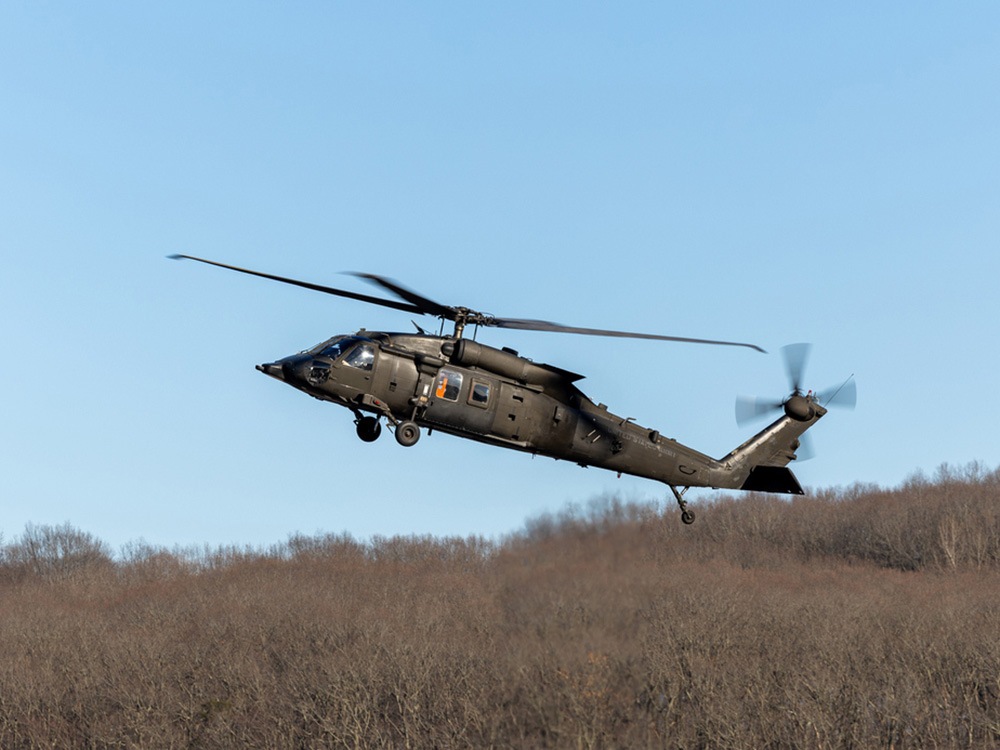
Helicopter missions can be dangerous, demanding and dependent on a small number of trained crews. Autonomy could offer more ways to move supplies or support people while reserving crews for tasks that need them aboard. The Army’s experimental UH-60MX matters because the service now has a familiar airframe equipped to explore that relationship itself. The step is less about replacing every pilot than about learning when different levels of piloting make operational sense.
DARPA’s March 2026 published source account reports delivery of an experimental Black Hawk equipped with Sikorsky MATRIX autonomy. Sikorsky’s published source statement describes an Army-owned and operated aircraft intended to help develop procedures for optionally piloted and autonomous systems. Together they establish a technology transition and a test resource. They do not establish that routine operational Black Hawks now conduct every mission without pilots or that the system has validated all proposed roles.
Optional piloting creates a choice to be managed
An optionally piloted aircraft can support operation with people aboard and operation without them, depending on configuration and authorization. That flexibility can be useful because different missions impose different risks. It also creates a procedural burden: the unit needs to know who controls the aircraft in each mode, how authority transfers and what happens if an operator needs to interrupt the automated behavior.
Our assessment is that an Army-owned testbed can make those questions more concrete. Operators can evaluate interfaces, planners can compare mission arrangements and maintainers can encounter the equipment in a service context. That does not eliminate the manufacturer’s engineering role. It does create an opportunity to test whether the system fits the Army’s work rather than only the test sequence a contractor selected for its demonstration.
The whole mission includes the endpoints
An autonomous flight can be technically successful while the loading or unloading process remains impractical. A cargo mission needs people and equipment at both ends, a clear landing location and procedures for deciding whether the destination is still usable. Aircraft control is part of that workflow. The delivery is operationally useful when the supporting unit receives what it needs without acquiring an unmanageable new coordination burden.
Consider a planned delivery to a remote site that becomes obstructed. This is a proposed test, not a reported UH-60MX mission. The aircraft needs an approved way to wait, divert or return, and the receiving team needs to understand its status. A demonstration should measure those decisions alongside flight quality. That would expose whether autonomy gives commanders more options or demands continuous remote attention whenever something changes.
Service learning should become a reusable record
The transition accounts describe a resource for experimentation. The next useful evidence would show which mission procedures were tested, what operators found difficult and which release or configuration produced the result. It should distinguish assisted piloting from uncrewed operation and preserve the limits of each. That record would help later units adopt a role without inferring that success in another mode certifies their own plan.
The support implications also deserve early attention. A familiar helicopter retains existing maintenance strengths, but new sensors, computing and interfaces introduce different faults. The service needs to know which personnel diagnose them and what changes require another safety assessment. Testing those responsibilities while the system is experimental is part of the practical value of receiving the aircraft, rather than leaving sustainment to be designed after a deployment decision.
Compare assisted and uncrewed modes separately
A familiar airframe offers a useful way to compare alternative crew arrangements. The service already understands much of the helicopter’s ordinary handling and support. It can therefore ask which additional tasks the autonomy equipment changes, instead of introducing every aspect of a new aircraft at once. That does not make the added system routine. It helps isolate the practical questions, such as how a ground team tasks an uncrewed flight and how a maintainer recognizes a fault that affects only an automated mode.
The testbed can also expose where automation benefits a pilot who remains aboard. Assistance during a demanding flight phase may have value even if uncrewed operation is not appropriate for the mission. Measuring those modes separately would prevent a false choice between no automation and complete crew removal. UH-60MX’s strategic importance is the opportunity for the Army to develop an operating concept from direct experience. The larger payoff would be a better allocation of crews and aircraft across tasks, with specific procedures for deciding when people need to fly, when they can supervise from elsewhere and when an automated function should be withheld.
What would change the assessment
Seek service-led mission results separating assisted and uncrewed modes rather than extrapolating delivery to fleet-wide readiness.
The wider impact
The wider opportunity is to make a mature aviation platform support more mission arrangements without losing a clear human relationship to the aircraft. UH-60MX can help the Army learn where that flexibility is useful and what support it needs. The durable result would be validated procedures and understandable limits, beyond a single autonomous flight.
This analysis draws on the public sources linked in the text. Send corrections to [email protected].