Air defense has to solve two problems at once: stopping a particular threat and sustaining protection as demands change. A weapon that performs well in one engagement can still be difficult to replenish, expensive to adapt or awkward to integrate with another part of the force. The wider industrial question is whether a family of related designs can preserve useful commonality without turning every new requirement into a separate development program.
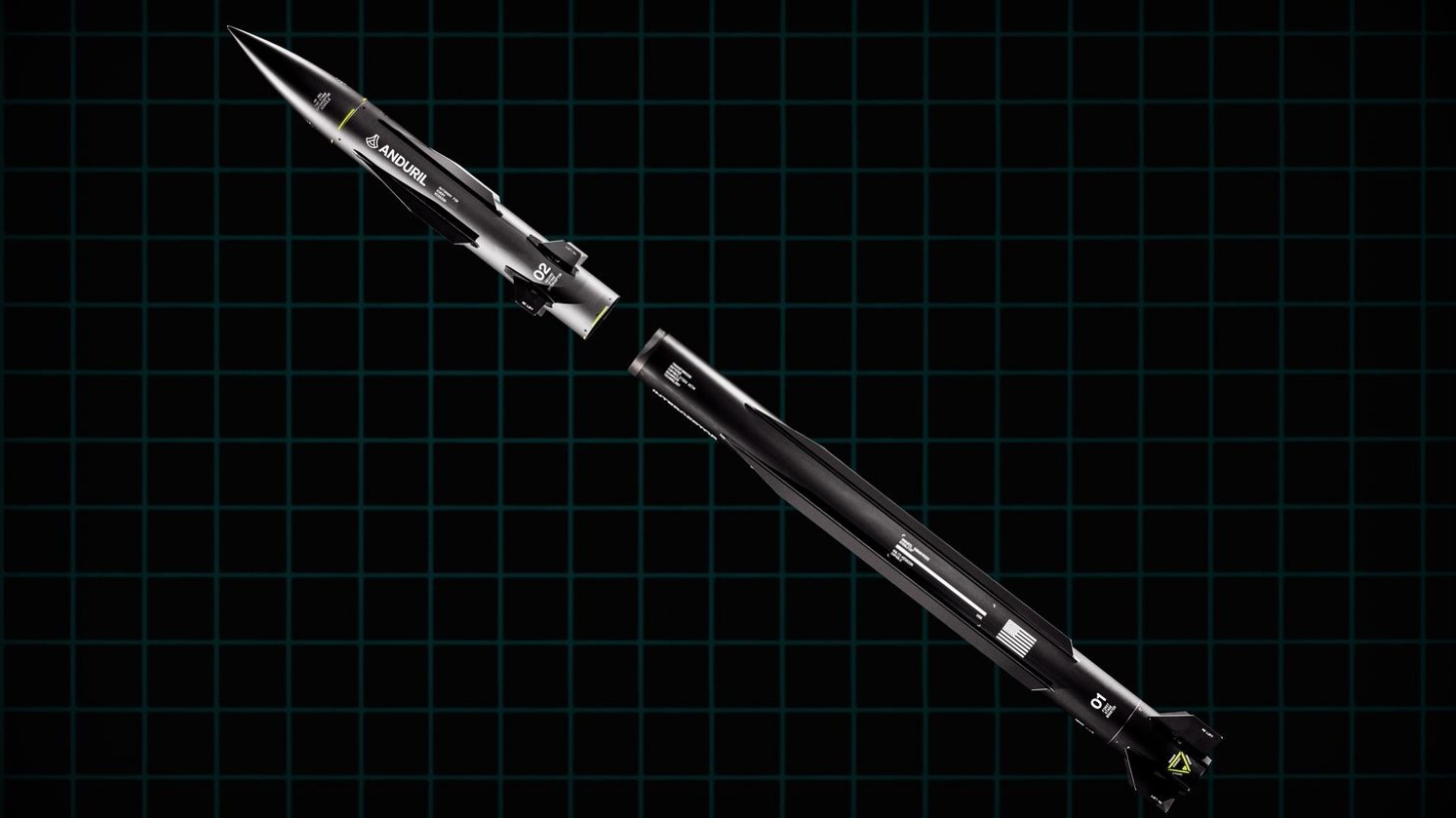
Anduril placed that question at the center of its October 12 Steelfin announcement. The company introduced a surface-to-air interceptor family based on a configurable two-stage architecture. It says shared components and interfaces will support different variants and compatibility with existing launch and fire-control infrastructure. Crucially, the release says representative air vehicles have undergone ballistic testing and that flight testing of variants will begin next year. Those milestones do not establish completed operational qualification.
The design claim is about the cost of change
Modularity is most interesting when a customer wants to change something. If a component can be replaced without redesigning the whole product, an upgrade could require less engineering work than an entirely new design. That is the architectural proposition. Whether it delivers a saving depends on how much validation the change still requires and which elements genuinely remain common.
The distinction matters because a common interface does not make every combination interchangeable in practice. An altered configuration still needs evidence that it behaves as intended as part of the complete system. This is a general qualification principle, not a claim about a specific Steelfin result. The relevant comparison is the total effort needed to introduce a validated variant, rather than the apparent simplicity of changing a component.
A useful public account would therefore connect each configuration to its demonstrated role. Readers should be able to distinguish a family-level ambition from results obtained by a particular vehicle in a particular test. Without that distinction, success in one setting could be read too broadly as evidence for every advertised mission.
What changes in the short term
For customers and potential suppliers, the announcement creates an architecture to examine and a test schedule to follow. It does not by itself make a new defensive capability available to an operational unit. Near-term decisions can concern integration studies, evaluation criteria and industrial participation while operational claims remain conditional on later results.
The economic assessment should be equally disciplined. A lower proposed unit price would answer only part of the question. A buyer would also need to understand development costs, testing, support equipment, training and replenishment. Those categories are analytical questions for assessing a procurement proposal; this article does not claim to have an independently verified Steelfin cost model.
Production claims deserve a similar separation. Designing a system with manufacturing in mind can be valuable, but an intended production approach is not a delivered output rate. The evidence to seek would include accepted units over time, the configuration being produced and the support needed to maintain that rate. Such reporting would let readers judge industrial progress without treating a factory ambition as inventory.
The long-term effect depends on maintaining commonality
If the architecture survives testing and repeated changes, it could give customers more options within a shared development and support framework. That could reduce the disruption of responding to new requirements. The benefit would be strongest where the common elements remain useful across variants and where introducing one configuration does not unexpectedly complicate the others.
The opposite outcome is also possible: a nominal family could accumulate enough unique equipment, software and support requirements that much of its promised commonality becomes administrative. Public evidence of controlled configuration changes would help distinguish those outcomes. A family name alone cannot do that work.
The next milestone is therefore more specific than another broad capability statement. Flight-test reporting should identify which variant flew, what the test was intended to establish and what remains outside its scope. That would help connect Steelfin’s larger argument about adaptable air defense to an assessable development record. The architecture is the proposition; qualification and production evidence will determine how far it travels.
Sources and limits
- Anduril, October 12, 2026: Steelfin announcement.
- Source checked October 16, 2026. Company claims are attributed. This is public-source analysis, not a weapons test or an independently verified assessment of price, production rate or interception performance.
What would change the assessment
Watch for repeatable test results and customer evidence that connect this announcement to the practical outcomes discussed in this analysis.
This analysis draws on the public sources linked in the text. Send corrections to [email protected].