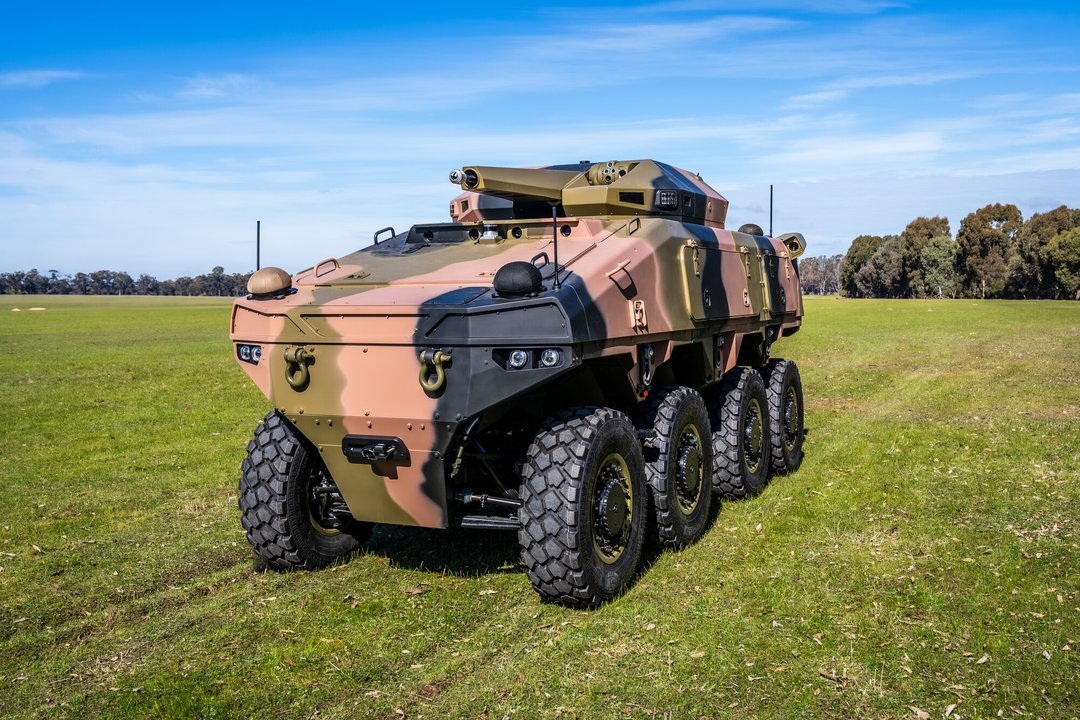
A robotic fighting vehicle promises to add capability without placing a soldier inside another exposed hull. That promise combines at least two problems: moving sensibly through the ground environment and operating a weapon within human authority. BAE Systems’ ATLAS Collaborative Combat Variant puts those functions on the same platform. The result is worth examining because success in one form of automation cannot simply be carried over as evidence for the other.
BAE’s February 2026 announcement statement describes a functional prototype tested across remote control, waypoint navigation and sense-and-avoid movement. It also describes a VANTAGE turret with automated detection, tracking and classification. The September 2024 supporting account launch supplies the development baseline. These are manufacturer accounts. They document the progression BAE reports, but do not provide an independent operational scorecard or establish how a fielded unit authorizes and supervises every weapon action.
Navigation is not target selection
A waypoint is a location used to define a route. Sense-and-avoid adds the ability to perceive obstacles and change movement to avoid them. A turret’s target classification is a different kind of judgment: it assigns meaning to something the sensors observe. The two may share cameras or computing resources, but they create different consequences when wrong. A mistaken obstacle judgment may stop a vehicle. A mistaken target judgment can shape a use-of-force decision.
Our assessment is that the system should make those separate states visible. An operator needs to know whether the vehicle is waiting for a movement instruction, whether a sensor has lost a track and whether the weapon awaits authorization. A single display that merges them into a general ready status would conceal the distinctions that matter most during an intervention. Reducing the number of controls is helpful only if it does not reduce understanding of the machine’s responsibilities.
Watch the footage
Brightcove player directly linked from official ATLAS product page; company launch demonstration rather than independent operational evidence.
Video: BAE Systems · Original source ↗ · Video watch page ↗Workload savings need a realistic comparison
Automation can shorten repeated aiming or tracking work while leaving the human responsible for deciding what the observation means. A useful trial would compare that complete workflow with the crewed alternative, including reviewing uncertain classifications and correcting them. Counting how many vehicles a person can supervise while nothing unexpected occurs would be a weaker measure. The advertised benefit is most important when several tasks compete for the same attention.
Consider a formation changing direction while the robotic vehicle reports a possible contact. This is a proposed test, not a published ATLAS outcome. The operator should be able to keep movement within limits, inspect the contact’s basis and understand whether another vehicle is already covering the area. Introducing a stale track or an ambiguous object would test whether the automation supports judgment or makes its own interpretation too easy to accept.
A prototype milestone is useful without being field readiness
The company’s reported trials show what it says has been exercised. They leave open the duration, terrain, intervention counts and independent criteria used to declare success. Buyers should request those details for the configuration offered, including the software release and turret. Doing so recognizes the value of a working prototype while keeping the further burden of proof explicit before a unit relies on it alongside people.
Support planning should follow the same separation. A mobility problem may need a mechanic; a classification problem may need data review or software correction. Units need a way to report both without turning every discrepancy into a vague autonomy fault. Clear failure categories would help the manufacturer improve the platform and help commanders decide which tasks remain dependable while another component is being repaired or revalidated.
Preserve the capability that remains dependable
A useful way to understand the combination is to follow one observation through the vehicle. A camera may first supply an obstacle to the driving system and later supply an object to the turret’s classifier. The underlying picture can be the same while the permitted consequences differ. The control system must preserve those distinctions when it displays the observation to a person. Seeing a machine avoid an obstacle does not provide evidence that it correctly classifies an object for a weapon-related decision.
This also affects what remains usable after a fault. If classification becomes unreliable, the vehicle may still provide transport or observation under a different approved configuration. If mobility fails, a payload might retain a limited stationary role. Those possibilities require explicit procedures rather than improvised assumptions during a mission. ATLAS therefore raises a broader question about modular combat capability: can a unit understand and employ the parts that remain dependable when another automated function is unavailable? The strategic gain would be additional options under clear authority, not a single impressive machine whose operational state is difficult to interpret.
What would change the assessment
Request trial conditions and intervention data for the integrated configuration; manufacturer-reported prototype success is narrower than validated operational readiness.
The wider impact
The wider consequence is a new relationship between armored force size and human attention. ATLAS could add capability without adding a crew inside each hull, but its usefulness will depend on people retaining a clear understanding of both movement and weapon functions. That is the link between a promising prototype and an accountable military teammate.
This analysis draws on the public sources linked in the text. Send corrections to [email protected].