A commander should not need to steer every robot by joystick to get useful work from it. A system that accepts an ordinary instruction could reduce that friction and make autonomy easier to employ. Scout AI’s Fury approach brings that prospect to military vehicles. Its deeper challenge is interpretation: a machine must understand what the person intends without treating an ambiguous sentence as permission to do something the person never meant.
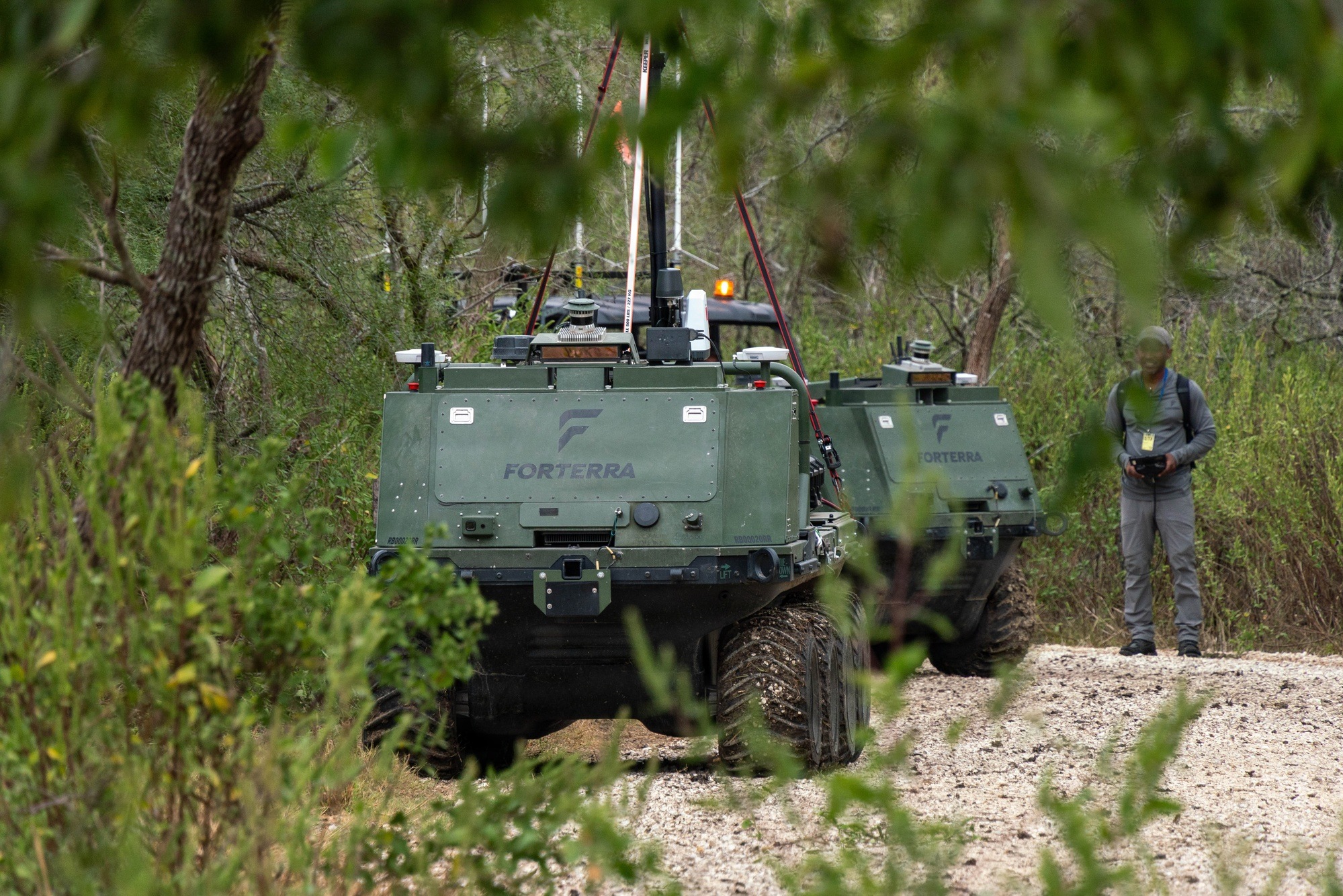
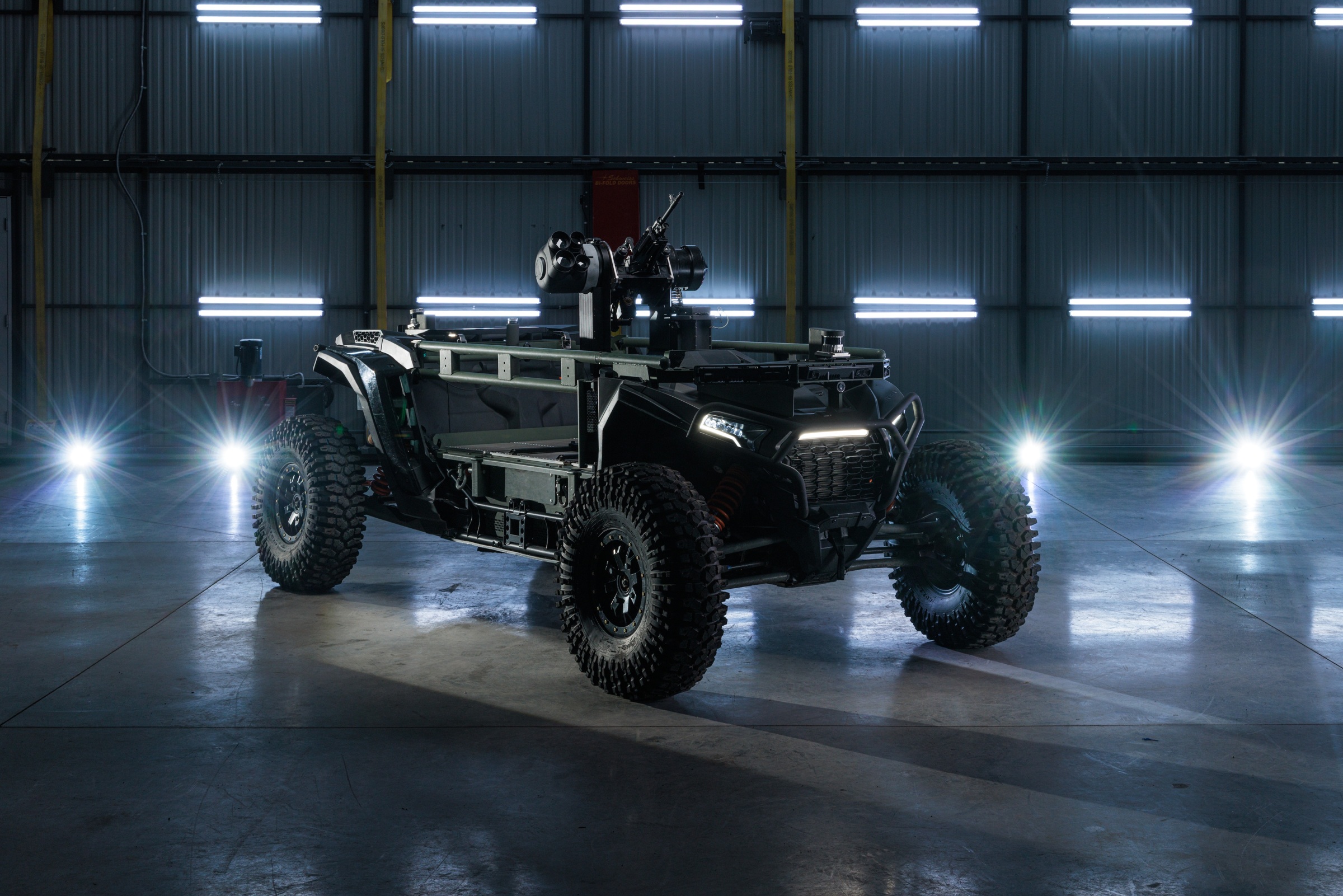
Scout’s August 2025 published account announcement says it was selected to integrate Fury on Army-provided Infantry Squad Vehicles. The Army’s own supporting source announcement names Scout alongside Forterra and Overland AI in a commercial autonomy evaluation. The selection is evidence of a government-funded prototype effort. It does not demonstrate that conversational tasking is reliable in combat, or that a model can safely interpret any instruction given by an operator.
Words become commitments when a vehicle moves
A vision-language-action model connects what a machine sees, what a person says and the action the machine selects. Those three elements can be useful together: an operator might refer to a visible object rather than enter its coordinates. But language also carries unstated assumptions. A request to move behind a building may imply staying within a particular area, avoiding civilians and waiting for another vehicle. The system needs a way to expose those assumptions before they become motion.
Our assessment is that the decisive interface feature is a confirmation that the operator can understand. The robot should show which destination it selected, which constraints it will follow and which part of the request remains uncertain. That is more demanding than displaying a transcript of the words. A correct transcript does not establish a correct interpretation. The test is whether a person can catch a wrong plan quickly enough to prevent its consequences.
Watch the footage
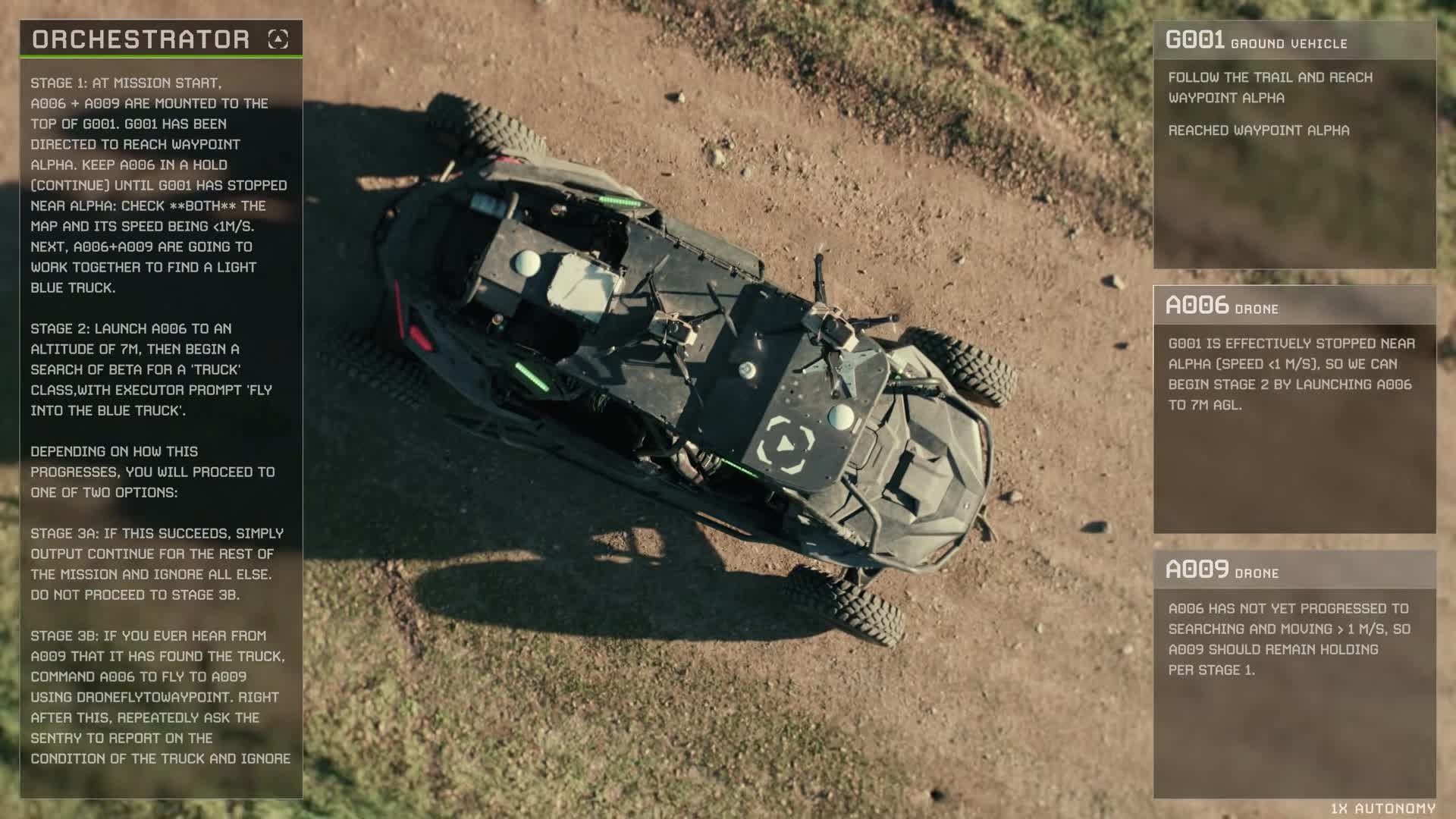
Scout AI presents its Fury vehicle orchestration system in a company demonstration. Published in February 2026; broader product context, not footage of the Army’s 2025 ISV evaluation.
Video: Scout AI · Original source ↗ · Video watch page ↗Evaluate clarification as a useful behavior
A hypothetical supply instruction illustrates the difference. Two buildings may share a name, and a spoken direction may refer to one from the operator’s viewpoint. A system that asks which building is intended can be doing its job well. This is an acceptance-test proposal, not a reported Fury result. An evaluation that rewards only speed might penalize that clarification and favor the model that guesses confidently, even though the guess is the more dangerous behavior.
The distinction also affects training. Soldiers need to know which instructions are supported, what the robot will ask them to confirm and how to interrupt a misunderstood task. They should not have to learn hidden phrasing tricks from engineers. A natural-language interface is valuable when it lowers the burden of specifying a mission; it is less valuable if the burden returns as constant supervision of how the model interpreted each sentence.
A model claim and an operational result are different evidence
The public announcements reviewed here establish the integration path and intended evaluation. They do not publish a breakdown of mistaken instructions, clarification requests, intervention time or unsupported tasks. Such measures would be more informative for this approach than a generic accuracy percentage. The same command should be tested with changed viewpoints, obstructed scenes, similar objects and background noise, while the operator carries the other responsibilities of the mission.
A buyer also needs to preserve the boundary between interpreting intent and expanding authority. A model that understands a request better has not thereby gained permission to choose a new mission or engagement. Logging the requested task, the interpreted plan and the action taken would let evaluators identify where a failure began and help units build justified trust as the software evolves.
A shared scene needs a shared interpretation
Ordinary language is particularly attractive when the operator is looking at the same scene as the robot. Pointing out “the nearer truck” can be quicker than opening a map and finding coordinates. But shared language does not ensure a shared viewpoint. The robot’s camera might see a different truck, or the referenced vehicle might have moved. A useful interface would connect the instruction to an identifiable object or route and show when that connection has been lost. This is a design implication of conversational control, not a capability independently demonstrated by the contract announcement.
There is also a difference between an initial instruction and a conversation that revises it. A later “wait there” must apply to the active task, not be interpreted as an unrelated new destination. Keeping a visible record of the current plan would help an operator understand those revisions without memorizing the entire exchange. Fury’s larger promise is lower friction between intent and action. The meaningful gain would be a person spending less effort explaining a bounded task while still knowing exactly what the vehicle has agreed to do.
What would change the assessment
Measure clarification quality, mistaken task interpretations and recovery effort alongside mission completion; the awards do not supply those results.
The wider impact
The wider opportunity is to make machines easier for people to direct without making their behavior harder to predict. Fury will be consequential if ordinary language can remain connected to visible, bounded plans. The successful interface would help a commander express intent and correct misunderstandings, rather than require the commander to trust an invisible interpretation.
This analysis draws on the public sources linked in the text. Send corrections to [email protected].