Drone manufacturing becomes military capacity only when the output is accepted, supplied and kept usable as requirements change. Auterion and SkyFall's proposed German joint venture addresses an important industrial constraint: producing systems while preserving the connection to users and engineers in Ukraine. Our judgment is that the arrangement has a credible rationale. Its value should be measured through delivered configurations and support, with the factory announcement treated as the beginning of that evidence chain.
The partners' November 20 statement says they intend to form a venture manufacturing drones for Ukraine in Germany. Initial production is planned around the Shrike platform, combining SkyFall airframes with Auterion avionics and AuterionOS. The companies also report having delivered more than 50,000 Shrike drones together. That historical total is a supplier claim about their collaboration, not a published acceptance rate for the proposed German line.
A factory is also a configuration system
Adding a production location can reduce one geographic dependency while introducing coordination work elsewhere. The partners need to keep manufacturing instructions, software versions, component changes and acceptance records aligned. Our inference is that this will be a central test of the venture. A unit delivered quickly but with unclear configuration history can impose avoidable work on the organization receiving it.
Auterion describes frequent feedback reaching SkyFall engineers and feeding the German line. That is a useful process ambition. The evidence that would substantiate it is a traceable route from an observed problem to an approved change and a verified production revision. Buyers need not see sensitive technical details to understand whether the process preserves quality and accountability.
Prior delivery experience is relevant, with limits
The reported collaboration gives the proposal more substance than a partnership between organizations without a shared product history. It suggests that the companies have already confronted some airframe and software interfaces. It does not establish the new site's production yield, its suppliers' readiness or its ability to maintain output through changing requirements. Those are industrial questions that have to be answered at the line being commissioned.
The strongest counterargument to rapid iteration is that manufacturing needs stable instructions. Constant changes can disrupt testing, spares and training if every improvement becomes an incompatible variant. The useful balance is an explicit release process that distinguishes urgent corrections from later features. That would allow operational learning to improve the product without leaving customers responsible for reconstructing its history.
Delivery and sustainment should share a ledger
For a procurement organization, the immediate gain could be an additional production route with an identifiable division of responsibility. The practical questions are who accepts each system, which software and component versions it contains, and who supports it afterward. These questions also shape training and inventory. A larger number of products can be less useful than a smaller, coherent fleet if maintenance teams cannot obtain the right parts or instructions.
The announcement also describes a possible path toward supplying German forces. That remains a prospective market, rather than proof of a separate customer order. Keeping that distinction visible helps readers assess what has changed today: the partners have announced an intended production venture, with a specified initial platform and a history of collaboration. Later orders and accepted output would add different evidence.
We would watch for the site's operating milestones and a clear account of production acceptance and support. The positive case is industrial resilience coupled with continuing product relevance. The risk is that scale, iteration and sustainment pull in different directions. The venture's success will be established by managing those obligations together, not by choosing one of them as a headline measure.
Sources and media credits
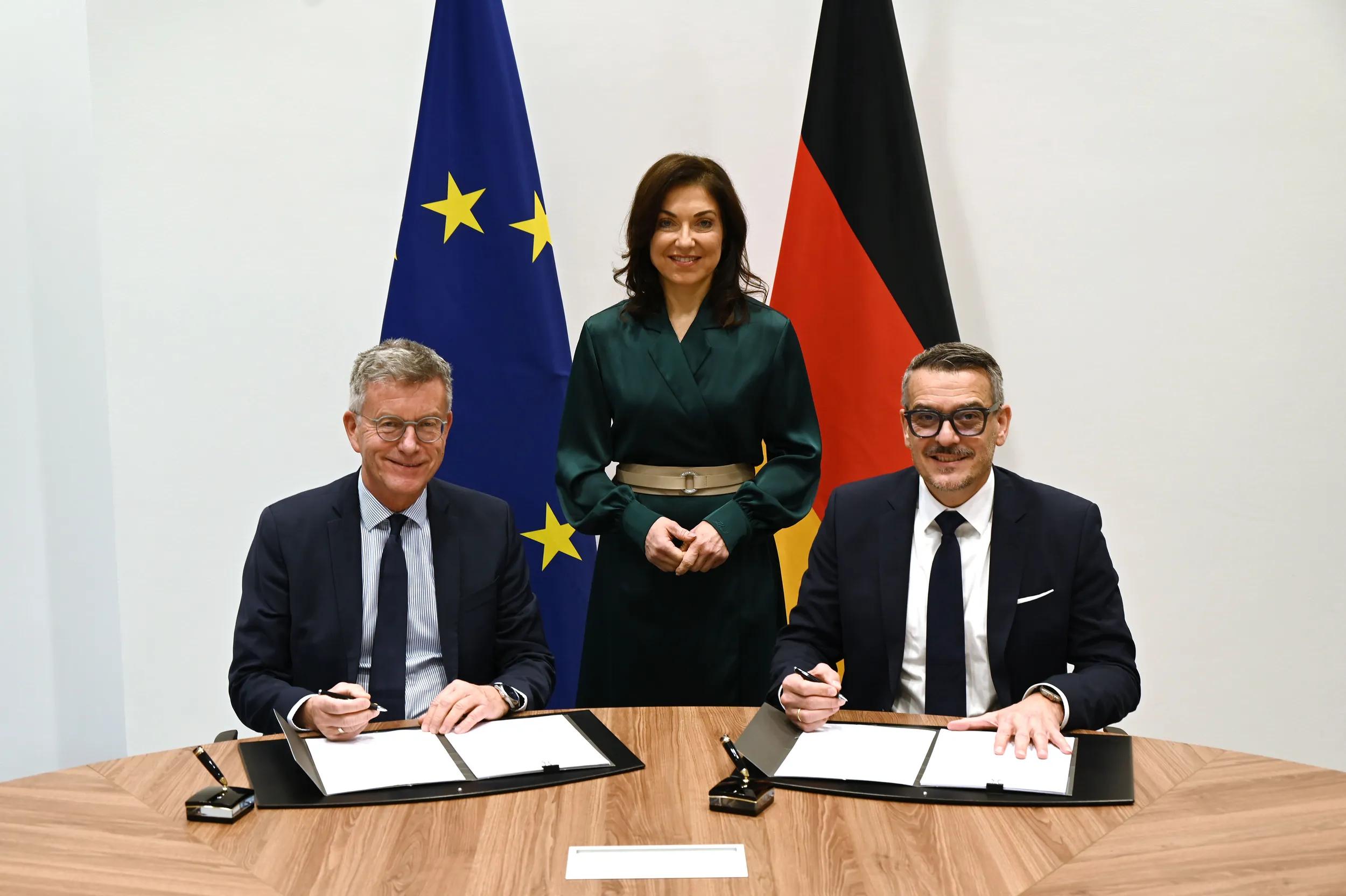
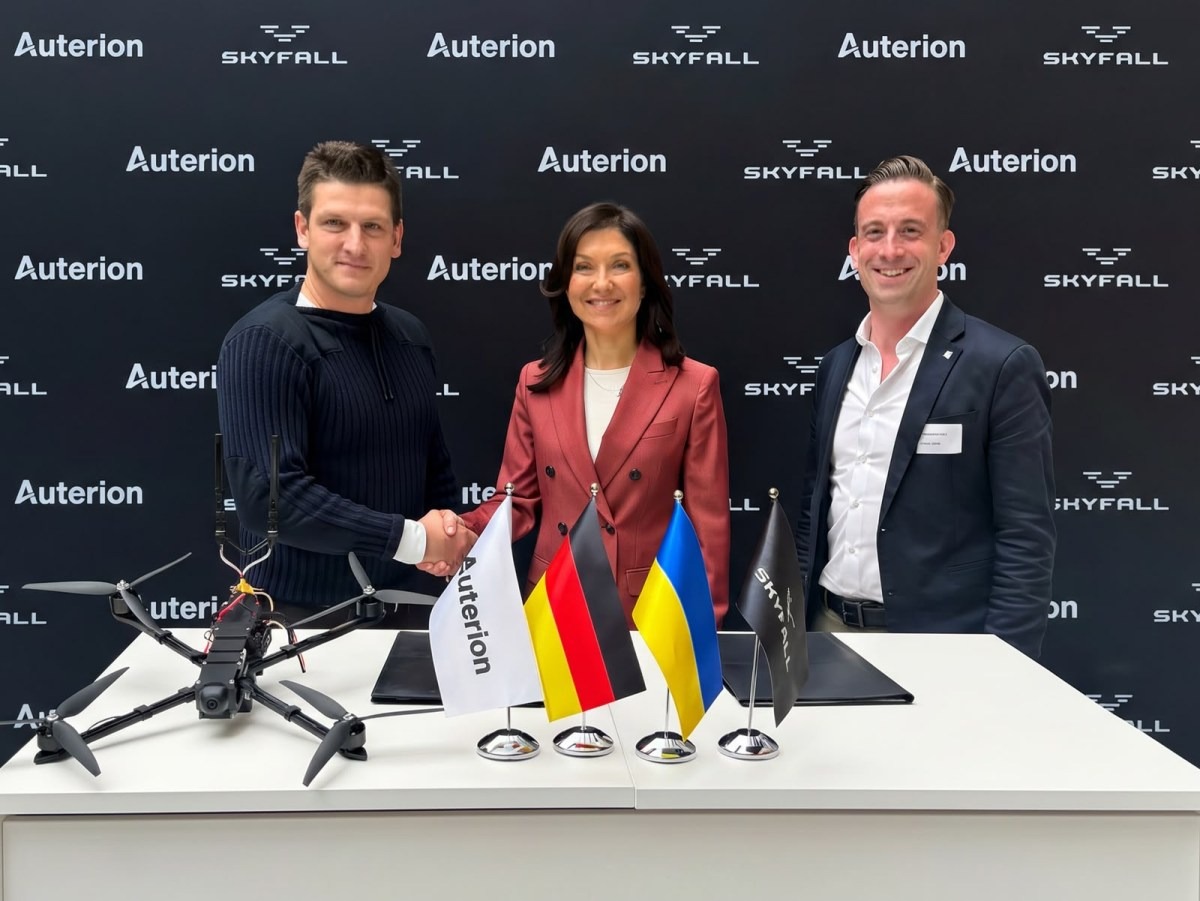
Supplier photograph accompanying the proposed Auterion–SkyFall joint venture. Agreement context, not factory output. Image: Auterion
This analysis draws on the public sources linked in the text. Send corrections to [email protected].