Counter-drone coverage depends on how many dependable sensors can be delivered, installed and maintained. A radar that works well in one configuration does little for a site still waiting for equipment. HENSOLDT's production agreement with ZF addresses that industrial constraint. Our assessment is that it is a credible route to expanding supply, with an important test still ahead: whether the additional factory can produce accepted systems at a repeatable rate.
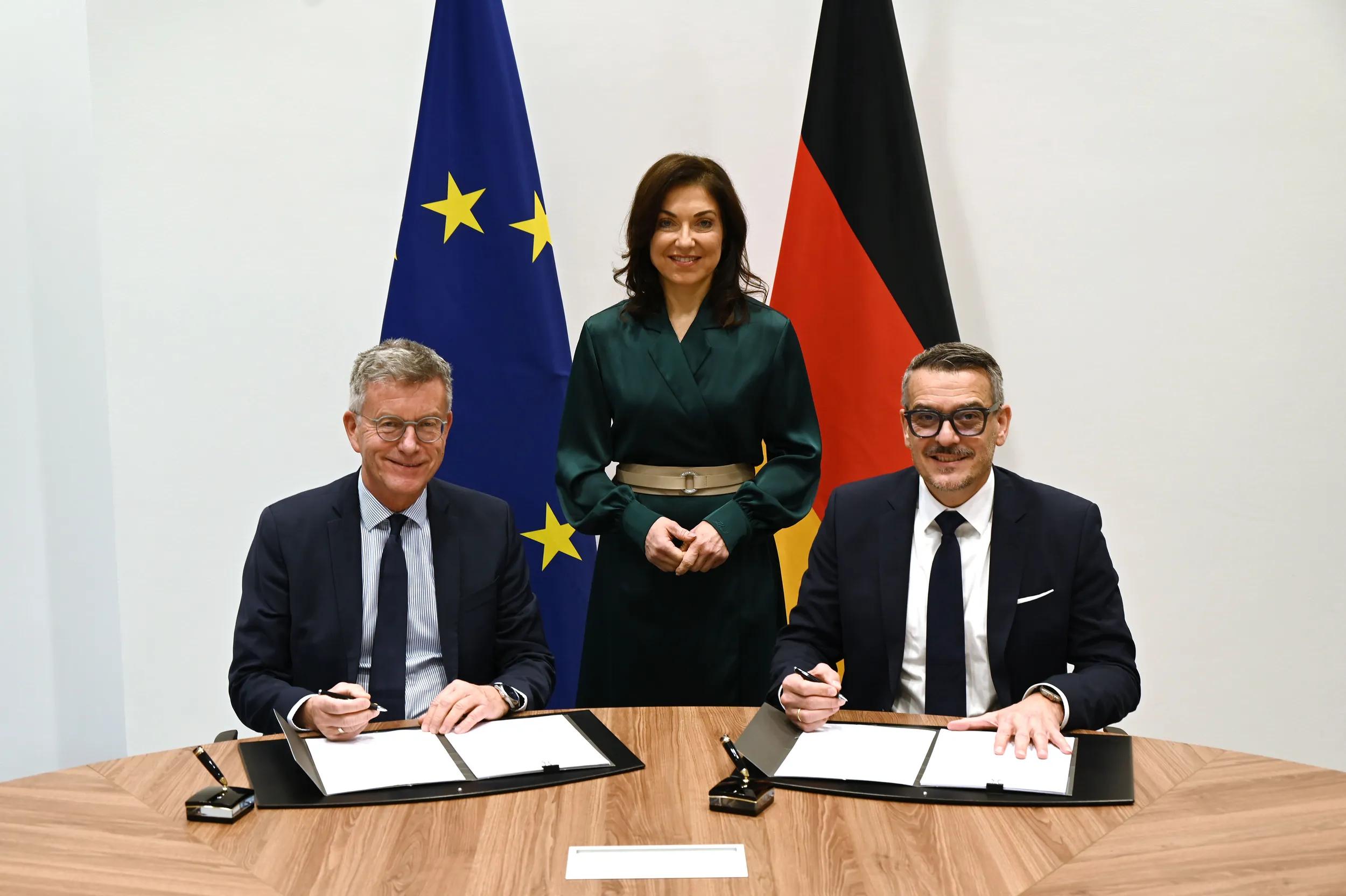
In their November 18 announcement, the companies say ZF will establish series manufacturing for Spexer radars and develop automated production-testing equipment. ZF is to manufacture independently and supply customers directly, while HENSOLDT retains the intellectual property. The release does not give a start-of-deliveries date, a committed annual output or a contract value.
Scaling the sensor, not the whole engagement chain
The autonomy connection is specific. HENSOLDT describes Spexer as a surveillance family with automatic detection and classification. Its Spexer 2000 3D MKIII product documentation identifies an X-band electronically scanned radar using micro-Doppler information to distinguish target classes. Those are supplier descriptions of sensing functions. They do not establish that the radar independently authorizes an engagement or replaces the human decisions around a counter-drone system.
That distinction matters when judging the announcement. A production partnership can make a sensor available in greater numbers without changing its detection performance. Conversely, a capable sensor can remain a bottleneck if delivery and repair cannot keep pace with demand. The agreement addresses the latter problem; it should be evaluated on manufacturing and acceptance evidence rather than treated as a new demonstration of autonomous interception.
The test system deserves attention
Our reading is that automated production testing could be as consequential as the extra assembly capacity. A larger manufacturing operation needs a consistent way to distinguish a unit ready for delivery from one requiring investigation. Testing can make that decision repeatable, but only if the test criteria represent the characteristics customers need and if exceptions remain traceable.
The practical questions are therefore straightforward. Who approves a change to the production test? How are anomalous results investigated? Can a delivered unit be traced to its configuration and acceptance record? These are evaluation questions, not allegations of missing controls. The announcement does not supply enough detail to answer them, and a factory test cannot substitute for checking an installed system in its actual operating environment.
What customers could gain first
In the near term, a second manufacturing route could give customers more delivery options and reduce reliance on the output of one production organization. That benefit is conditional on the new line reaching qualification and on components, skilled staff and test equipment being available together. Counting workstations or announcing capacity would be an incomplete measure if finished units still waited for acceptance.
Direct delivery from ZF also puts importance on a clear support arrangement. A customer needs to know where to send a fault report, how repairs are coordinated and which organization approves a configuration change. Retaining the design rights and assigning manufacturing responsibility can be a workable division of labor. It does not, by itself, tell the buyer how quickly a problem in the field will be resolved.
Industrial experience is useful, but not sufficient
The strongest case for the partnership is that an established industrial manufacturer can bring repeatable processes to a specialist product. The strongest qualification is that familiarity with volume production does not automatically settle defense-specific acceptance, configuration control or long-term support. Those requirements have to be carried into the production system rather than assumed to follow from the partners' reputations.
Over a longer period, the arrangement could provide a useful model for extending radar supply without transferring ownership of the underlying design. Its wider value would depend on whether manufacturing knowledge, quality records and support responsibilities remain coherent as volumes and configurations change. More output is useful only when it remains the output customers can actually accept and sustain.
The next meaningful milestones are a disclosed production start, accepted deliveries and evidence of a stable delivery cadence. HENSOLDT and ZF have identified a concrete industrial response to demand. The verdict on scale should follow the accepted radars, not the signing photograph.
Related reading: How counter-drone systems connect detection to response.
This analysis draws on the public sources linked in the text. Send corrections to [email protected].