A domestic drone factory can improve access to equipment without yet improving the availability of intelligence. The gap lies between manufacturing an aircraft and sustaining a complete operational system. TEKEVER's Cahors opening is a meaningful industrial step for France because production, local payload suppliers and support are being brought into the same programme. Its value should be judged by accepted systems and reliable service, rather than by treating the inauguration itself as proof that the entire capability is ready.
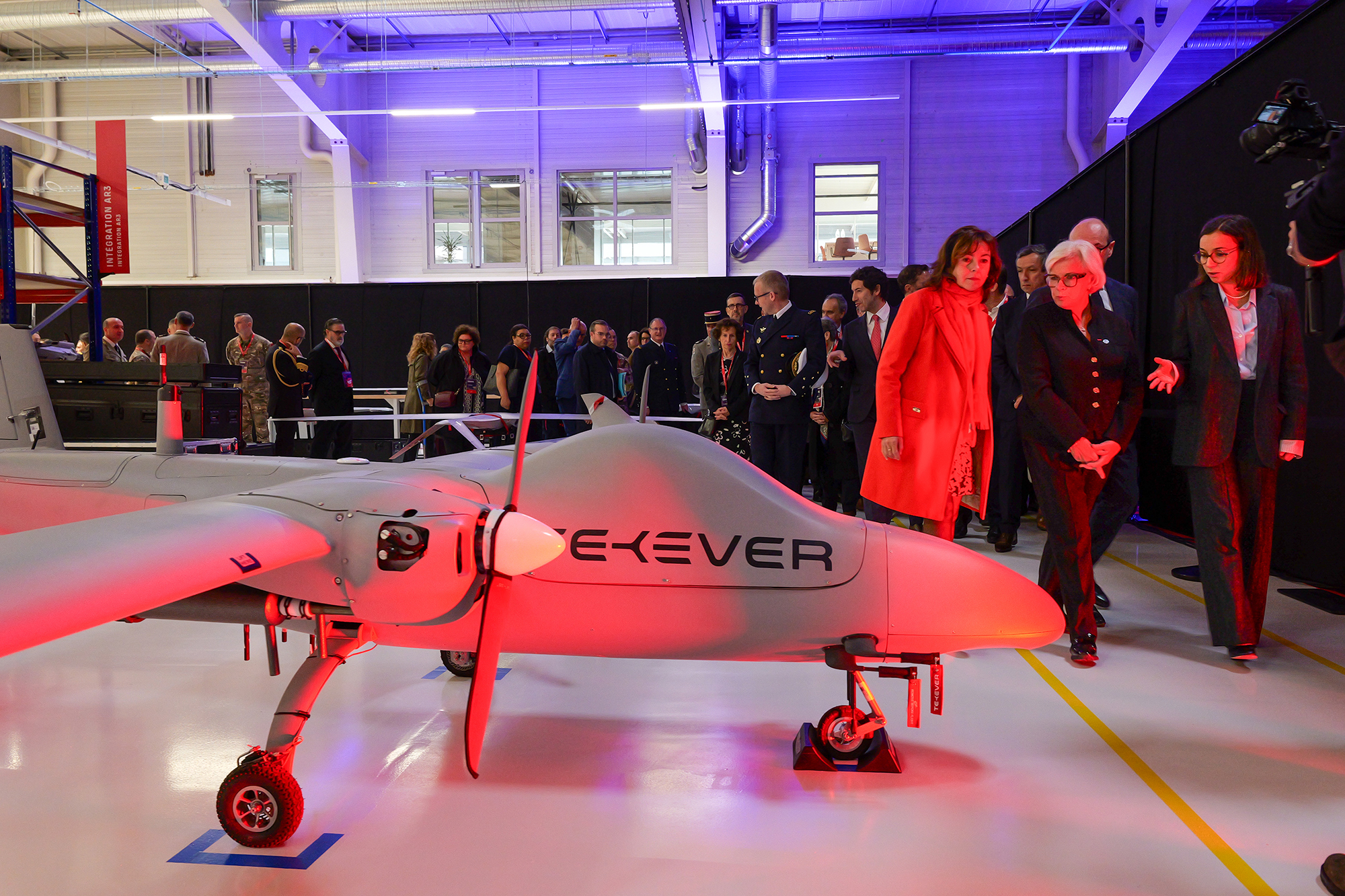
TEKEVER's announcement, listed on November 16, says AR3 and AR5 production is underway at Cahors. The company presented the first AR3 system intended for the French Armed Forces and said delivery of an initial 15 systems was planned before the end of 2026. That is a delivery objective, not a statement that all 15 have been handed over. Its seven-year DGA agreement includes AR3 EVO systems, training and support.
Local production needs a complete operating chain
The selected configuration combines imagery payloads from MERIO and signals-intelligence payloads from AVANTIX. Those partners matter because the aircraft's purpose is to produce useful information, not simply to fly. A local assembly line is most valuable when it can support the payloads and processes that turn a flight into intelligence an operator can use. The announcement establishes the intended combination; it does not publish the complete acceptance evidence for that combination.
The autonomy question is similarly narrower than the industrial headline. Expanding an uncrewed aircraft production line can support more persistent collection, but this release does not demonstrate a new autonomous decision function or quantify reduced operator workload. Human responsibility for tasking, interpretation and operational decisions should remain explicit. More available aircraft do not, by themselves, show that analysts can absorb more information effectively.
The useful consequence of local capacity is therefore an opportunity to shorten the distance between an operational problem and the people able to fix it. Engineers, production staff and support teams can share responsibility for a configuration. That opportunity still needs an operating process: clear ownership of faults, controlled changes and evidence that repairs restore the required performance. Geography helps, but it cannot substitute for those arrangements.
Training and support deserve equal billing
Including training and support in the agreement is important because a delivered system consumes organizational capacity before it supplies reliable capability. Operators must understand normal behavior and exceptions. Maintainers must distinguish a component fault from a software or configuration problem. Customers also need a route for feeding experience back to the supplier without making every field change an isolated customization.
These are practical reasons to assess the whole programme rather than count completed airframes. A unit with spare equipment but too few qualified staff may gain less usable coverage than expected. Conversely, dependable maintenance and well-designed training can make existing aircraft more productive. The release does not provide staffing or availability results, so either outcome remains possible.
The strongest counterargument to celebrating a national factory is that final assembly can coexist with dependencies elsewhere in the supply chain. Local production does not automatically establish control over every component, update or repair. An industrial-sovereignty claim should therefore be tested against the actual rights and capabilities needed to keep systems operating. The public announcement does not resolve every one of those questions.
Measure the production promise at acceptance
For France, the immediate opportunity is a more accessible production and service base for a defined reconnaissance programme. For TEKEVER and its payload partners, the challenge is to turn that proximity into repeatable deliveries with a consistent configuration. A demonstration aircraft and a series-production system serve different purposes. Acceptance needs to establish that the delivered equipment matches the agreed operational requirement, not merely the appearance of the exhibited system.
A useful next public milestone would identify which systems have been accepted and what support arrangements are available to their users. Later evidence could describe availability, repair turnaround and the effort required to introduce approved updates. Those measures would make the industrial argument more concrete without requiring disclosure of sensitive mission details.
Longer term, the factory could help a customer evolve its collection capability without replacing the entire system every time requirements change. That depends on configuration control, maintainable interfaces and a durable relationship between aircraft and payload suppliers. If those conditions fail, additional production capacity may simply multiply the number of individually difficult systems to sustain.
Our judgment is positive but bounded: Cahors makes TEKEVER's French industrial commitment more tangible. The decisive evidence now moves from the opening ceremony to delivery and service. The first accepted systems, followed by dependable operational support, will show whether the production investment is translating into usable intelligence capacity.
This analysis draws on the public sources linked in the text. Send corrections to [email protected].