An autonomous aircraft still has to exchange useful information with the people and systems around it. The aircraft may navigate locally while its observations, task changes and status compete for network capacity. That makes communications part of the operating system rather than an accessory added after autonomy works. The practical question is whether the connected team can continue to understand what each aircraft is doing as conditions change, including when the network cannot provide its preferred service.
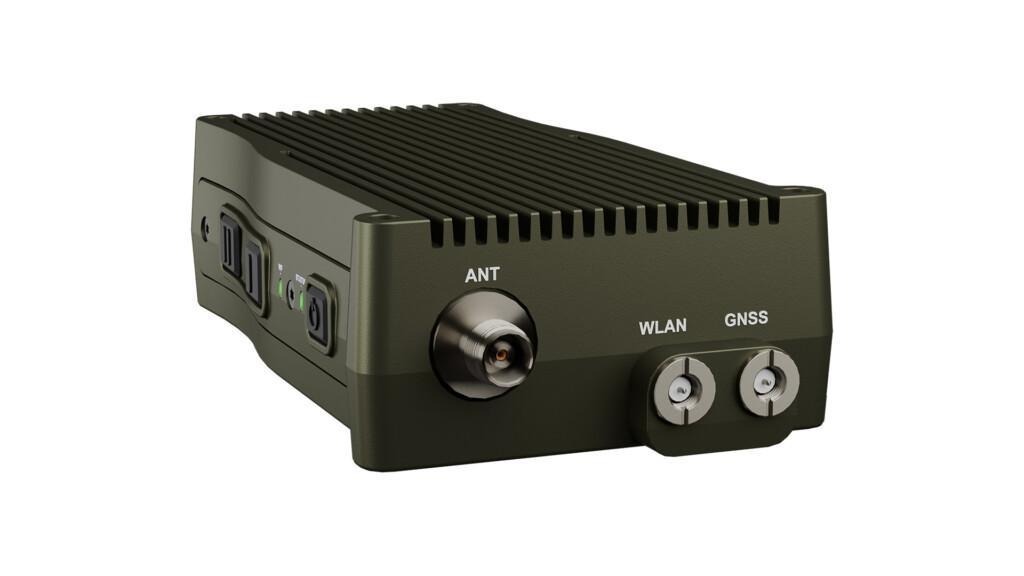
Bittium’s October 29 announcement describes a joint demonstration with Unikie at the NATO Innovation Range Capability Demonstrator in Oulu, Finland, on October 28–29. Unikie’s drone technology operates over Bittium’s tactical communications network, including its Tough SDR Unmanned radio module. Creoir, Airolit and Offcode also participate. The release presents integration in a practical test environment. It does not disclose a comparative packet-loss result, a fleet acceptance decision or a measured operational availability for the combined configuration. Read the primary source account.
Connect the task and the observation
A communications link carries several kinds of information whose importance can differ. A task update, an aircraft status report and a sensor stream should not be treated as interchangeable evidence that the system is connected. A high-bandwidth video display may look convincing while saying little about the timeliness of a changed instruction. Conversely, a locally autonomous aircraft may continue moving while the receiving operator has an increasingly old picture. Evaluation needs to make those distinct states visible.
The announced collaboration is useful because it puts these interactions inside one test arrangement. It gives participating engineers a concrete configuration in which to examine the handoff between autonomy and tactical networking. That does not establish what the demonstration found under every condition. The release does not provide a test matrix that would let an outside reader compare traffic levels, terrain, range or deliberate disruption. Those omissions limit conclusions about resilience without negating the value of performing the integration.
Interoperability needs a configuration record
Multiple suppliers can contribute a radio, aircraft, voice interface and embedded software without producing an interchangeable system by default. Interoperability depends on how their interfaces represent tasks, state and failure. An operator who receives an acknowledgment must know whether it means a message arrived, a command was accepted or the requested task was completed. Treating those as separate states makes the combined workflow easier to diagnose and reduces the temptation to infer a mission outcome from successful message delivery.
For a customer considering a similar configuration, the immediate benefit is a more specific starting point for integration questions. The relevant evidence would identify software and radio versions, the tested vehicle setup, the messages exchanged and the limits of the operating environment. It should also explain what remains available when a component is absent. Those records matter to maintenance and later upgrades: changing one participant’s software can change behavior elsewhere even when the physical network equipment stays the same.
What a receiving force would need next
Bittium describes the demonstration as examining how the communications network works with autonomous drones. Unikie’s earlier experience with autonomous systems and voice control is background to this work, not a substitute for results from the new configuration. The two should remain separate in an assessment. Prior performance can justify a test program, while the resulting measurements determine whether the specific integration meets the receiving force’s requirements. The announcement does not supply those acceptance criteria or a schedule for fielding.
The supplier account identifies shared situational awareness and command as the integration purpose. This makes the timeliness and interpretation of exchanged information as relevant as whether a radio connection can be established.
The longer-term opportunity is a networked autonomy stack that connects observations and command without requiring each aircraft supplier to rebuild every surrounding service. Realizing that opportunity depends on repeatable behavior across versions and on clear boundaries when connectivity degrades. The next useful evidence would therefore combine communications measurements with task-level outcomes and operator workload. A successful demonstration can establish that the pieces can work together; a durable operational service needs to show when they stop doing so and how people recover.
Source organizations: Bittium, Unikie, Creoir, Airolit, Offcode.
This analysis draws on the public sources linked in the text. Send corrections to [email protected].