A flying uncrewed rotorcraft and a reusable mission-autonomy development process are different achievements. Flight establishes a platform on which engineers can work. Mission software must then connect observations, task choices, vehicle limits and human authority in a way that can be tested again after each change. The distinction is especially important when a supplier proposes that one development toolkit can support several aircraft and different mission types over time.
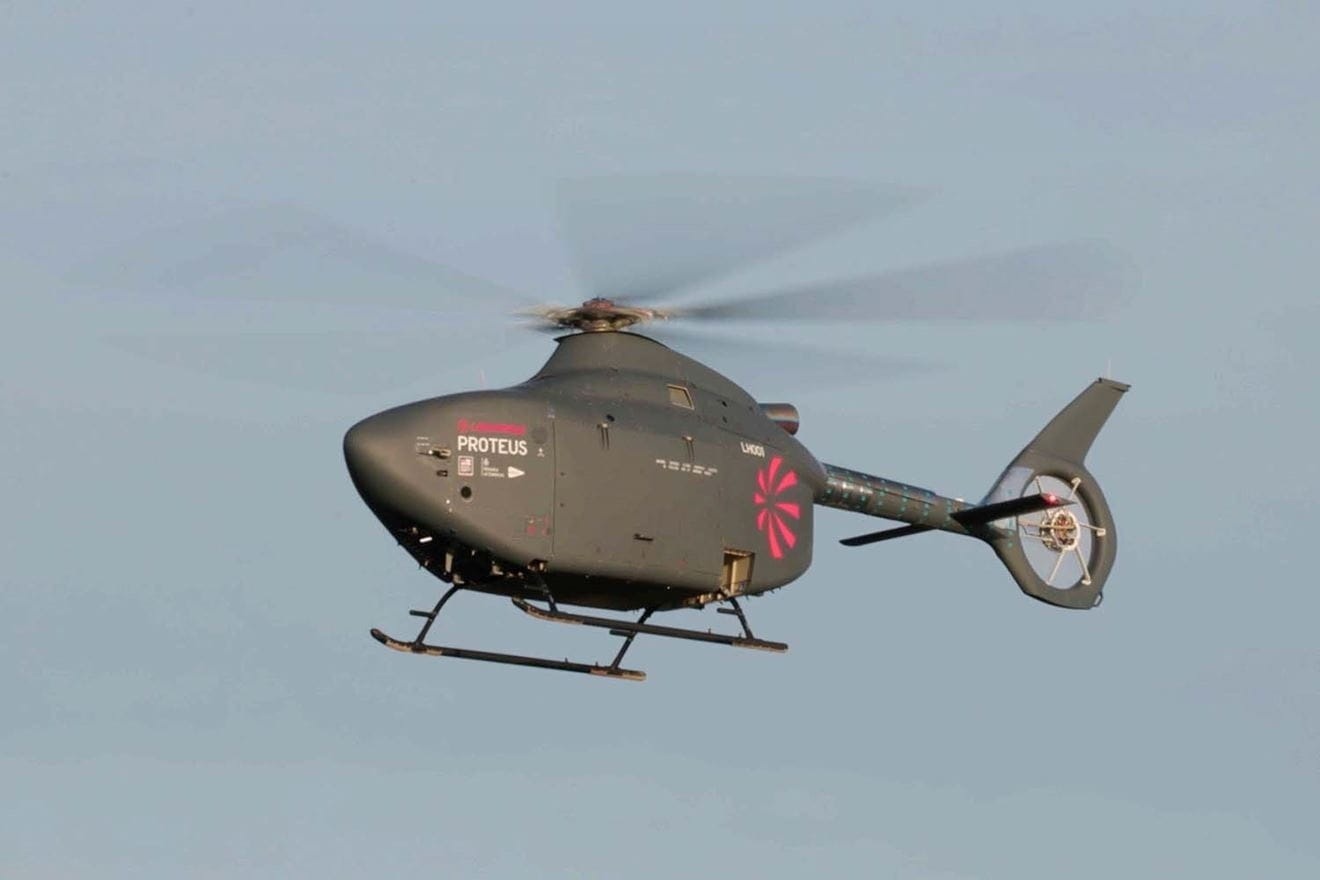
Shield’s October 29 announcement says Leonardo will use the Hivemind Software Development Kit to further develop autonomy capabilities for integration onto Proteus. The named areas include anti-submarine warfare, intelligence and surveillance, and contested logistics. The agreement gives Leonardo engineers tools for developing mission-autonomy software. It is an announced development and integration relationship, not evidence that every listed mission has been completed autonomously or that an operational customer has accepted the resulting software configuration. Read the primary source account.
A toolkit changes who can make a change
An SDK can provide interfaces and development tools that let another engineering organization build and modify capabilities. That is useful when the aircraft manufacturer needs control over its own integration work. It does not eliminate the need to understand how the underlying autonomy behaves. The important boundary is which decisions Leonardo can change, which parts remain supplied by Shield and how the complete configuration is tested before a modified capability reaches an aircraft.
This boundary also determines what an outside evaluator should ask to see. A demonstration created using the SDK could establish one working combination without showing that every future application is equally straightforward. Evidence should identify the software baseline, aircraft setup, supported interfaces and operating conditions. A claim about development efficiency would need a defined comparison; a claim about mission performance would need a mission-level evaluation. Successful software installation alone would establish neither of those broader outcomes.
Mission labels are not acceptance results
The announced mission areas have different sensing and decision requirements. Moving supplies, maintaining a surveillance task and contributing to an underwater-search workflow cannot be evaluated through one undifferentiated autonomy score. Each requires a clear account of inputs, constraints, the intended role of a person and the consequences of uncertainty. The public announcement does not provide the complete acceptance criteria for those proposed integrations. This article therefore treats the list as development scope, rather than a catalogue of completed capabilities.
For a customer following Proteus, the useful near-term question is what new behavior the agreement enables engineers to implement and evaluate. That could include a more explicit route to changing mission logic without rebuilding the entire aircraft system. Any such benefit depends on compatible interfaces and adequate test coverage. A reusable toolkit may reduce repeated engineering work, while still leaving substantial platform-specific integration and qualification. Both statements can be true without making the development relationship less significant.
Preserve evidence across software updates
Autonomy software can evolve faster than the airframe around it. That makes versioned evidence essential. A result observed before a change should not silently become evidence for the new configuration. Engineers need to retain the scenarios, assumptions and software versions behind a successful assessment, together with regression cases for behavior that previously worked. The agreement creates an opportunity to organize this process across suppliers; it does not establish that the future evidence record is already complete.
The announcement also describes the toolkit as supporting Leonardo’s own mission-software development for new and existing systems. That expands the intended development scope, while leaving the qualification of each aircraft and software combination as a separate obligation.
The longer-term possibility is a rotorcraft program in which mission capabilities can be developed and revised through a repeatable software process. Its value will depend on whether that process preserves authority, observability and reliable operation as the mission changes. The next meaningful evidence would identify an integrated configuration and a specific capability assessed under stated conditions. That would connect the SDK agreement to a measurable development outcome, while keeping the distinction between a promising engineering arrangement and an accepted operational capability clear.
Source organizations: Shield, Leonardo.
This analysis draws on the public sources linked in the text. Send corrections to [email protected].