A robotics competition becomes more useful when evaluators move beyond a proposed capability and examine working hardware. The transition matters because logistics, sensing and communications functions can look compatible in a written brief while imposing different demands on power, support and operators in practice. A live demonstration is an opportunity to expose those differences, rather than evidence that they have already been resolved.
BLADE said on October 8 that Hunter WOLF had advanced to Phase II of the government's GroundBreaker 1 uncrewed ground vehicle demonstration. The company identifies the legal entity as HDT Robotics, LLC, doing business as BLADE. It says a technical evaluation of its Phase I solution brief led to a hardware demonstration scheduled for October 19–23 at Camp Grafton, North Dakota. Read the primary announcement.
Selection opens the test
According to the announcement, Phase II evaluators will assess technology maturity, operational readiness and cross-domain interoperability. Companies evaluated successfully may subsequently be invited to submit a full proposal in Phase III for a prototype Other Transaction Authority award. The conditional sequence is important: advancement to a demonstration is not itself that award.
Hunter WOLF is presented as a multi-mission platform. The useful assessment is therefore configuration-specific. A vehicle carrying supplies may draw on a different payload, interface and support arrangement from one carrying a sensor. Evidence that a base vehicle moves successfully does not automatically validate every mission assembled on top of it. This is an evaluation distinction, not a reported defect.
The practical near-term question
For a potential user, the upcoming event offers a chance to compare the complete workload of proposed solutions. Mission records could identify what the machine completed, where an operator intervened and what had to be repaired or recovered. Publishing those boundaries would help explain the result more clearly than a readiness label alone.
Interoperability deserves similarly concrete evidence. A customer needs to know which information can move between systems, how it is interpreted and what happens when a connected component is unavailable. The announcement lists interoperability as an assessment subject, but does not publish completed Phase II results or demonstrate universal compatibility.
A demonstration and an award answer different questions
The company's announcement separates the government review of a solution brief from the forthcoming hardware evaluation. That avoids conflating a technically credible proposal with an observed mission result. It also creates a useful record for later comparison: which proposed functions appeared in the demonstration, which were deferred and which required assistance? The public release does not answer those questions yet, so its selection should not be reported as a completed operational assessment.
A multi-mission platform also creates a configuration-management problem. Evidence from one payload and control-software version may not describe a different payload or later software release. A follow-on report would be more useful if it names the combination evaluated and separates inherited vehicle behavior from newly integrated functions. The same discipline would help distinguish equipment readiness from the readiness of the team supporting it.
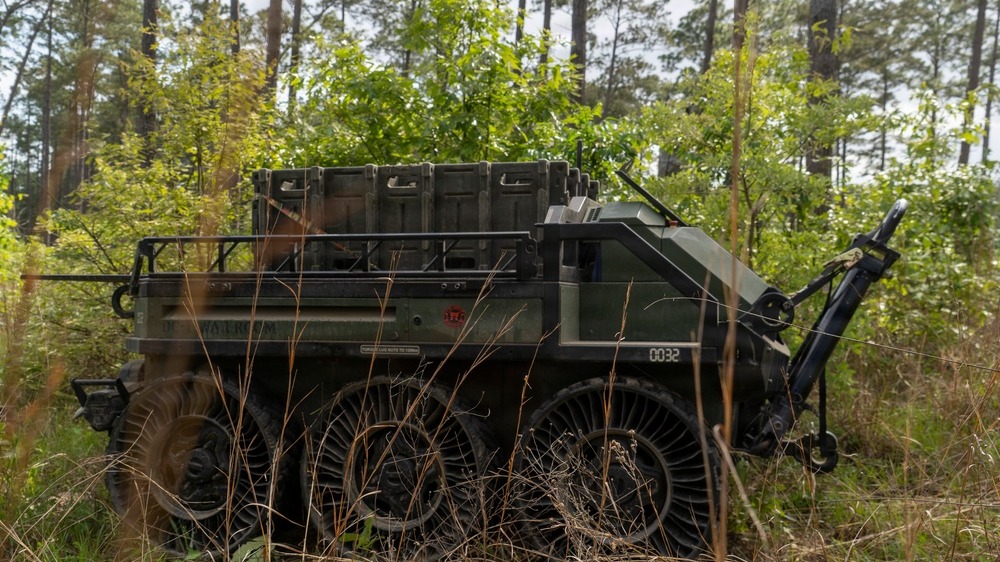
The historical Army photograph used here illustrates that distinction. It shows the named platform carrying cargo in an April exercise, with its place, date and creator retained. It is evidence of that earlier photographed activity. It neither documents the scheduled October event nor proves the outcome of the evaluation BLADE is about to enter.
From an event to a supported capability
If the process produces repeatable evidence and a subsequent prototype agreement, it could help customers distinguish promising platforms from capabilities ready for further integration. That outcome depends on what the tests actually cover and what follow-on work is funded. The source's broader claims about readiness remain the manufacturer's account.
The next evidence is the October 19–23 demonstration and any disclosed evaluation outcome. Tracking the progression from brief, to hardware, to a possible prototype award keeps procurement news tied to the decision actually made. It also leaves room for a successful experiment to identify important work still outstanding.
Sources and scope
Official organizations: BLADE / HDT Robotics. Primary source, 2026-10-08. Manufacturer results and plans remain attributed; this publication did not independently test the equipment.
What would change the assessment
The next evidence is the October 19–23 demonstration and any disclosed evaluation outcome. Tracking the progression from brief, to hardware, to a possible prototype award keeps procurement news tied to the decision actually made. It also leaves room for a successful experiment to identify important work still outstanding.
This analysis draws on the public sources linked in the text. Send corrections to [email protected].