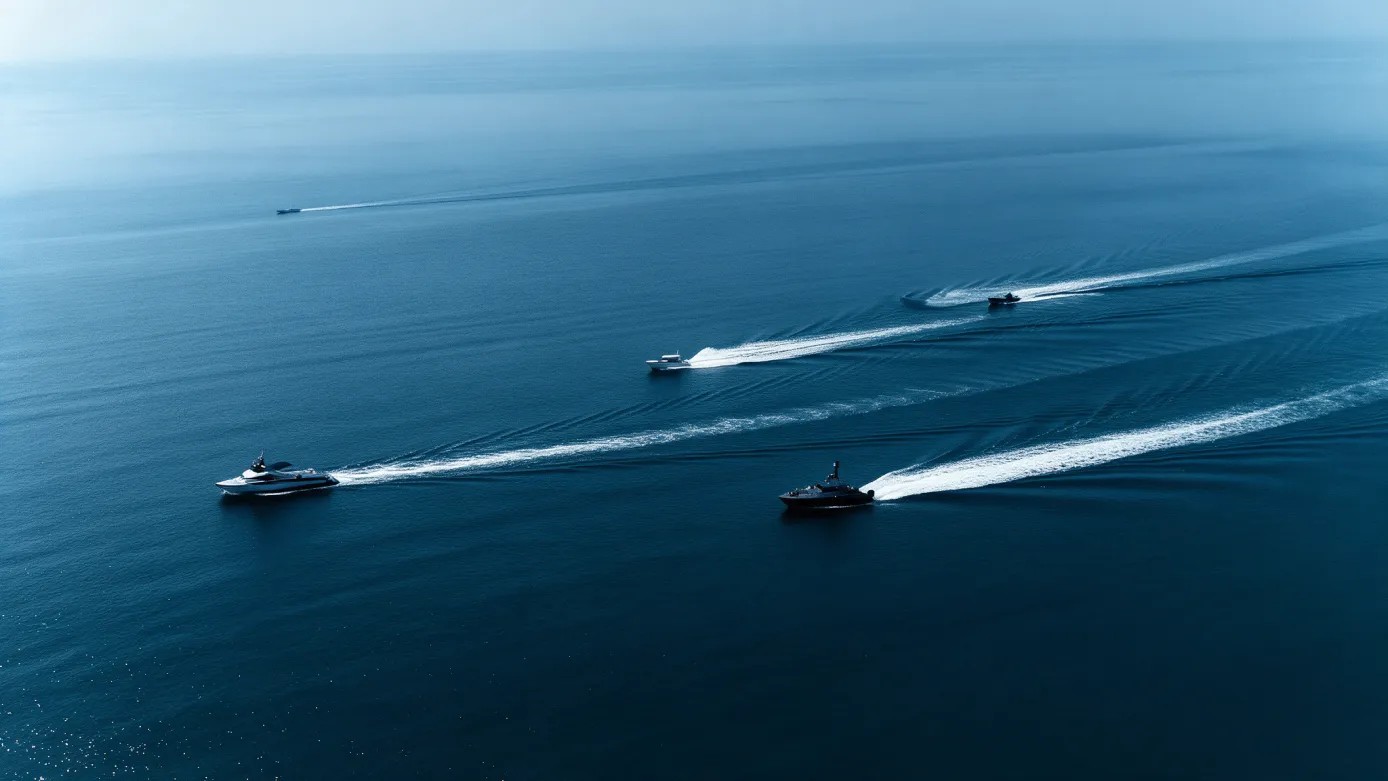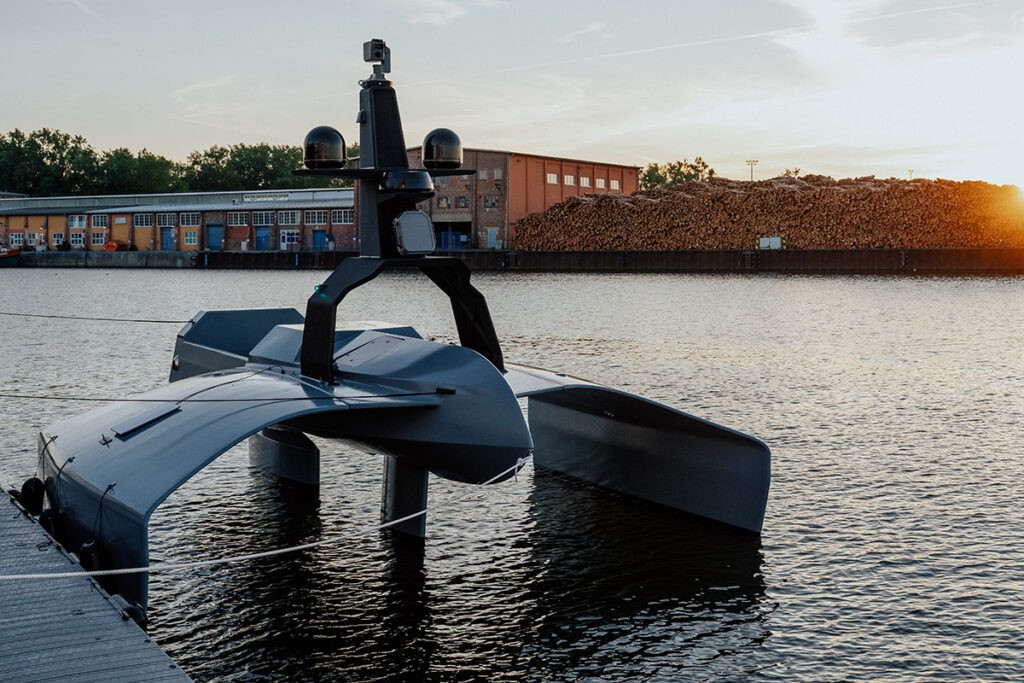
An uncrewed vessel becomes easier to procure when a supplier can identify a production configuration and a way to build it. Availability still leaves the customer with a separate decision: whether that configuration can perform a particular mission with acceptable support, recovery and supervision.
Red Cat’s October 22 announcement introduces Blue Ops’ B-Series, renaming Variant 7 as B-26 and adding the 18-foot B-18 and 39-foot B-39. The company says B-18 has completed sea trials and is available for orders, while B-39 is in low-rate production on an established commercial hull platform. These are supplier statements about development and availability, not a published Navy acceptance decision. Read the source account.
A commercial hull is one part of the mission system
An established hull can reduce manufacturing uncertainty, but autonomy, payloads and communications still need configuration-level testing. A vessel intended for reconnaissance has different acceptance needs from a logistics vessel or an expendable platform. The announcement should not be read as evidence that all proposed roles have been validated together.
The trial statement would become more informative with sea conditions, duration, payload, interventions and recovery arrangements attached. Similarly, low-rate production shows a manufacturing stage without establishing delivery quantities, sustained output or fleet readiness. The release does not disclose a complete operational scorecard for either new vessel.
What an order-ready vessel still needs to establish
The two announced stages should remain separate. Completed sea trials describe a development activity for B-18; low-rate production describes a manufacturing activity for B-39. Neither phrase supplies the conditions, quantities and acceptance terms needed to compare operational readiness. A customer could reasonably ask for evidence from both stages without disputing that the supplier has reached them. The announcement’s value is that it identifies actual platforms and states where they stand, allowing the next questions to be attached to a defined product instead of a general maritime-autonomy ambition.
An illustrative reconnaissance evaluation would specify a route, observation task and reporting interval, then record when a person intervened or a finding could not be delivered. A logistics evaluation would instead need the load, loading process, delivery interface and recovery arrangement. These are proposed test cases, not reported B-Series trials. Applying one test result to both missions would hide the difference between carrying a sensor and completing a supported delivery service. Even when the hull and autonomy software are shared, the mission configuration changes the evidence a buyer needs.
The commercial-hull argument is strongest when the supplier identifies which established manufacturing processes remain unchanged. Naval payloads, communications and power demands can introduce new installation and support work. The announcement does not disclose a quantified commonality figure or demonstrate that every modification has the same production maturity as the underlying hull. A useful follow-on would distinguish standard construction from mission-specific integration and identify the acceptance step between them. That would make the claimed manufacturing advantage more concrete without inventing a delivery-rate estimate.
Open architecture similarly creates an integration opportunity rather than a universal compatibility guarantee. A customer needs the documented interfaces, approved payload limits and software versions supporting the offered configuration. It also needs a way to preserve the tested result after an upgrade. A configurable vessel can be valuable precisely because missions change, but those changes need engineering authority and a repeatable check. The release does not provide a full public integration manual or an independent demonstration with every proposed payload. Its claims should remain bounded to the named portfolio and stated development stages.
For procurement, the next milestone could be a delivery accepted against an identified requirement or a trial report with a clear mission envelope. The customer should be able to tell what was ordered, what was delivered and what remains a development option. Those distinctions make availability useful without allowing marketing terms such as mission-ready to replace acceptance evidence. A vessel can be available for sale before every prospective naval use has been validated, and a limited successful mission can still be an important result when its boundaries are preserved.
The next milestone
The next evidence is a customer-defined trial or delivery milestone with a stated configuration and mission envelope. A broader available portfolio can give buyers more choices, but those choices become operational capabilities only when production, support and mission performance are demonstrated together.
What would change the assessment
Look for the next documented configuration, its test conditions and its support responsibilities. The current source establishes the announced stage; later results should identify what changed.
This analysis draws on the public sources linked in the text. Send corrections to [email protected].