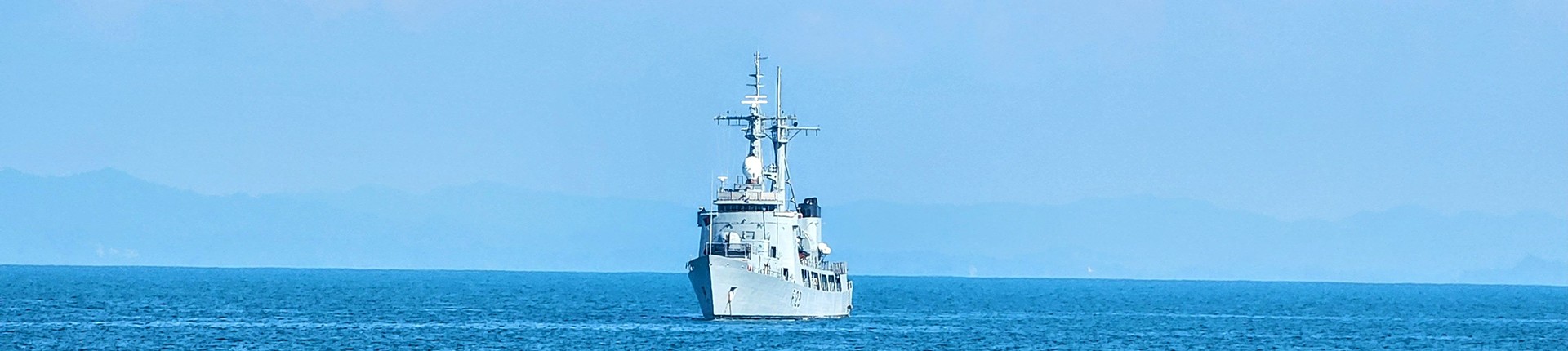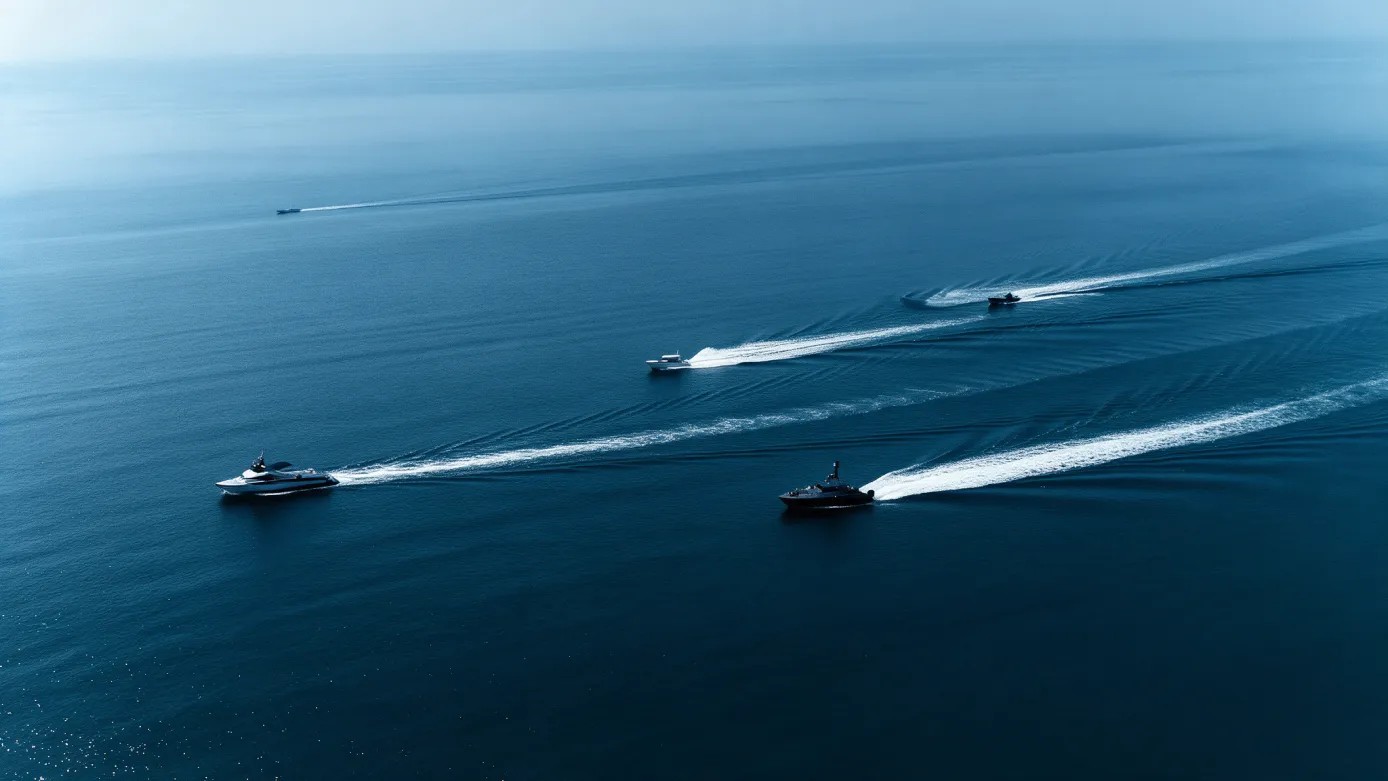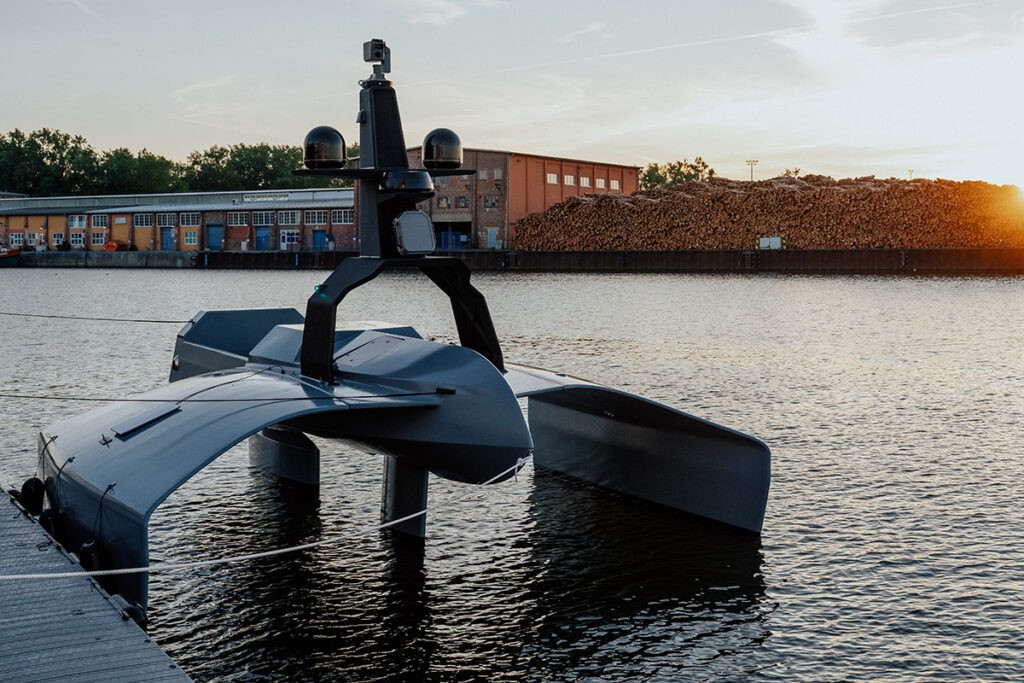
Persistent maritime observation requires more than a vehicle that can stay away from port. Surface and underwater systems need to exchange information, recover equipment and return findings in a form operators can use. Combining them offers a possible service, while also creating dependencies between machines with very different communication conditions.
Quantum Systems announced its maritime domain on September 14 in Sesimbra, introducing Seavex, an uncrewed surface vessel, and Subvex, an underwater vehicle. The company describes both as connected to MOSAIC UXS and says they would test capabilities during sea trials. Its stated endurance and depth figures are design specifications in that launch account, not independently established results from all proposed operating modes. Read the source account.
The handoff is part of the endurance claim
A surface platform intended to support aircraft and underwater vehicles must allocate energy, payload space and time to those interactions. The endurance of one vehicle cannot establish the persistence of the entire combined operation without the support cycle being included. A meaningful test would state which vehicles were deployed and what activities consumed the available resources.
Underwater findings may also need to wait for a communications opportunity. The operator needs to distinguish current information from a stored observation and understand what a vehicle can do while disconnected. A shared software architecture can support that process, but the launch does not publish a complete record of degraded operation or recovery.
A combined maritime service needs a complete support cycle
A surface vessel supporting underwater vehicles must allocate time and energy to docking, charging and exchanging information. Its persistence depends on those activities as well as propulsion and sensing. This is an operating-model observation, not a measurement of Seavex. A useful sea-trial account would preserve the task mix with any endurance result, so readers could distinguish a long transit or passive station-keeping period from a complete cycle of deploying and recovering another vehicle. The launch specifications do not establish that all those activities were sustained together for the maximum advertised duration.
The underwater platform’s proposed modes also need separate interpretation. Active movement and passive seabed observation impose different power and communication demands. A duration in one mode should not be combined with a depth specification and another mode’s activity to create a mission the supplier did not report testing. The same applies to the maximum operating depth: it is a stated product capability, not proof of a particular deep-water trial in the launch account. This article therefore avoids presenting the full set of specifications as one independently demonstrated operating point.
An illustrative infrastructure-inspection workflow could ask a vehicle to investigate a bounded area and return observations for review. The useful evidence would include navigation uncertainty, coverage gaps and the effort needed to recover usable data, rather than merely a map showing that the vehicle passed nearby. This is a suggested evaluation scenario, not an announced customer deployment. A shared software system could make the observations easier to compare with surface and aerial findings, provided their different times, sensors and confidence levels remain visible to the operator.
Recovery deserves as much attention as deployment. A support vessel must be able to recognize that another vehicle needs assistance and act within the conditions for which recovery is designed. Weather, equipment state and available energy can make that task different from a planned docking demonstration. The launch account does not provide a complete public recovery envelope. That limitation does not negate the design proposition; it identifies the operational evidence needed before a customer assumes that a persistent unmanned presence can be supported without equivalent persistence from crewed assets.
The wider integration claim is therefore about a proposed service across the waterline, not simply a larger product catalog. A successful result would connect vehicles, information and support in a repeatable configuration that operators can understand. The September launch establishes the supplier’s architecture and intended roles, while the next trial evidence should show where that architecture works and where it still depends on people or external resources. Keeping the original announcement date visible also prevents this catch-up coverage from implying a new October product launch.
The next milestone
The next evidence is a bounded sea-trial account with configurations, conditions and interventions. The September announcement is being assessed here as an earlier, distinct development, not presented as a new October launch. Its significance lies in the proposed cross-domain service; its practical envelope still needs evidence.
What would change the assessment
Look for the next documented configuration, its test conditions and its support responsibilities. The current source establishes the announced stage; later results should identify what changed.
This analysis draws on the public sources linked in the text. Send corrections to [email protected].