Source chronology: October 2026 exercise; originating report published November 24, 2026. Analysis published 24 November 2026.
Swarmbotics AI: original source
Putting a sensor beyond a soldier’s position can reduce exposure without immediately improving warning. The observation still has to reach an operator, refer to the right location and support a useful decision. FireAnt’s latest reported sensor-carrying configuration matters because it extends ground autonomy into the physical placement of a sensing network. Our judgment is that this is a useful experimental step whose value will be determined after the robot has completed its delivery.
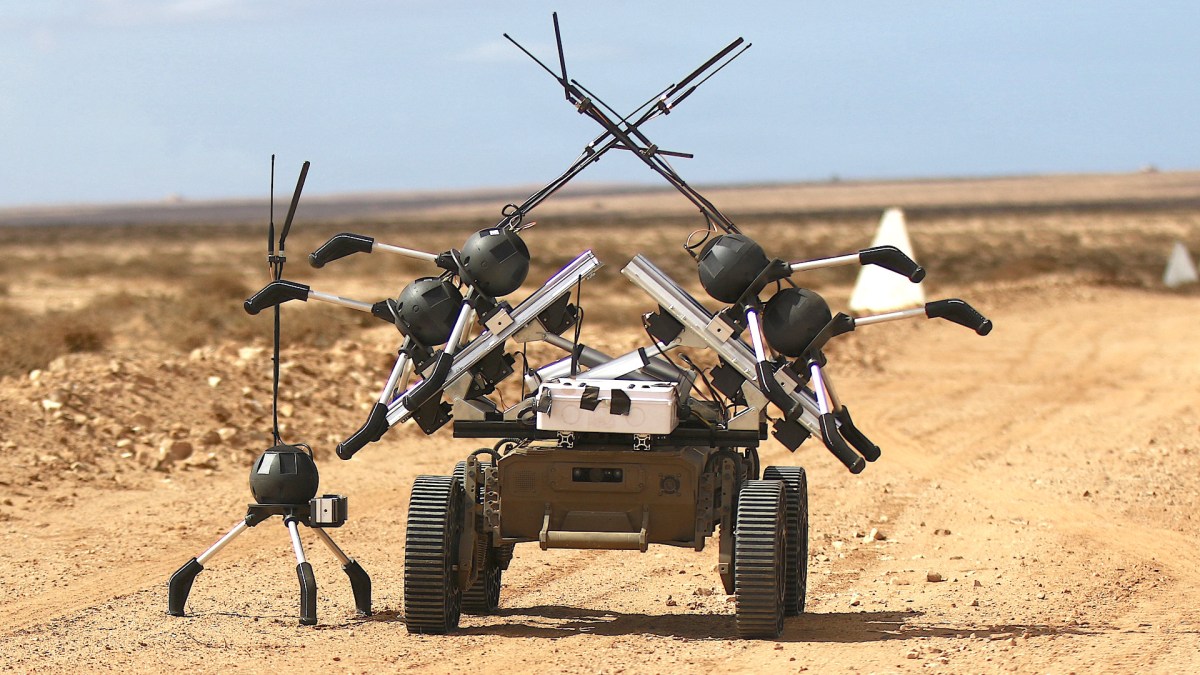
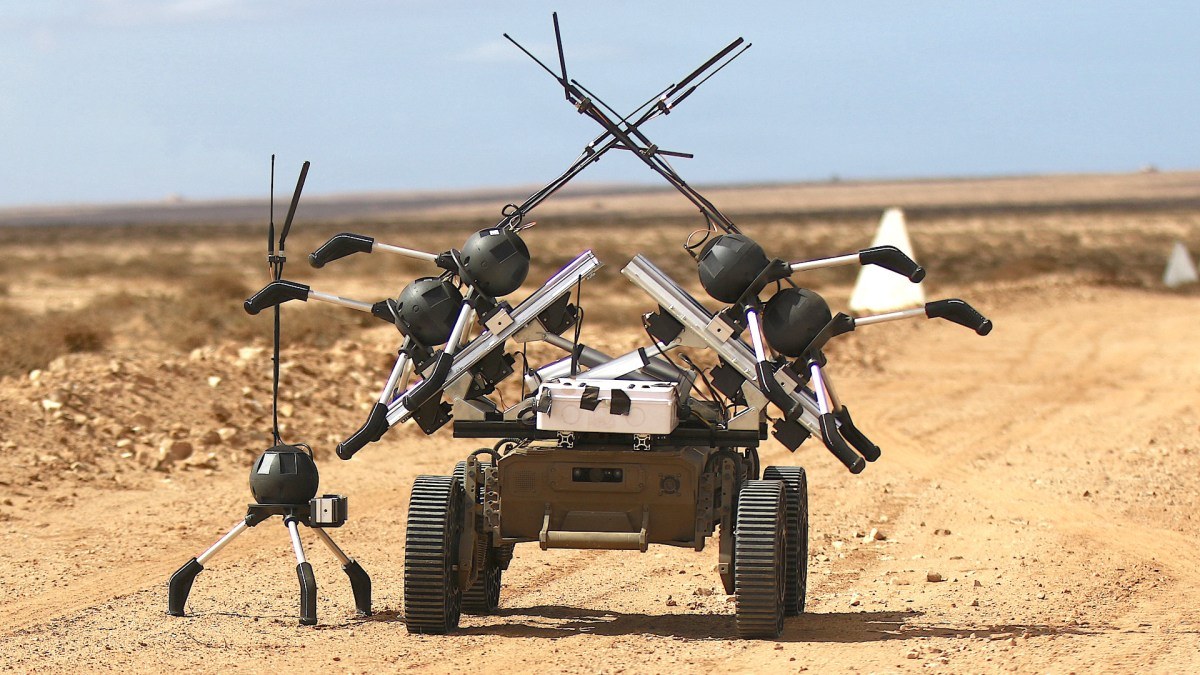
The War Zone’s November 24 report describes a Swarmbotics AI FireAnt carrying deployable ground sensors at the Army-led NANO ACE II event in Morocco in October. The report attributes the exercise details and photographs to the Army. Its account does not establish the deployed sensors’ precise detection mechanism or a measured operational detection rate. Those unresolved points should remain separate from the visible demonstration of carriage and emplacement.
Delivering hardware is the beginning of the sensing task
A small ground vehicle can transport equipment through places where walking personnel would face greater risk. But a successfully delivered sensor can still be poorly positioned, incorrectly registered or unable to communicate. The relevant unit of assessment is therefore the complete observation service. It starts with selecting a site and ends with information that a person can interpret, including an explicit indication when a node becomes unavailable.
This is also why the sensor mechanism matters. Different instruments respond to different physical signatures and operating conditions. A report of a detected object should identify what was measured and what was inferred. Combining several weak observations may improve confidence, but it can also repeat the same error if their dependencies are hidden. We would look for a documented relationship between each observation and the operator’s eventual warning.
The larger experiment’s emphasis on communications and payload integration is relevant here. Movement, sensing and networking are separate capabilities that must work together. A route-completion result cannot establish the quality of a detection service, just as a successful radio connection cannot establish that a sensor remains correctly calibrated. Procurement should preserve those distinctions when deciding what a demonstration has actually shown.
Measure warning and workload together
The strongest case for the approach is flexibility. A mobile carrier could help a unit adapt its observations to a changing requirement rather than depend entirely on fixed infrastructure. The strongest objection is that flexibility brings configuration work. More nodes create more batteries, device identities, clocks and software states to manage. A larger number of observations can consume scarce attention if their quality is not made visible.
A useful evaluation would therefore record eligible tasks, successful placements, time until each sensor became usable, interruptions and the human effort needed to resolve them. It should include incomplete attempts rather than count only the sensors that eventually reported. For the warning function itself, assess missed detections and false alerts under declared conditions. These are proposed acceptance measures, not outcomes disclosed by the exercise report.
There is a practical support question too. A low-cost carrier does not make the entire network inexpensive. Retrieval, replacement, communications capacity and software support belong in the operating cost. Comparing the complete workflow with a conventional installation would show whether exposure was reduced at an acceptable burden, rather than simply moved from one task to another.
Our assessment remains positive about the experiment’s direction. The next meaningful milestone is a repeatable, independently interpretable sensing result tied to its emplacement and support record. That evidence would turn an interesting payload configuration into a stronger case for usable ground autonomy.