A naval autonomy program changes character when its problem becomes delivering multiple vessels rather than demonstrating one configuration. Software, hull construction, sensors and shore support have to remain consistent enough that each new vessel can be accepted and maintained. A production milestone therefore matters for reasons beyond the ceremony: it creates a point at which a prototype’s demonstrated behavior must become a repeatable industrial and operational process.
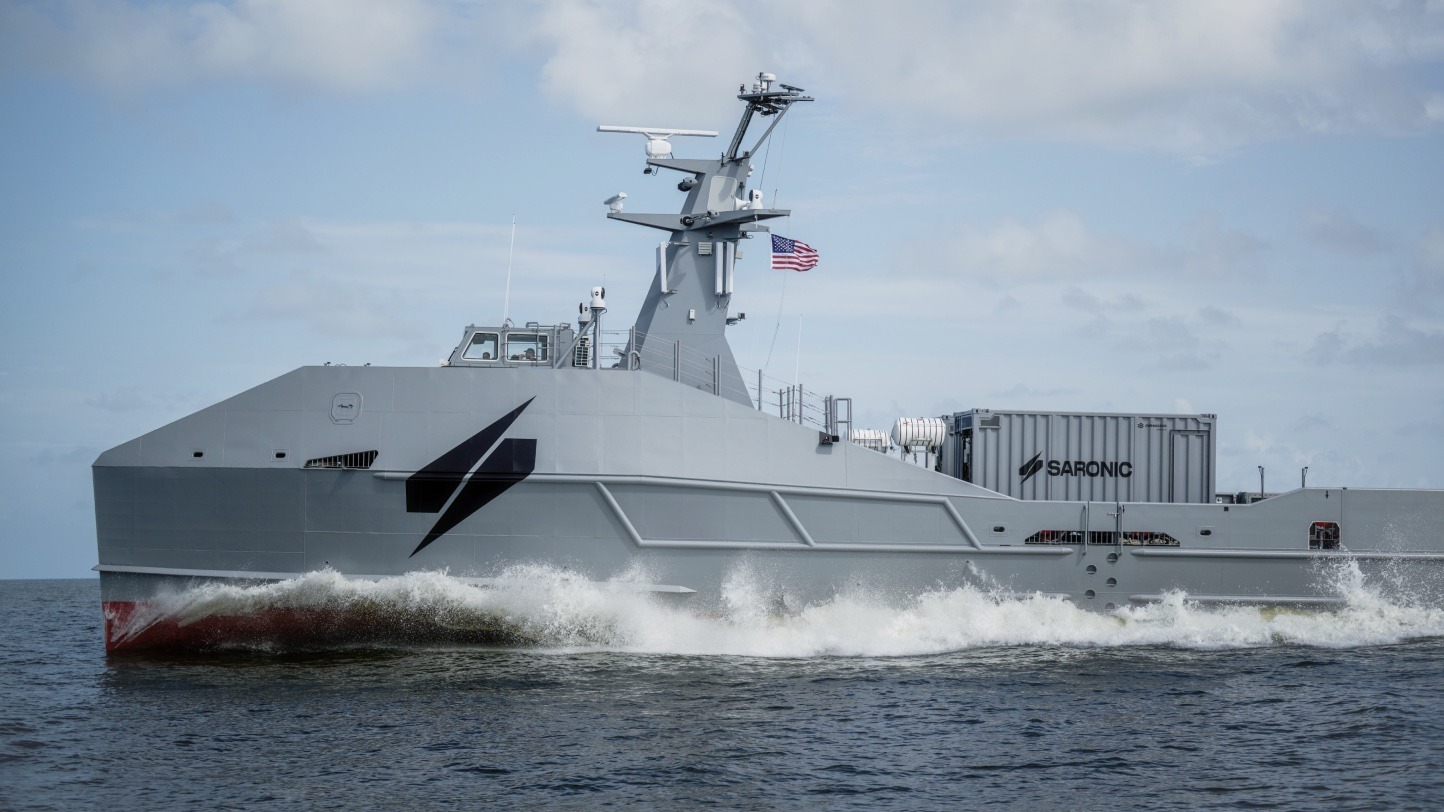
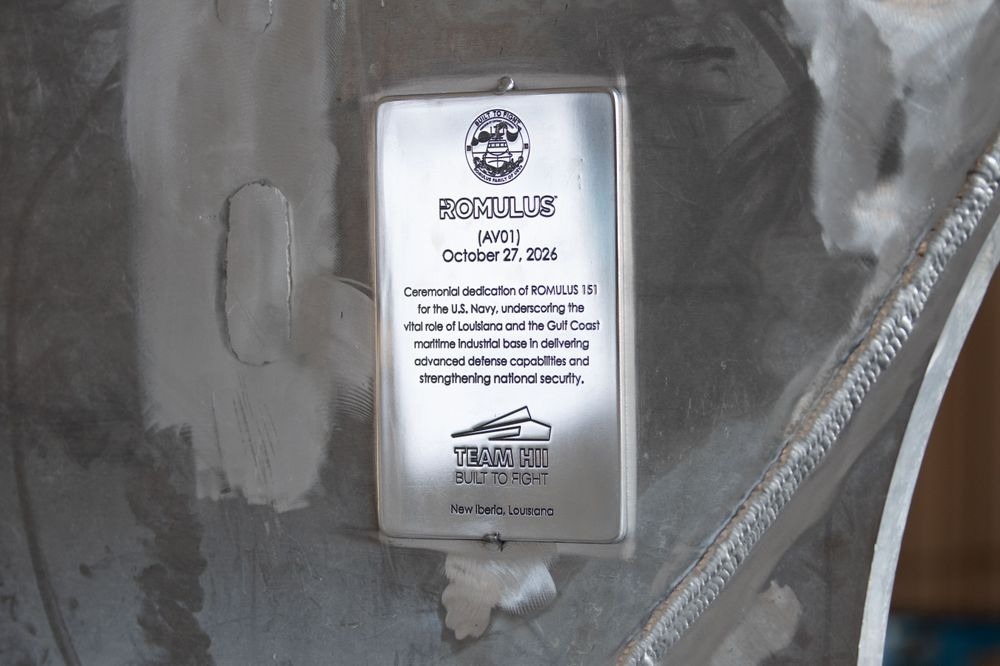
HII’s October 28 release reports production progress in Louisiana on ten ROMULUS 151 uncrewed surface vessels contracted by the Navy. The event included a commemorative hull plaque on the first vessel. The company describes a distributed production network and its Odyssey autonomy suite. It also reports a Navy-monitored evaluation lasting 13 days, including a 420-nautical-mile mission over 28 hours that met the established criteria. Those are company-reported evaluation results, not evidence that all ten contracted vessels have been delivered or accepted. Read the primary source account.
A test result belongs to its configuration
The endurance mission provides a concrete measurement with units and duration. Its meaning still depends on the conditions under which it was performed: the route, traffic, sensor setup, supervision and criteria used to judge completion. The release does not publish the complete evaluation record. Readers should therefore preserve the reported result without assuming it establishes the same performance for every payload, operating area or weather condition. A measured mission is stronger evidence than a rendering, but it remains a bounded observation.
Production adds another denominator. A successful trial on one integrated system does not reveal the amount of work required to bring subsequent vessels to the same state. Acceptance records can show whether later hulls reproduce the configuration and behavior, and whether changes are tracked when they do not. That is especially relevant to an open architecture: the ability to integrate new components is useful only when the resulting configuration remains visible to the people responsible for operating and sustaining it.
The supply network becomes part of the capability
HII identifies Breaux Brothers Enterprises, Halimar Shipyard and Bayou Metal Supply & Manufacturing among its Louisiana partners, with Beier Integrated Systems and Incat Crowther involved in development. It also names Applied Intuition, Greenroom Robotics and Rodi Marine in the evaluation effort. This is evidence of the stated industrial and integration arrangement. It does not quantify the production rate each participant can sustain or establish that every proposed mission module is already qualified across the vessel family.
For the Navy, a distributed network can offer access to existing skills and infrastructure. It also creates interfaces that need consistent drawings, software baselines and acceptance responsibility. A hull arriving from one production site should not require operators to rediscover which autonomy behavior it supports. The immediate management task is therefore to connect manufacturing records, integration changes and operating documentation. That work may be less visible than an endurance demonstration, but it determines whether a larger fleet can be supported as a coherent service.
Separate construction from the operational effect
The release lists a broad range of potential missions for the ROMULUS family. A modular platform can support several kinds of work without having demonstrated all of them in the configuration described at the ceremony. An assessment should identify which payload and mission were tested, which are under integration and which remain intended applications. The contract and production milestone establish a procurement and construction stage. They do not by themselves establish the effectiveness of every future mission package.
The event is consequently a construction milestone rather than a delivery ceremony. Keeping those stages separate lets later announcements demonstrate actual progress without forcing every stage into the same claim of operational readiness.
The short-term significance is that HII has a defined vessel quantity and a visible production effort to follow. The longer-term test is whether repeatable delivery leads to reliable availability under the Navy’s actual operating requirements. Evidence of accepted vessels, maintained configuration records and sustained use would make that transition clearer. The next useful milestone is consequently more specific than another demonstration claim: it is a documented progression from built hull, through integrated acceptance, to a supported vessel performing an assigned task.
Source organizations: HII.
This analysis draws on the public sources linked in the text. Send corrections to [email protected].