A continuous sea trial can reveal problems that a short demonstration misses. Equipment must keep working as watches change, conditions vary and accumulated faults become harder to ignore. Moving from that trial into production creates another challenge: reproducing the tested behavior across new hulls, software versions and support teams. The useful assessment therefore follows the vessel beyond the strongest demonstration number, while retaining what that number actually measured.
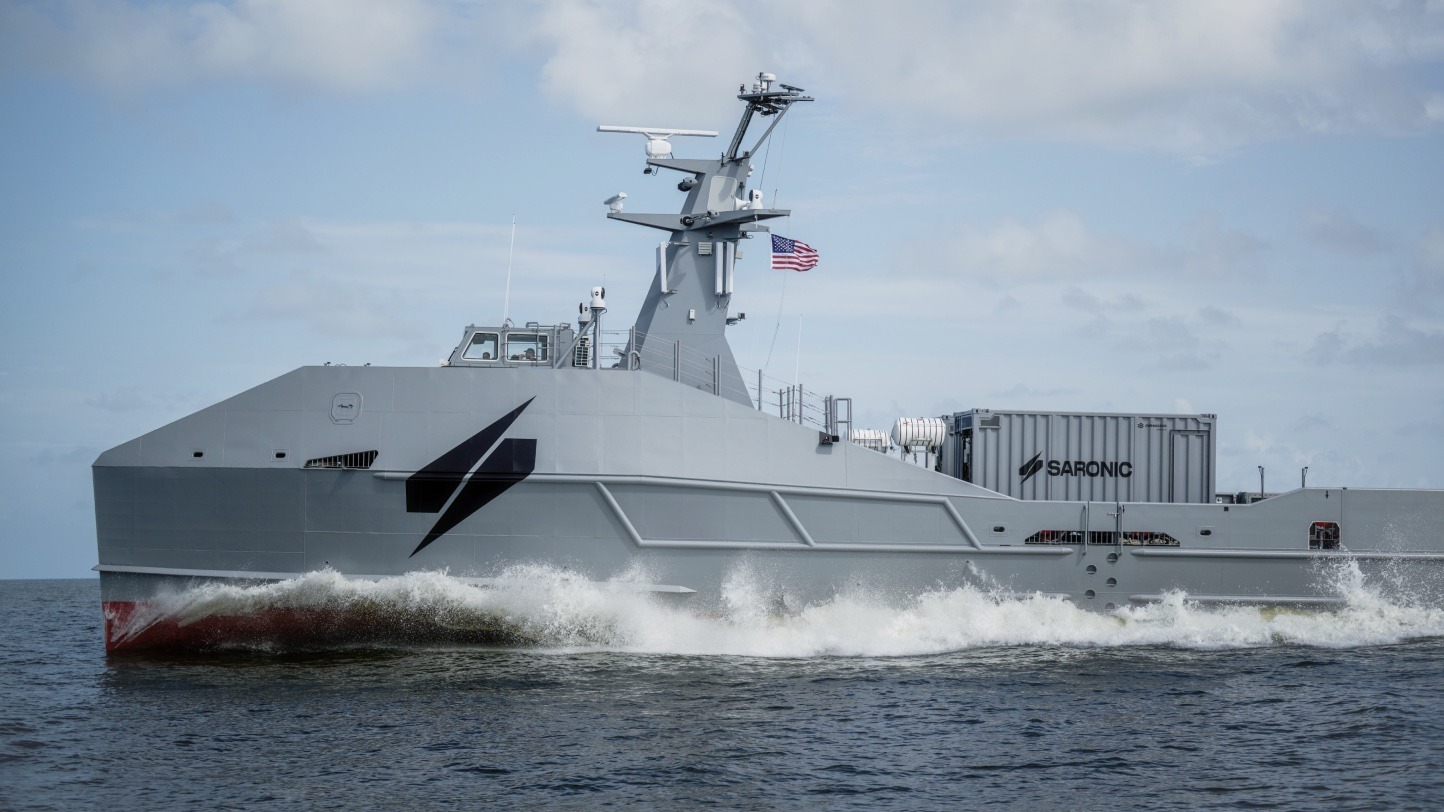
Saronic’s September 29 announcement reports a firm-fixed-price production Other Transaction for its 180-foot Marauder under the Navy’s Medium Unmanned Surface Vessel Marketplace. The company says the vessel completed more than 140 scenarios over eight days of continuous operations, including passive-sensor perception work. This is the supplier’s account of a production award and its preceding evaluation. It does not disclose a complete scenario record, contract value or vessel quantity in that announcement, and it is not a report of a new October delivery. Read the primary source account.
Continuous operation is a useful condition
Keeping the tested platform in operation through consecutive scenarios makes the evaluation more informative than resetting it for every selected display. It can expose interactions between subsystems that isolated tests do not capture. The reported duration should nevertheless remain attached to the conditions used. An eight-day evaluation is not an availability percentage for a year of service, and successful completion does not identify how performance changes in an operating environment outside the assessment’s scope.
The scenario count also needs a denominator that makes sense to the receiving customer. Many successful scenarios can explore variations of one task without representing every mission or environmental condition. The announcement gives readers a reason to examine the evaluation more closely, not enough information to reconstruct its complete coverage. An acceptance record would be stronger if it connected scenario families, operating limits and intervention requirements to the capabilities the customer is actually buying.
Passive perception introduces a separate question
The release specifically describes detecting and following vessels with passive onboard sensors rather than relying on active radar for those scenarios. That is a concrete distinction in the reported sensing arrangement. It should not be expanded into a claim that the vessel never requires other sensors, or that passive perception is equally reliable in every visibility condition. The quality of the resulting observation and the response to uncertainty remain properties of the integrated configuration.
For an operator, a contact that cannot be confidently characterized is still an operating condition to manage. A useful system must make uncertainty visible rather than convert every track into an equally authoritative symbol. The public announcement does not disclose the full display or escalation logic. That absence is a limit on this article’s conclusions, not evidence that the system lacks those functions. The appropriate next step is to inspect the relevant record, rather than infer a missing feature or a guaranteed capability.
Production has to preserve the tested system
Saronic emphasizes the connection between its autonomy, hardware and production process. Developing these together can make some changes easier to coordinate. It also makes configuration control important: a new hull or software update should have a traceable relationship to the version that passed the evaluation. Manufacturing progress and mission performance are related, but neither substitutes for the other. A line producing vessels efficiently still needs a consistent route through integrated acceptance and later maintenance.
Saronic also reports a third Marauder hull progressing through its production process. That is an industrial-progress claim, not an additional sea-trial result. Later acceptance evidence should identify whether those follow-on hulls retain the tested configuration.
The immediate milestone is the production award itself, which creates a defined path beyond the trial stage. The longer-term test is whether delivered vessels preserve useful behavior while remaining supportable in routine service. Evidence of accepted hulls, documented configuration changes and sustained availability would connect the reported evaluation to that outcome. Until then, the bounded sea trial and the production transition should be read together: they establish concrete progress, while leaving fleet-scale reliability and the receiving force’s complete operational experience for subsequent evidence.
Source organizations: Saronic.
This analysis draws on the public sources linked in the text. Send corrections to [email protected].