Source chronology: November 16, 2026. Analysis published 24 November 2026.
The time between a satellite observation and a useful decision includes more than image collection. Data must be processed, delivered and interpreted within the user’s authority and operating conditions. ICEYE’s Gen5 announcement addresses several parts of that chain at once. It is a meaningful engineering direction, but sharper imaging and faster automated interpretation should be evaluated as distinct capabilities with distinct evidence requirements.
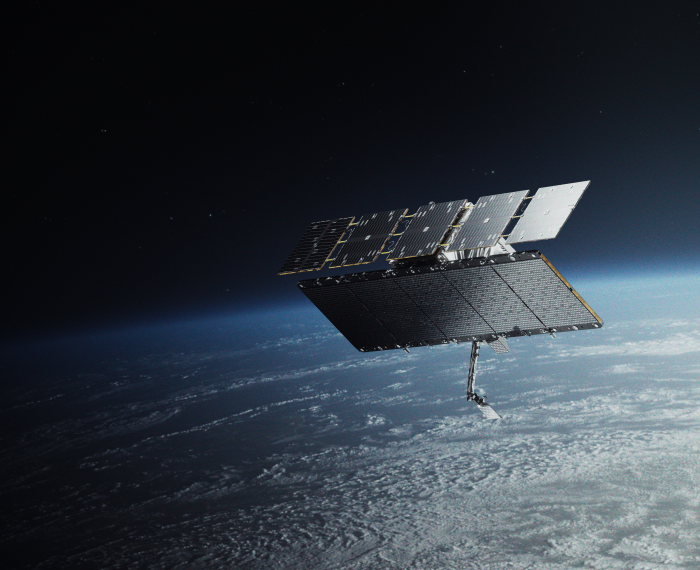
ICEYE’s November 16 release describes a new SAR satellite generation, including resolution as fine as 11 centimetres for government customers under specified bandwidth and regulatory conditions. It separately describes onboard AI as a platform for capabilities to be introduced over time. The company’s statements should therefore be read carefully: an AI-ready processor is different from a fully validated operational interpretation service.
Keep the observation and the interpretation visible
Higher image detail can improve an analyst’s ability to distinguish features. Automated screening can potentially reduce the amount of information that must be reviewed immediately. Those benefits arise at different stages. A system can improve one while leaving the other unchanged, or even create a new burden if users must spend more time checking machine-generated suggestions.
Onboard processing makes this distinction particularly important. A selected or transformed observation may reach a user sooner, but the user still needs to know how the system selected it and what information was omitted. A screening failure can be difficult to discover if only the flagged examples are retained. Evaluation should include events that the automated process did not surface, under declared test conditions.
The same reasoning applies to updates. Adding a new screening model to an existing platform can be valuable, provided the user can identify the version and understand its applicable limits. A change in software should not silently alter the meaning of a product used for comparison over time. Configuration records and access to appropriate underlying observations help keep an intelligence workflow auditable.
Customer qualification should record which product configuration and processing version produced each delivered image. That context makes comparisons across a changing satellite fleet interpretable and helps prevent future roadmap capabilities from being silently attributed to an earlier collection.
Judge the operating chain under ordinary constraints
The strongest argument for doing more work in orbit is that selected results may be available with less dependence on moving every raw observation through the same ground pipeline. The strongest objection is that selection errors can become less visible to the downstream user. Both deserve measurement. Latency should be assessed together with missed events, false cues and the effort needed to verify a result.
A useful customer test would begin with a stated information requirement and compare the complete workflow with an appropriate existing service. It should use representative conditions and preserve unsuccessful requests. Best-case collection examples and average timing can conceal the cases in which a deadline matters most. The company’s release does not supply that full comparison, and this analysis does not infer it from the hardware description.
Compatibility with an established ground system can reduce adoption work, but it does not remove the need to qualify a changed capability. Teams should know which procedures transfer directly and which require additional training or acceptance. Clear separation helps customers introduce a new generation without assuming that every operational question has already been answered by the earlier one.
Our assessment is positive about the attempt to improve the complete sensing chain. The next evidence should distinguish imaging qualification from each onboard-AI release and then connect both to sustained customer tasks. That would show whether the new platform improves the speed of trustworthy decisions as well as the detail of its observations.