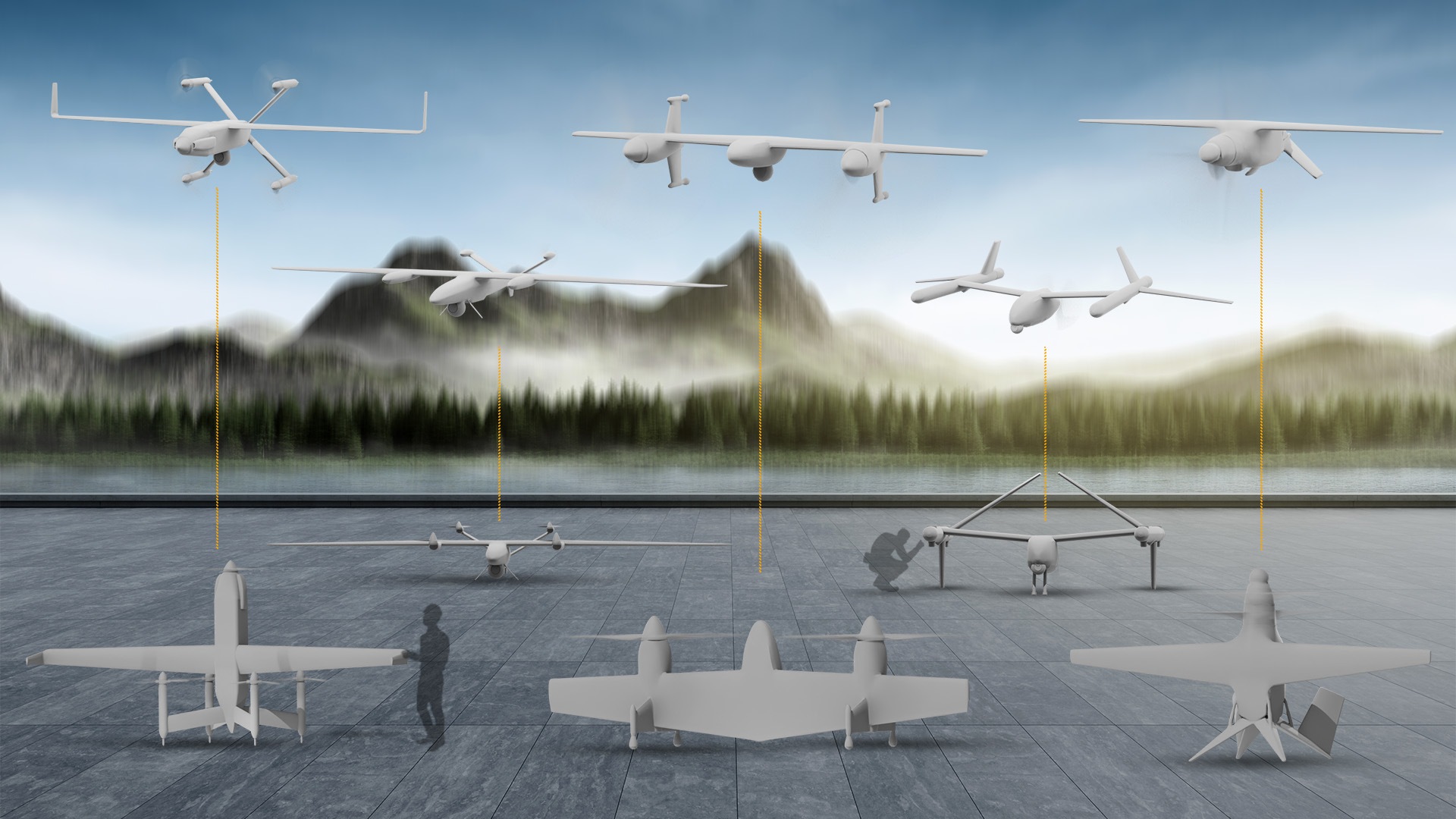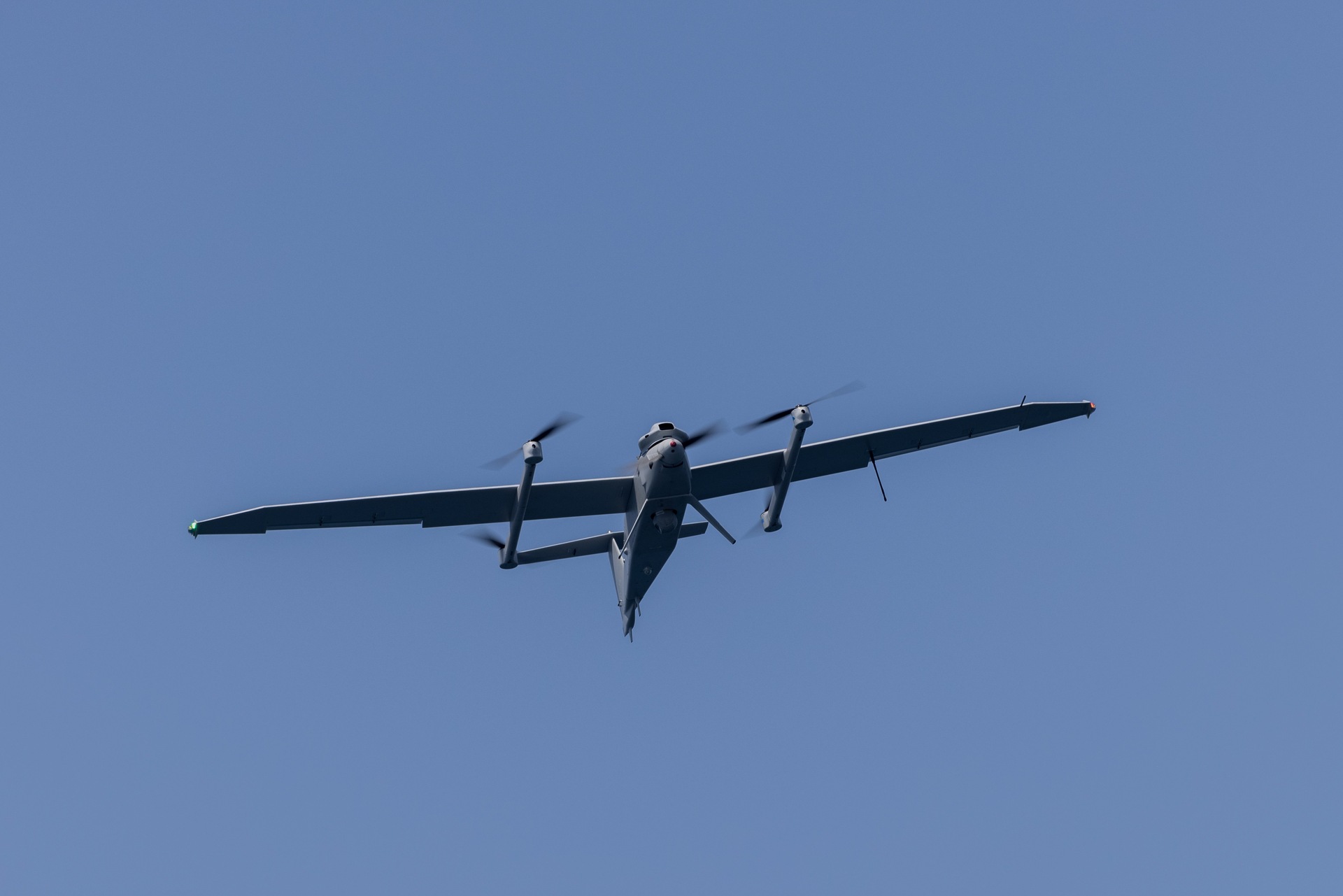
An aircraft aboard a small ship can extend the ship’s view without requiring a conventional runway. It also has to return to a place that moves. AeroVironment’s JUMP 20-X is consequential because it combines vertical flight with a shipboard operating proposition. The practical advantage will depend on whether landing, deck handling and support fit the ship as well as the aircraft fits the air.
AV’s February 2025 published source launch account describes JUMP 20-X as a modular vertical-takeoff aircraft for maritime operations, including a heavy-fuel engine. Its March 2026 published source services account describes Navy selection to compete for surveillance orders. These are supplier descriptions and a commercial opportunity. They do not supply an independent year-round landing success rate or show that every vessel can operate the system in every sea and weather condition.
Vertical takeoff changes the footprint
Vertical takeoff and landing lets an aircraft use a smaller departure area than a runway-based design. It can reduce the need for separate launch and recovery equipment, but it does not eliminate the deck as an operating system. Personnel still prepare the aircraft, keep the area clear, handle the payload and secure the machine afterward. Those actions compete with the ship’s other work and need procedures the crew can sustain.
Our assessment is that the moving deck is an interface between aircraft autonomy and the ship. Sensors and controls need to understand where the usable landing area is and how it is moving. The crew needs to know when an approach is valid, when to keep the area clear and what happens if conditions change. A successful landing clip can show an important event without establishing the reliability of that complete relationship.
Fuel commonality is a separate support proposition
A heavy-fuel engine can make the aircraft’s fuel arrangement more compatible with a maritime setting. That potential benefit belongs in the support comparison alongside servicing, spares and engine maintenance. It is distinct from the autonomy result. A buyer should avoid combining an attractive fuel specification and an automated landing claim into an assumption that the shipboard support burden is already minimal.
Consider a return while another deck operation has become urgent. This is a proposed trial, not a reported JUMP 20-X result. The ship should be able to change the landing window within agreed limits, and the aircraft should report whether it can wait, divert or attempt another approach. The trial should measure the crew effort and the safe outcome. That would test the operational flexibility the platform is intended to provide.
A services selection still needs configuration evidence
The manufacturer’s Navy account establishes eligibility to compete within a service arrangement. It does not guarantee an order or certify every payload advertised for the aircraft. Each mission package can change power, weight or handling. The service customer needs evidence for the actual configuration, plus a clear record of how changes will be tested and communicated.
A useful scorecard would report completed information missions, interrupted recoveries, reasons for missed coverage and the work required aboard the ship. It would include the conditions encountered rather than select only clean demonstrations. That would connect the vertical-flight design to the commander’s practical need for persistent information, while allowing a limited operating envelope to be valuable without pretending it is unlimited.
The recovery record should identify the deck conditions and the decisions assigned to its crew.
Recovery competes with the ship’s other work
Returning to a ship is also a scheduling problem. The same deck may support other aircraft, handling equipment and urgent ship operations. An autonomous recovery function cannot assume its landing area will be available simply because the planned mission duration has elapsed. The operating concept must connect aircraft endurance to the ship’s ability to reserve or revise that space. That relationship is part of useful flexibility, even when the actual flying task is highly automated.
A compact launch footprint can make an aircraft attractive to vessels that cannot support a conventional runway-based system. It should be compared with storage, servicing and recovery needs over the complete voyage. A platform may require little equipment for takeoff while still needing substantial space to maintain or secure afterward. JUMP 20-X’s bigger-picture promise is an expanded set of ships able to obtain aerial information. The convincing outcome would be sustained missions that fit the crew’s daily work and the ship’s operating conditions, with missed or delayed recoveries recorded alongside successful flights rather than hidden behind the visual appeal of vertical landing.
What would change the assessment
Request condition-specific recovery and crew-workload evidence for the contracted payload configuration.
The wider impact
JUMP 20-X’s wider promise is aerial capability that fits more ships with less dedicated infrastructure. Its value will be decided at the boundary between the autonomous aircraft and the working deck. Making that boundary reliable and understandable turns an impressive landing into a service a ship can repeatedly use.
This analysis draws on the public sources linked in the text. Send corrections to [email protected].