Military buyers would like to benefit from the investment already made in commercial autonomous driving. Reusing software, engineering practices and support tools could save time compared with starting again. Kodiak’s defense work puts that transfer at the center of its proposition. The important distinction is between bringing a tested development process into a new environment and assuming that experience on commercial routes certifies behavior on a battlefield.
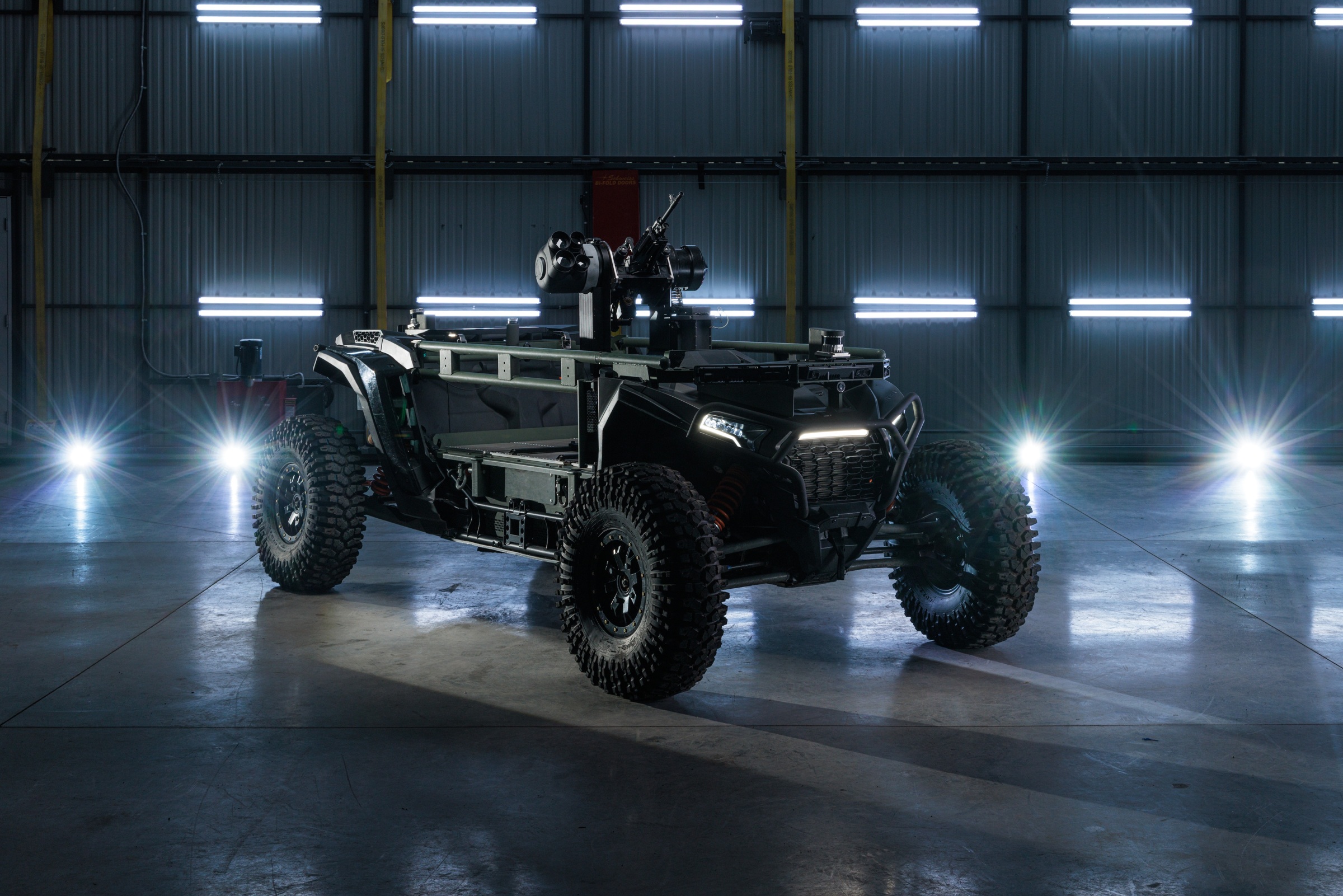
Kodiak’s February 2025 announcement statement describes its defense advisory council, a military prototype and integration of Kodiak Driver into Textron’s RIPSAW M3. Its supporting account defense page presents vehicle-agnostic autonomous ground technology and maintainability as product goals. Those sources document the company’s approach and claimed work. They do not supply an independent comparison showing which commercial driving results transfer to an off-road military mission or how much additional validation each vehicle needs.
The transferable asset may be the process
Commercial development can create tools for recording incidents, reproducing faults and managing software releases. Those tools can be valuable even when a military scene looks nothing like a public highway. Our assessment is that a buyer should identify exactly what is being reused: perception models, controls, hardware, test infrastructure or maintenance procedures. Each category carries a different kind of evidence and a different need for adaptation.
A road vehicle often encounters conventions designed to make other users predictable. Military off-road movement can involve informal paths, concealed obstacles and people giving directions in ways the vehicle has not seen before. The difference is not simply rougher terrain. It changes how the software infers where it may travel and what another person expects. A large driving record is informative about the recorded conditions; it cannot answer questions that were absent from that record.
Watch the footage
Textron Systems shows a RIPSAW M3 integrated with the Kodiak Driver. This company demonstration explains the integration; it is not the Swedish evaluation or evidence that commercial road miles certify military terrain.
Video: textronsystems · Original source ↗ · Video watch page ↗A new chassis changes the control problem
The RIPSAW integration also illustrates a physical transfer. Steering, braking and response to a command differ between vehicles. An autonomy system needs to account for those differences, including how quickly the platform can stop and how its sensors are positioned. Calling the software vehicle-agnostic describes an ambition to support multiple platforms. It does not mean the same configuration is automatically valid wherever the software is installed.
Consider a route that includes loose ground and a blocked passage. This is a suggested acceptance test, not a reported Kodiak outcome. The system must decide whether another path fits the mission’s limits, not merely whether the vehicle can physically traverse it. The trial should record both completed travel and the cases where the robot correctly declines to proceed. Refusing an unsafe alternative may be a successful autonomy behavior even when the route is left unfinished.
Keep commercial evidence in its proper role
A prospective customer should request a comparison between the starting commercial capability and the military configuration after integration. Which conditions required new data? Which faults were solved by mechanical changes? Which functions remain dependent on an operator? Those questions make the claimed transfer assessable without dismissing the value of the commercial work or treating its scale as a shortcut around mission-specific proof.
The industrial benefit could be a larger support base serving both kinds of customers. That depends on how much hardware and tooling remains common and whether military requirements introduce specialized components. It also depends on data and interface rights: the government needs to understand the configuration well enough to maintain confidence when the supplier releases another model or adapts the software for a different vehicle.
Transfer diagnostic practice alongside software
Commercial experience is valuable partly because it can teach an organization how to handle rare failures. Engineers need to preserve enough information to reconstruct what the system saw, distinguish an incorrect perception from a bad control response and verify a correction without breaking another behavior. Those practices can transfer even when the original driving data cannot. A military customer should evaluate that engineering discipline alongside demonstrations, because its operational environment will continue to produce cases that the initial development team did not anticipate.
Maintainers form another important bridge. A diagnostic tool that lets a technician identify a failed sensor quickly can be more transferable than a model trained on orderly road scenes. But the military unit must be able to use it under its actual constraints, including intermittent communications and limited access to specialist support. Kodiak’s wider opportunity is to turn a commercial development base into a faster route to bounded military mobility. The strongest evidence would show what genuinely remains common, what requires adaptation and whether the resulting system can keep improving without becoming dependent on constant outside intervention.
What would change the assessment
Look for configuration-specific military trials and failure categories rather than treating accumulated road experience as proof of battlefield performance.
The wider impact
Kodiak’s broader opportunity is to bring a repeatable engineering and support system into military robotics. The transfer will be valuable if it reduces the time needed to earn new evidence, rather than replacing that evidence with a commercial mileage total. That distinction connects private investment to a capability soldiers can actually assess and sustain.
This analysis draws on the public sources linked in the text. Send corrections to [email protected].