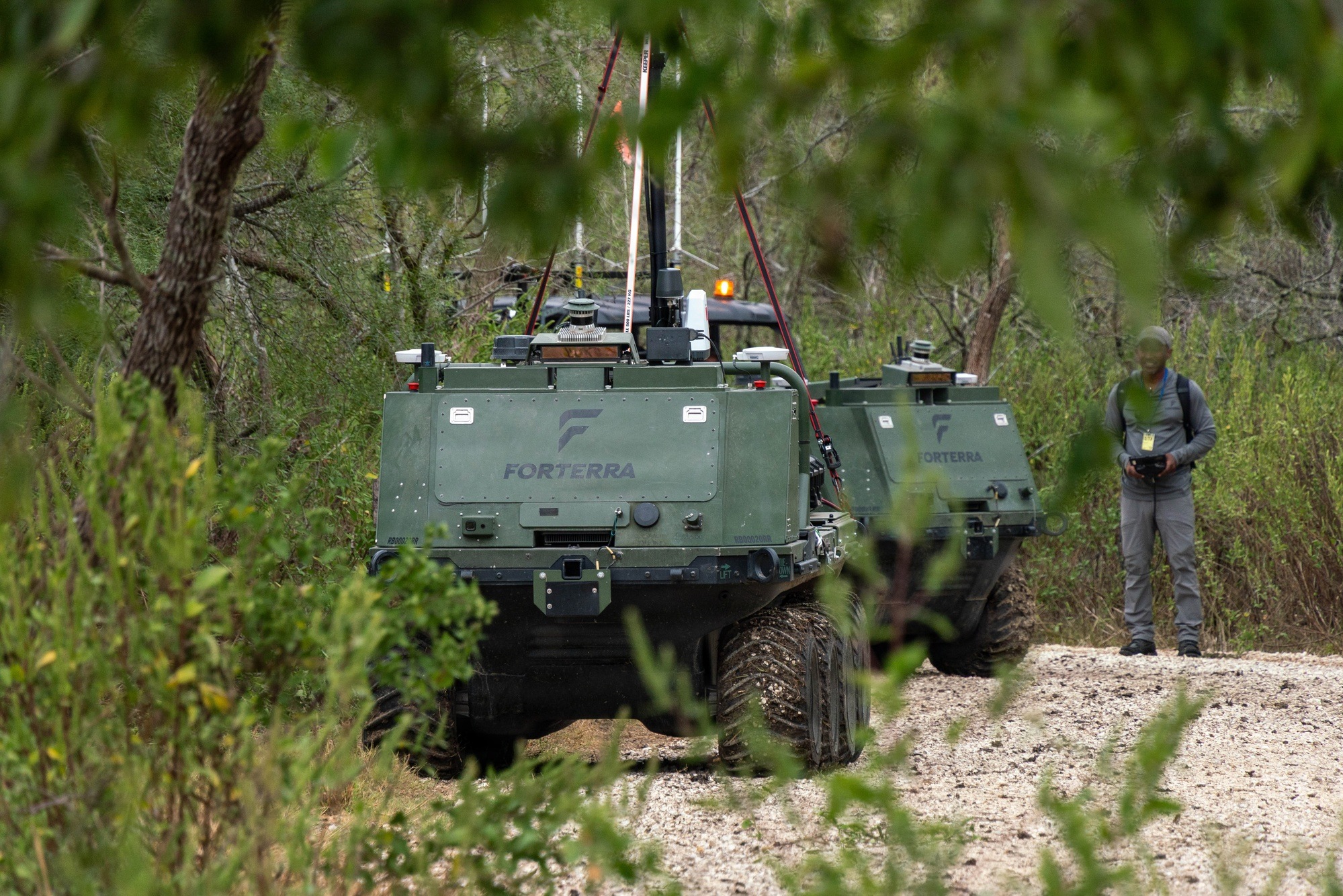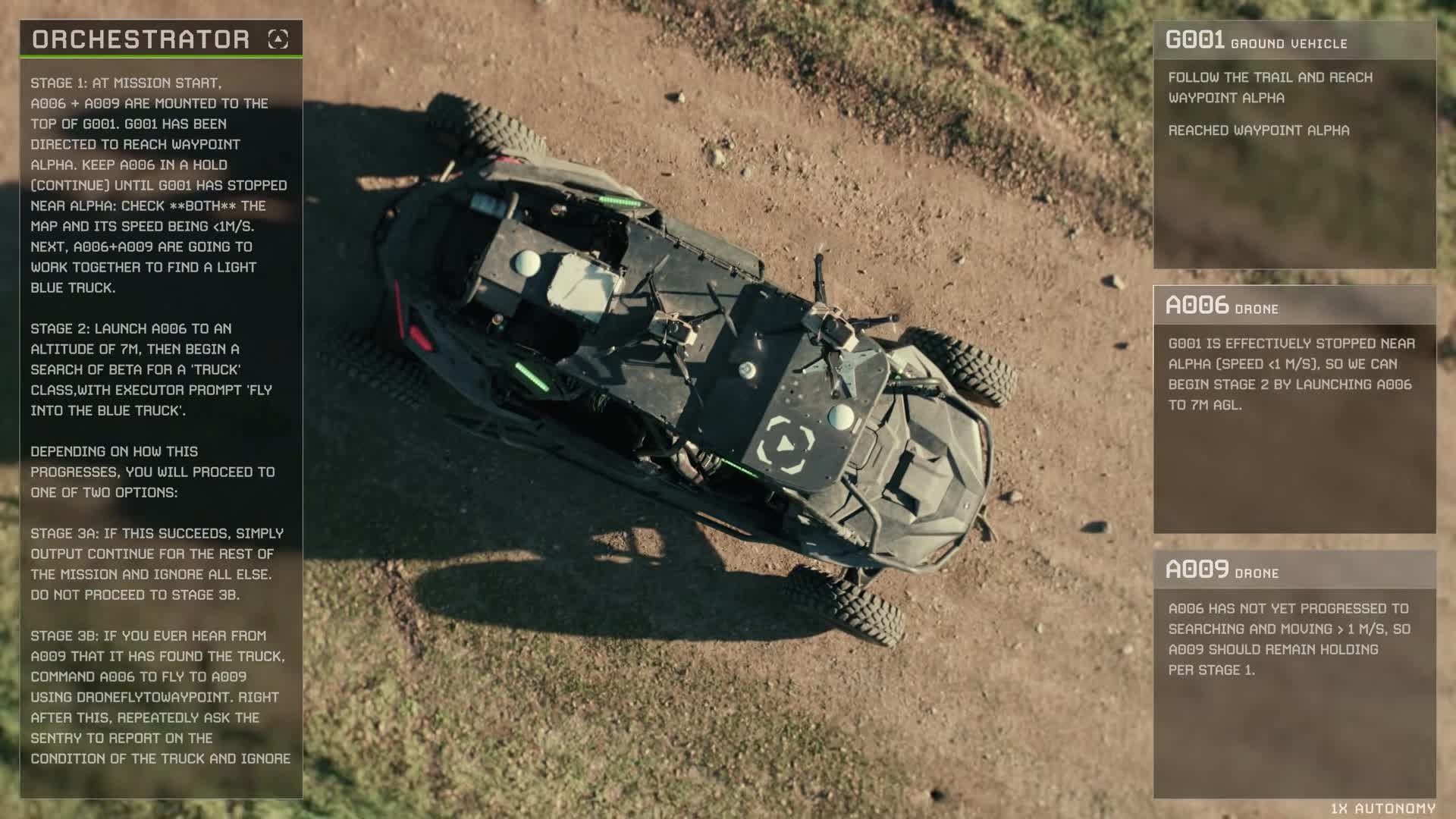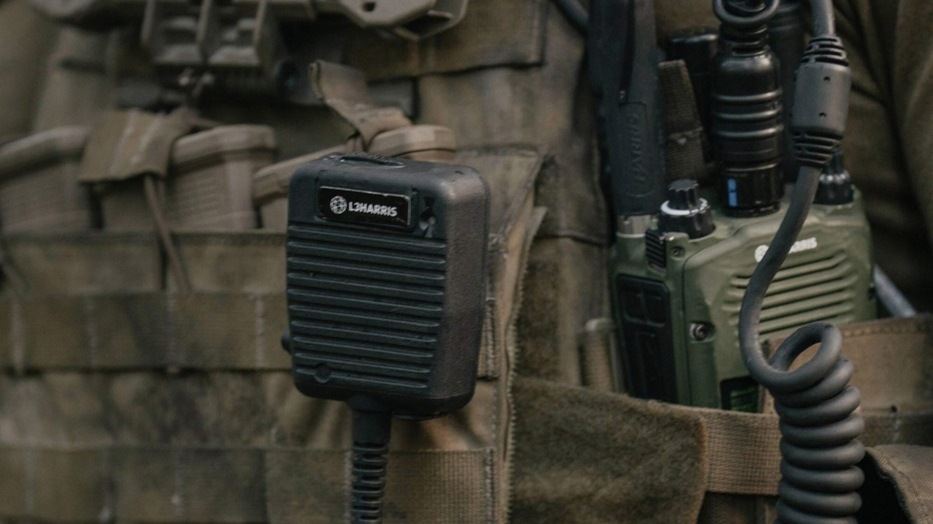
A ground robot becomes useful to a unit when its information can reach the people and systems that need it. A capable sensor on an isolated vehicle can still create another screen to watch, another device to configure and another stream of observations to reconcile. The larger opportunity in military autonomy is therefore organizational as well as mechanical: equipment must fit into a shared workflow without requiring every connection to be rebuilt from scratch.
That makes an apparently administrative milestone worth examining. In an October 8 announcement, L3Harris said five systems received “Jailbroken” status at Army Operation Jailbreak events. The company described the experiments as checks of standards-based application programming interfaces for integration into future networks. Its release also described a robotic threat-sensing demonstration involving communications, sensors and counter-unmanned equipment. These are company-reported integration results, not an independent assessment of operational effectiveness.
What an interface result establishes
An application programming interface defines how one piece of software requests information or services from another. In a mixed equipment fleet, that boundary matters because the receiving application should not have to understand every internal detail of a radio or sensor before using its output. A defined interface can make a supplier’s hardware accessible to a wider set of applications.
The useful distinction is between making a connection possible and making the whole workflow dependable. A receiving system may recognize a message without understanding its age, uncertainty or operating context. A location report, for example, becomes less useful if the display cannot distinguish a fresh observation from a delayed update. That example illustrates an integration question; it is not a reported failure from Operation Jailbreak.
For a buyer, the next evidence would be a description of what information crossed each boundary, which software versions were involved and whether another team could reproduce the connection. Those details would make the announcement more useful as a planning input. A status label alone cannot tell a unit what work remains before introducing the equipment into its own network.
Watch the footage
Official L3Harris product presentation published September 24, 2026. Product demonstration and manufacturer claims; not footage of the October Army deliveries or Operation Jailbreak. It does not independently verify combat performance.
Video: L3Harris Technologies · Original source ↗ · Video watch page ↗The near-term effect is on integration work
The immediate implication is a potentially shorter path from selected equipment to a working experiment. If the interfaces and supporting documentation are available to an authorized integrator, the team may spend less time writing bespoke adapters and more time checking the behavior of the combined system. That is a plausible benefit of the approach, not a measured saving established by the announcement.
The work does not disappear. Someone still has to assign responsibility for software changes, resolve version conflicts and test how the workflow behaves when a component becomes unavailable. Operators also need a clear account of which system is authoritative when two displays disagree. These are acceptance questions for the integrated capability rather than criticisms of a particular supplier’s implementation.
Procurement language can make the distinction concrete. Instead of requesting only connectivity, a customer could ask for evidence that a replacement component can be connected, tested and supported without rebuilding the entire workflow. Such a requirement would test whether the promised openness survives an ordinary change in equipment. It would also expose which parts of the integration remain supplier-specific.
The longer-term prize is a replaceable system
If repeatable interfaces become normal, the strategic effect could be a more adaptable fleet. A new sensor, vehicle or application could compete on its own contribution rather than needing to replace an entire equipment stack. That could broaden the range of suppliers able to improve a deployed system. It would depend on access rights, documentation and support arrangements as much as on the existence of an interface.
For autonomous systems, that flexibility would matter most after the first successful demonstration. Units need capabilities that can change as their software, tasks and supporting equipment change. An architecture that makes a demonstration easy but an upgrade difficult would leave much of the lifecycle problem untouched.
The question to watch is therefore practical: can a different integration team reproduce the result and retain it through a software or component change? Evidence of that repeatability would connect the Army experiment to the broader promise of adaptable ground autonomy. Until then, the milestone is best understood as progress on a necessary connection, with the operational result still requiring its own evidence.
Sources and limits
- L3Harris, October 8, 2026: Five systems achieve Jailbroken status.
- Source checked October 16, 2026. This article is public-source analysis; no independent field test or interview was conducted. Procurement questions and future implications are the publication’s analysis.
What would change the assessment
Watch for repeatable test results and customer evidence that connect this announcement to the practical outcomes discussed in this analysis.
This analysis draws on the public sources linked in the text. Send corrections to [email protected].