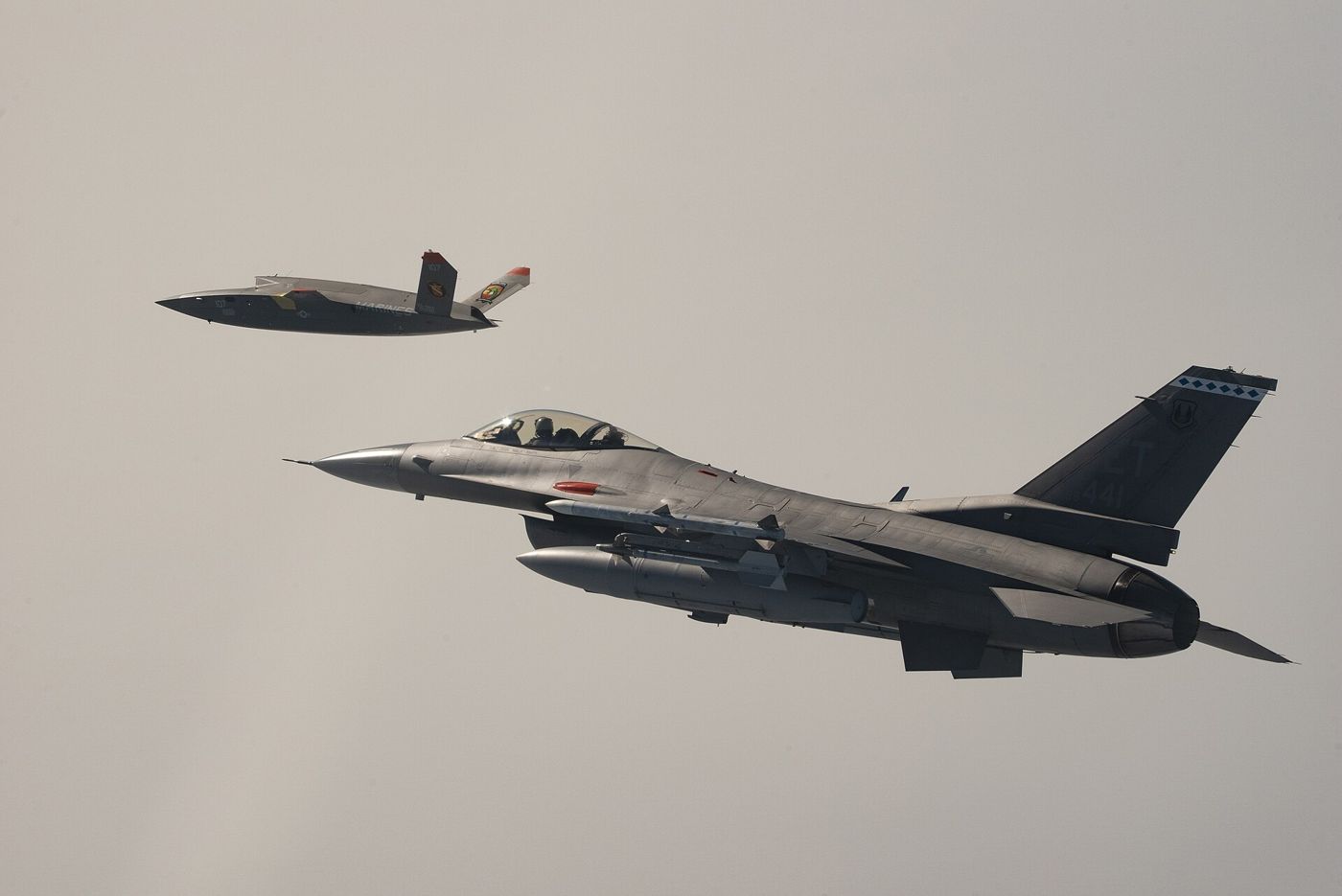
An uncrewed aircraft carrying useful mission equipment has to connect that equipment to the force employing it. Otherwise the vehicle can fly successfully while the commander cannot direct or understand its contribution. The Marine Corps’ Valkyrie work makes this integration visible through electronic-warfare and beyond-line-of-sight control tests. The significance is a more complete mission system, with communication treated as part of the capability rather than a background assumption.
Kratos’s August 2026 published source account reports an April test of a missionized Marine Valkyrie demonstrating electronic warfare and beyond-line-of-sight command and control. The Marine Corps’ published source Emerald Flag 2024 account provides an earlier tactical-datalink integration milestone. The newer results remain a supplier account of a collaborative test. They do not establish uninterrupted control in every contested setting or independently publish the effectiveness of the electronic-warfare mission.
Beyond line of sight is a reach claim
Beyond-line-of-sight communication lets participants exchange information without being within a direct local radio path. That can extend where the aircraft operates and who can direct it. It does not mean the connection cannot be disrupted or delayed. The buyer needs to know what path was used, what conditions the test imposed and how the system behaved when an expected message was late or missing.
Our assessment is that payload and control should be tested together because each changes what the other requires. An electronic-warfare mission may need precise timing, clear task boundaries and an understandable status report. Successful flight alone cannot establish those functions. The operational record should show whether the force could request the intended action, recognize its result and stop or change it when the mission required.
Integration makes a flying platform useful
A tactical datalink carries information in a form other military systems can use. That can connect the drone to a wider picture rather than leave its reports in a separate station. Yet sharing a message does not guarantee that every recipient understands its age, source or uncertainty. The complete test needs to preserve those meanings as information moves between the aircraft, control system and other participants.
A hypothetical task change illustrates the requirement. The force asks the aircraft to stop one assigned activity and support another while a link is delayed. This is a proposed evaluation scenario, not a reported Valkyrie result. The aircraft must act within its defined authorization, and the controller must know which task is active. A stale command or unclear acknowledgment could make an otherwise useful payload difficult to employ responsibly.
Each mission configuration needs a record
The supplier describes a missionized platform, meaning the aircraft has equipment and software for a specific role. Changing that configuration can affect power, data and control behavior. Evidence should therefore identify the version tested, rather than attach every result to the general Valkyrie name. A common air vehicle can host several useful configurations while each retains a different validated mission envelope.
The sources reviewed establish integration activity over time and a more recent reported test. They leave the government’s detailed mission outcomes and denied-condition behavior open. The next public evidence should connect link performance, operator interventions and payload effects in the same account. That would show which portion of the complete mission has matured, while preserving the uncertainty that remains before a force treats the aircraft as a dependable distributed capability.
An acknowledgment must have a clear meaning
A connection can work technically while failing operationally because participants disagree about the meaning of a message. A task acknowledgment may indicate receipt, acceptance or actual execution; each creates a different expectation. The commander needs to know which state is being reported, especially when a link is slow. Integration testing should therefore follow the complete exchange from request through action and result, rather than end when data successfully crosses the network.
Electronic-warfare equipment makes those meanings particularly consequential because the effect may not be directly visible to the controller. A useful status report must relate to the assigned task and explain which part of the requested activity occurred. The public test account does not disclose a complete scorecard for that relationship. Valkyrie’s broader significance is the development of an uncrewed platform into a contributor that other forces can actually employ. The gain would be distributed mission capability with understandable command and feedback, preserving a clear distinction between an aircraft that can carry equipment, one that can receive a message and one that delivers the authorized outcome as part of a wider force.
What would change the assessment
Seek government configuration-specific outcomes and degraded-link behavior beyond the vendor’s reported BLOS demonstration.
The wider impact
Valkyrie’s larger promise is to move useful functions onto aircraft that can support a force without another cockpit crew. The gain appears when the force can task, understand and change those functions at range. A working datalink and payload together are steps toward that result; their limits need to remain as visible as their successful demonstration.
This analysis draws on the public sources linked in the text. Send corrections to [email protected].